How to deal with several common failures ofmanual hydraulic stackers?

The most common failure of manual hydraulic stacker is that the forks cannot be hit and the oil cylinder is leaking. This is the most common failure and the problem we deal with the most. If the fork of the manual stacker cannot hit, let's analyze the main cause of the failure and some troubleshooting methods.
In the first case, the fork frame of the manual stacker cannot reach the maximum height. The reason for this is insufficient hydraulic oil. The solution is to add hydraulic oil;
In the second case, the fork of the manual hydraulic stacker cannot be lifted. There are four possibilities:
1. There may be no hydraulic oil, this only needs to be refueled;
2. It may be that the hydraulic oil is impure, let out all the hydraulic oil in the cylinder and replace the hydraulic oil again;
3. It may be that the adjusting nut is too high. Opening the unloading valve can increase the test pressure of the adjusting nut;
4. There may be air in the hydraulic oil. It is sufficient to remove the air in the hydraulic oil. The exhaust method is to pull the finger handle to the lower position, and then pull the handle to reciprocate up and down several times.
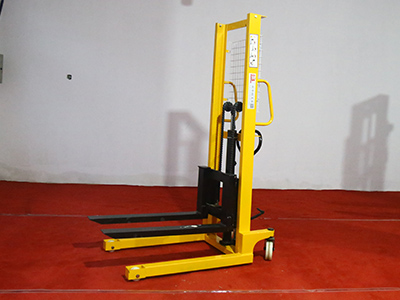
The fork of the manual hydraulic stacker cannot be lowered:
1. The piston rod or cylinder body is damaged and deformed due to the goods being biased to one side or overload, just replace the piston rod or cylinder body;
Second, it may be that the fork frame of the manual stacker has been in a raised position for a long time, and the piston rod is exposed and rusted, making the piston unable to move. The solution is to lower the fork frame of the manual hydraulic stacker when not in use. To the lowest position, pay attention to timely lubrication of the piston rod;
Third, the position of the adjusting nut may be wrong. The solution is to adjust the nut.
There are also some common faults, such as the aging or damage of the seals of the manual stacker, and the damage of certain parts causing oil leakage. The solution is to replace the seals and parts.
-
 Stand-on Double Pallet Stacker Pros & Cons For High Throughput WarehouseIn high-turnover e-commerce warehouses, stand-on electric double pallet stackers carry two pallets at once to boost outbound efficiency. Check aisle space before purchase as the machine has a wider body.
Do you like ?0
Read more -
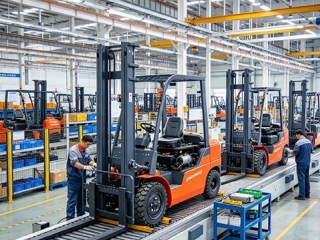 Newniudun Forklift OEM Service, Taizhou Newniudun ForkliftBuilding your own forklift brand does not require self-built production lines. OEM manufacturing is ideal for traders. newnewton forklift provides equipment OEM, logo customization, export certification and stable supply.
Do you like ?0
Read more -
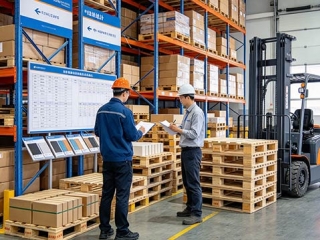 3 Core Rules for Small Warehouse Forklift SelectionMany buyers blindly pursue high load and lifting parameters for forklifts. Small warehouses need forklifts matched by aisle space, cargo demands and full-cycle costs for proper operation and budget control.
Do you like ?0
Read more -
5 Forklift Selection Tips for Small EnterprisesSmall enterprises often focus only on forklift unit prices and ignore actual warehouse conditions, leading to unusable equipment. Select suitable forklifts from five dimensions: aisle, cargo, environment, maintenance and certification.
Do you like ?0
Read more -
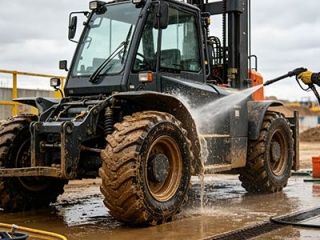 4WD Rough Terrain Forklift For Muddy Construction Site, Anti-stuck Off-road ForkOrdinary forklifts slip and get stuck on muddy post-construction sites. 4WD off-road forklifts with upgraded tires and high chassis adapt to unhardened ground for stable outdoor material handling.
Do you like ?0
Read more -
 3 Steps To Troubleshoot Black Smoke Of Fuel Forklift, Reduce Equipment LossBlack smoke from fuel forklifts results from insufficient combustion and worsens engine wear and fuel consumption. Troubleshoot the air intake, fuel system and engine conditions to eliminate smoke faults efficiently.
Do you like ?0
Read more