
It’s too dangerous to use a manual hydraulic stacker like this

The manual hydraulic stacker is a small storage forklift for handling stacked goods. Because of its small size, simple operation and low cost. Suitable for short-distance stacking of light goods. Manual forklifts have the advantages of manual forklifts, but you also need to pay attention to strictly follow the manual operation specifications when operating.
What are the contraindications in the use of manual stackers?
1. There is no detailed inspection of the car body, oil tank, etc. before use, resulting in the problem that the goods cannot be hit during use, or the problem cannot be lowered after being raised. This is caused by the adjustment of the pressure relief valve being too loose or too tight.
2. In the process of using a manual hydraulic stacker, we need to pay attention to the order of the forklift when lifting the goods, such as moving a certain distance after lifting the pallet with the goods, the height of the fork should not be too high, generally The distance from the ground does not hinder the movement of the forklift. If the forklift is raised too high, the center of gravity of the forklift will move up, and the chassis will easily tilt when the chassis is unstable, which may cause casualties in serious cases.
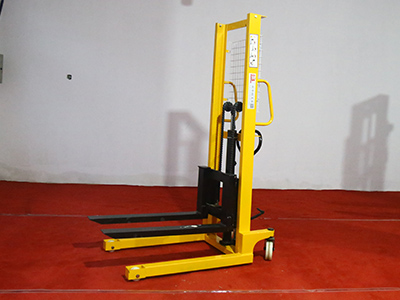
3. When using a manual hydraulic stacker to stack goods, do not pay attention to increasing the load ratio, and overloading will cause the vehicle to tip over. Therefore, we must pay attention to the increase in load ratio. Generally, the standard increase of manual stacker is 1.6 meters. If you want to stack the goods to 1.6 meters, then we must appropriately reduce the load by one more on the basis of the rated load, just to ensure the service life and safety of the vehicle.
4. Improper use of pallets is also a dangerous thing. The size of the pallet is too large and does not match the size of the fork of the manual hydraulic stacker, which causes the center of gravity of the goods to shift, and eventually tip over and cause an accident. In general, electric forklift manufacturers will mention that the pallets used by manual stackers are nine-legged or Sichuan-shaped pallets when they explain their use. The pallet size also needs to be clarified.
-
 Stand-on Double Pallet Stacker Pros & Cons For High Throughput WarehouseIn high-turnover e-commerce warehouses, stand-on electric double pallet stackers carry two pallets at once to boost outbound efficiency. Check aisle space before purchase as the machine has a wider body.
Do you like ?0
Read more -
 Newniudun Forklift OEM Service, Taizhou Newniudun ForkliftBuilding your own forklift brand does not require self-built production lines. OEM manufacturing is ideal for traders. newnewton forklift provides equipment OEM, logo customization, export certification and stable supply.
Do you like ?0
Read more -
 3 Core Rules for Small Warehouse Forklift SelectionMany buyers blindly pursue high load and lifting parameters for forklifts. Small warehouses need forklifts matched by aisle space, cargo demands and full-cycle costs for proper operation and budget control.
Do you like ?0
Read more -
5 Forklift Selection Tips for Small EnterprisesSmall enterprises often focus only on forklift unit prices and ignore actual warehouse conditions, leading to unusable equipment. Select suitable forklifts from five dimensions: aisle, cargo, environment, maintenance and certification.
Do you like ?0
Read more -
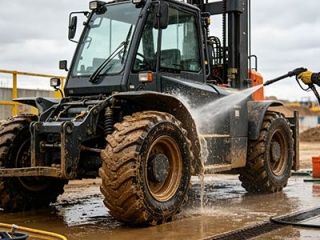 4WD Rough Terrain Forklift For Muddy Construction Site, Anti-stuck Off-road ForkOrdinary forklifts slip and get stuck on muddy post-construction sites. 4WD off-road forklifts with upgraded tires and high chassis adapt to unhardened ground for stable outdoor material handling.
Do you like ?0
Read more -
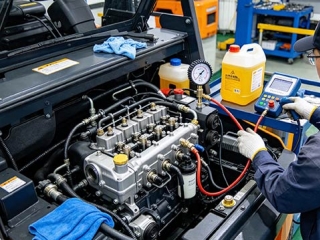 3 Steps To Troubleshoot Black Smoke Of Fuel Forklift, Reduce Equipment LossBlack smoke from fuel forklifts results from insufficient combustion and worsens engine wear and fuel consumption. Troubleshoot the air intake, fuel system and engine conditions to eliminate smoke faults efficiently.
Do you like ?0
Read more








