Precautions for site testing:
1. Getting Started
(1) Before departure, check the instrument of the electric forklift, wear work clothes, a safety helmet, and do not wear slippers, high heels and other shoes that do not meet the requirements;
(2) Check whether the shift lever is in neutral and whether the manual lever (handbrake) is in the braking position.
2. Forward
(1) Do not stop during driving;
(2) It is not allowed to press the line, rub the pile, go out of the line, or collapse the pile during driving.
3. Reversing
(1) Reversing smoothly without stopping;
(2) When reversing, it is not allowed to press the line or pile, or press the line or move the pile.
4. Homework
(1) When the forks of the electric forklift move in and out of the stack, the stack should not move more than 0.2m;
(2) Do not counterattack when stacking and unstacking (that is, when the fork is inserted into the stacking object, the position is wrong, and then re-insert the yard truck after reversing;
(3) When picking up the fork, do not hit or push the container. When the fork is lifted, the fork is completely inserted into the stack, and the center of gravity of the goods is stable;
(5) Do not show up, fall, move stacks, or dump containers while driving;
(6) Put the stacked items in place.
5. Parking
(1) Do not press the line when parking, reset the operating lever, tighten the handbrake, and steadily land the fork;
(2) The front end of the vehicle is more than 0.5m away from the parking line after parking, and shall not exceed the parking line.
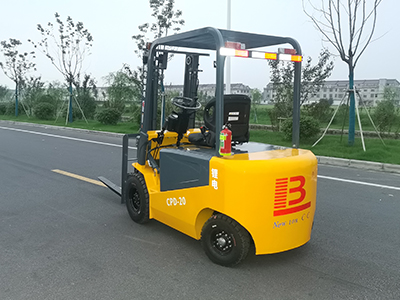
Precautions for venue roads:
1. Getting Started
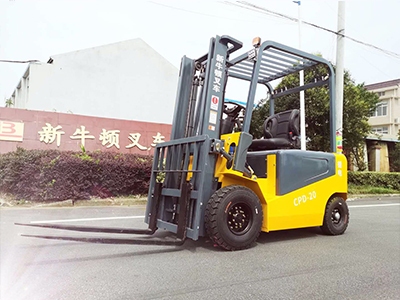
(1) Before starting the electric forklift, check the status of the forklift;
(2) After getting on the vehicle, fasten the seat belt, adjust the mast to tilt backward, and adjust the fork to be 0.2~0.3m off the ground.
2. Shift
(1) Shift specification and clutch usage specification;
(2) Specification for the use of direction lights;
(3) Standards for the use of service brakes;
(4) The engine does not stall when driving.
3. Electric forklift turning at right angles
(1) When turning at right angles, turn on the turn signal. After turning, turn off the turn signal.
4. Stop at a fixed point on a slope
(1) There is no flameout or pause during lifting.
5. Turn and U-turn
(1) Don't turn the steering wheel in a hurry when turning or turning your head;
(2) After turning around, no part of the forklift can touch the wire.
6. Parking
(1) Do not press the line when parking, reset the operating lever, tighten the handbrake, and steadily land the fork;
(2) The front end of the electric forklift is more than 0.5m away from the parking line after parking, and shall not exceed the parking line.
-
 Stand-on Double Pallet Stacker Pros & Cons For High Throughput WarehouseIn high-turnover e-commerce warehouses, stand-on electric double pallet stackers carry two pallets at once to boost outbound efficiency. Check aisle space before purchase as the machine has a wider body.
Do you like ?0
Read more -
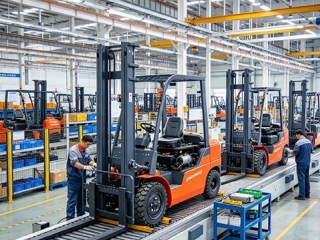 Newniudun Forklift OEM Service, Taizhou Newniudun ForkliftBuilding your own forklift brand does not require self-built production lines. OEM manufacturing is ideal for traders. newnewton forklift provides equipment OEM, logo customization, export certification and stable supply.
Do you like ?0
Read more -
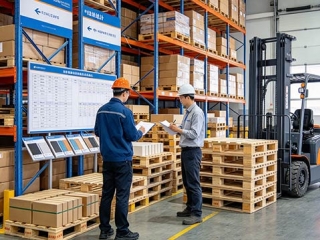 3 Core Rules for Small Warehouse Forklift SelectionMany buyers blindly pursue high load and lifting parameters for forklifts. Small warehouses need forklifts matched by aisle space, cargo demands and full-cycle costs for proper operation and budget control.
Do you like ?0
Read more -
5 Forklift Selection Tips for Small EnterprisesSmall enterprises often focus only on forklift unit prices and ignore actual warehouse conditions, leading to unusable equipment. Select suitable forklifts from five dimensions: aisle, cargo, environment, maintenance and certification.
Do you like ?0
Read more -
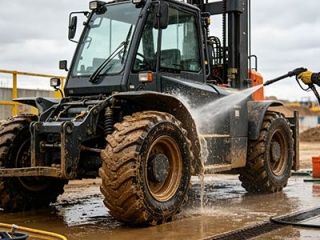 4WD Rough Terrain Forklift For Muddy Construction Site, Anti-stuck Off-road ForkOrdinary forklifts slip and get stuck on muddy post-construction sites. 4WD off-road forklifts with upgraded tires and high chassis adapt to unhardened ground for stable outdoor material handling.
Do you like ?0
Read more -
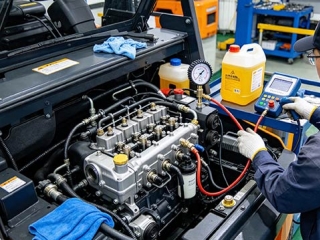 3 Steps To Troubleshoot Black Smoke Of Fuel Forklift, Reduce Equipment LossBlack smoke from fuel forklifts results from insufficient combustion and worsens engine wear and fuel consumption. Troubleshoot the air intake, fuel system and engine conditions to eliminate smoke faults efficiently.
Do you like ?0
Read more