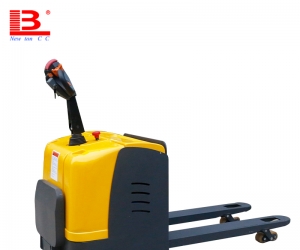
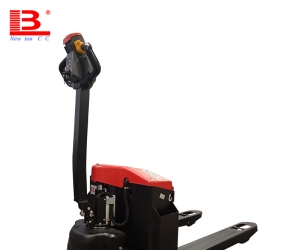
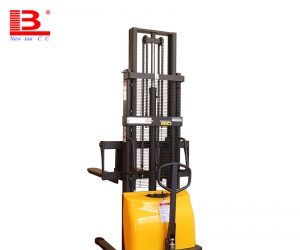
Full‑Electric Stacker VS Manual Stacker: Scenario‑Based Selection
For large processing plants and small‑to‑medium‑sized warehouses, purchasing considerations for stacking equipment are similar, yet final model selections often differ greatly. The core reason is that manual hydraulic stacker and electric stackers are designed for distinct working scenarios. This article compares the two types from multiple dimensions to support enterprises making condition‑based equipment decisions.
Working Efficiency The performance of manual stacker is limited by operator physical strength, so it fits low‑frequency tasks. After long continuous work, operators get fatigued and stacking speed drops obviously.
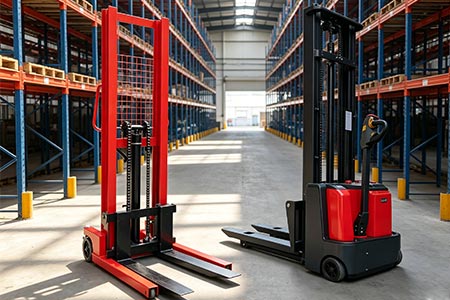
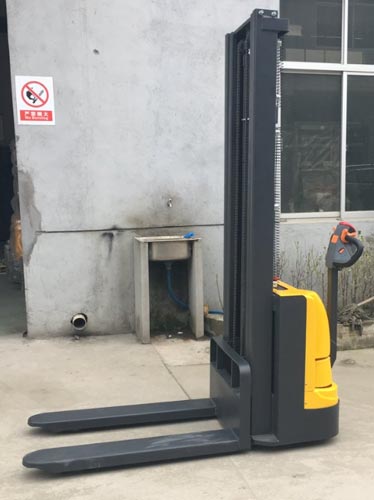
A full‑electric stacker maintains constant working speed regardless of operator stamina. Under high‑frequency conditions, it boosts productivity by 45‑65 % for identical stacking assignments and is ideal for continuous inbound‑outbound workflows.
Labor Intensity Manual stackers rely fully on human force for travelling and lifting. Operators spend great physical effort pumping handles and pushing heavy‑load units. Long‑time operation easily causes arm and lumbar strain, so they are unsuitable for frequent heavy‑load stacking.
Full‑electric stacker uses motors for both travel and lifting. Operators only perform steering control. Physical exhaustion is greatly reduced, cutting operation mistakes caused by worker fatigue.
Procurement & Maintenance Costs Manual hydraulic stacker features low purchase cost. Without batteries, motors or other electric assemblies, it barely demands daily upkeep; only hydraulic oil, chains and rollers need periodic inspection. Its main drawback is full manual operation, making it suitable only for light‑duty and low‑frequency applications.
Full‑electric stacker requires higher upfront investment. Core assemblies include motor, controller and battery. Routine maintenance for batteries and electric systems is necessary. Nevertheless, for high‑frequency operations, it saves labor expenses and lowers management costs related to staff physical injury.
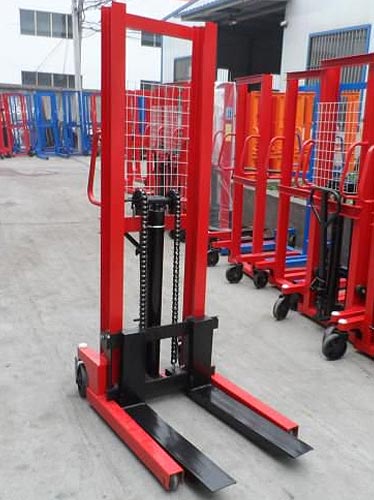
Load & Lifting Limitations Mainstream manual stacker models cover 1 ton and 1.5 ton rated capacity, with maximum lifting height mostly under 3 meters. Higher lifting calls for much greater hand‑pumping force, which makes high‑lift operations extremely tiring.
Full‑electric stackers support 1‑3 ton loads and can reach lifting heights up to 6 meters. They handle high‑rack stacking effortlessly and show prominent advantages under heavy‑load and high‑lift conditions.
To sum up, purchasing decisions should be made case‑by‑case. full‑electric stacker vs manual stacker each has its own strengths. Enterprises can use this comparison to avoid common pitfalls during stacker selection.
-
 Newnewton Forklift Manufacturer, Forklift CE Certification for ExportNewnewton forklift factory offers full CE certification complying with EN ISO 3691, complete technical documents and OEM service to reduce customs detention risks.
Do you like ?0
Read more -
 Electric Forklift Vs Diesel Forklift, Warehouse Selection GuideElectric forklift is zero-emission and quiet for indoor clean warehouses. Diesel forklift offers strong power for outdoor heavy-duty tasks.
Do you like ?0
Read more -
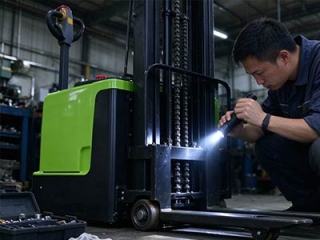 Narrow Aisle Stacker Forklift Custom Manufacturer for WarehouseCustom narrow aisle stacker for non-standard racking. Adjust body, mast and fork specs, upgrade power and protection, site survey available.
Do you like ?0
Read more -
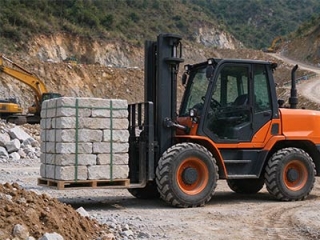 4WD All Terrain Rough Terrain Forklift Climbing for Mountain Sites4WD rough terrain forklift works on unpaved roads. Observe load climbing limit, attachments optional for forest and construction sites.
Do you like ?0
Read more -
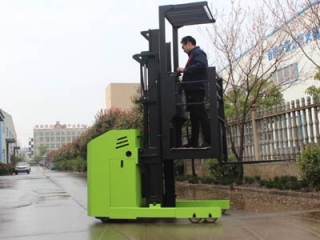 Man-Up Order Picker for High Level Picking, Suitable Warehouse ModesMan-up high level order picker for high-level split picking. Not for full pallet stacking, check rack, aisle and floor before selection.
Do you like ?0
Read more -
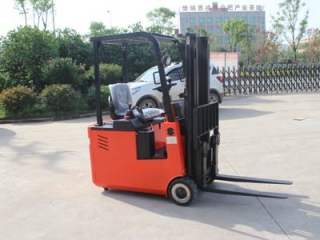 Narrow Aisle Operation Of Three-Wheel Forklift With Compact Turning RadiusThree-point electric forklift features small turning radius for narrow aisles. Reserve safety margin and check floor condition during selection.
Do you like ?0
Read more