What are the motor composition and working principle of electric forklifts?

As the main handling tool in the warehousing industry, electric fork truck are self-evident for an enterprise. So what are the important components of electric forklifts?
The operation of an electric forklift cannot be separated from the battery. The battery provides the energy source, so what provides the power source? Yes, the motor. Let's talk about the composition and working principle of the motor, one of the important components of the electric forklift.
The full English name of the electric forklift steering motor is Electronic Power Steering, or EPS for short. It uses the power generated by the forklift motor to assist the driver in power steering. The composition of EPS, although the structural components of different forklifts are different, they are generally the same. Generally, it is composed of forklift accessories such as forklift direction (steering) sensor, electronic control unit, electric motor, reducer, mechanical steering gear, and animal battery power supply.
The working principle of electric fork truck steering motor: When the forklift is turning, the direction (steering) sensor will "feel" transmit signals to the steering wheel control unit to distribute current to the steering motor to rotate the direction. These signals will be sent to the electronic control unit through the data bus , The electronic control unit will send an action command to the forklift motor controller according to the data signals such as the transmission torque and the direction to be rotated, so that the forklift motor will output the corresponding torque according to the specific needs, thereby generating the power steering. If it does not turn, the system will not work, and it will be in standby (sleep) state waiting to be called. Due to the working characteristics of electric power steering, forklift drivers will feel that driving such a forklift has a better sense of direction and is lighter. At the same time, because it does not work when it is not turning, it saves energy consumption to a certain extent.
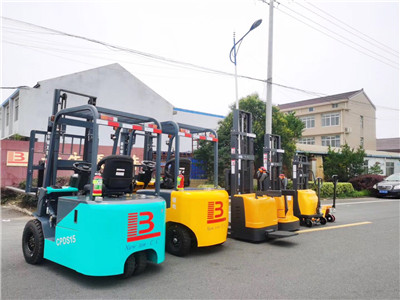
Since the electric power steering system of the forklift only needs electricity and does not use hydraulic pressure, many components are omitted compared with the mechanical hydraulic power steering system. There are no oil pumps, oil pipes, pressure and flow control valves, oil storage tanks, etc. required by the hydraulic system. The forklift has a small number of accessories, convenient layout and light weight. And there is no "parasitic loss" and liquid leakage loss. Therefore, the electric power steering system can save about 80% energy under various driving conditions, which improves the running performance of the entire electric forklift accessories. Therefore, it has been rapidly promoted in recent years and is also the development direction of power steering systems in the future.
In order to ensure the portability of the forklift when turning in situ or at low speeds, the displacement of the oil pump is determined by the flow rate of the forklift engine at idling speed. While the forklift is at a speed higher than the idling speed and in a straight line most of the time during driving, most of the oil output from the oil pump can only be returned to the oil storage tank through the control valve, causing great "parasitic losses". Therefore, in order to reduce such unnecessary losses, a motor-driven oil pump is used. When the forklift is traveling in a straight line, the motor runs at low speed, and when the electric fork truck is turning, the motor runs at high speed. By controlling the speed of the forklift motor, the flow and pressure of the oil pump are adjusted to reduce "parasitic losses."
-
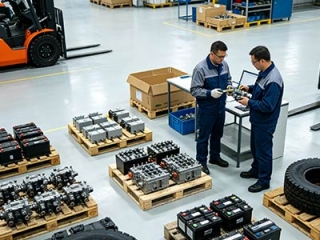 5 Strict Inspection Stages of Newnewton Forklift Before DeliveryForklift factory inspection determines equipment stability. Taizhou manufacturers adopt five testing procedures from parts sampling to full-load tests for reliable quality.
Do you like ?0
Read more -
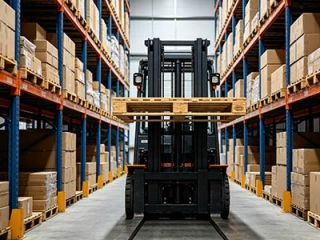 Introduction to Straddle Leg Function of Stacker and Damage ImpactsSupport legs are core load-bearing structures of stackers. They prevent tipping, bear loads and guide pallets, requiring daily maintenance for safe operation.
Do you like ?0
Read more -
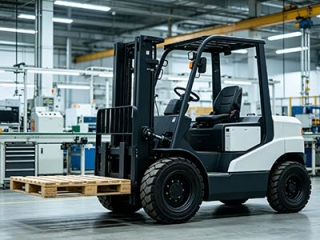 3 Sets of Workshop Narrow Aisle Forklift Solutions from Forklift ManufacturerNarrow workshop aisles limit handling efficiency. Professional forklift manufacturers provide three forklift solutions for different narrow aisle working conditions.
Do you like ?0
Read more -
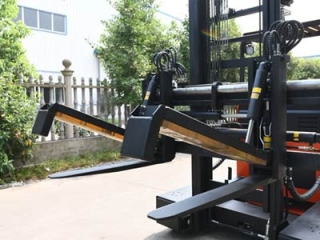 6 Steps to Learn Standard Operation of Full Electric Four-way ForkliftFull-electric four-way forklifts handle long materials with vertical and horizontal travel. Standardize six operating procedures to avoid operational risks.
Do you like ?0
Read more -
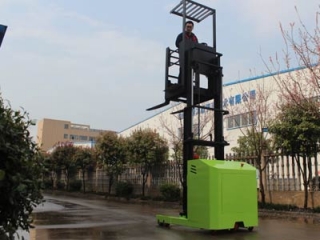 Electric order picker vs manual order picker, warehouse order pickerWhen choosing order pickers, compare electric and manual models from efficiency, workload, scenarios, cost and safety to match your warehouse working conditions.
Do you like ?0
Read more -
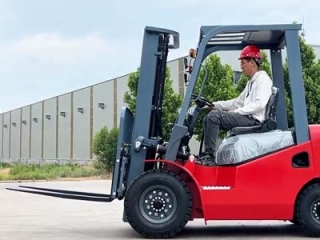 What Items Can Be Customized for Diesel Forklift OEM ServiceFor diesel forklift OEM, clarify customizable ranges to avoid delivery deviation. Factories support logo, mast, cabin and document customization.
Do you like ?0
Read more