
Walk Behind Forklift: Stacking Without Outriggers, Great Performance
Most traditional stackers rely on outriggers for stacking, making them difficult to use with special pallets or in tight spaces. The walk behind forklift features a legless design and achieves stable lifting through its own counterweight, allowing stacking without outriggers and offering outstanding practicality and flexibility.
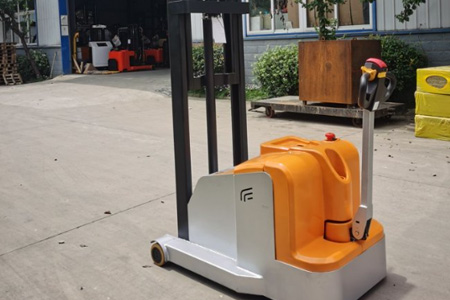
As a type of walk-behind legless stacker that falls into the category of electric counterbalance stacker, it has a compact structure and intuitive operation. One operator can easily handle loading, unloading, stacking and transfer while walking behind. With no external outriggers taking up space, it moves flexibly in narrow aisles, workshop stations and between racks, requiring less space and fitting more applications.
Thanks to the counterbalance structure, the machine maintains a stable center of gravity during lifting and travel. Even without outriggers, it ensures smooth lifting and safe movement, effectively preventing tipping and cargo shaking. It handles both standard and irregular pallets easily, free from outrigger restrictions, greatly improving versatility.
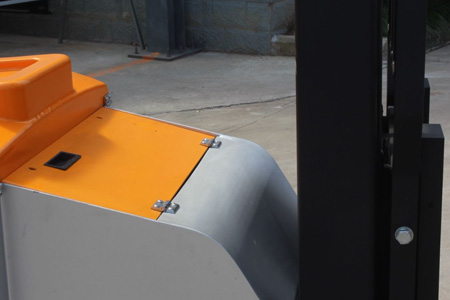
Powered by electric drive, it is efficient and labor-saving, significantly reducing fatigue compared with manual stackers and enabling comfortable long-hour operation. Simple maintenance and low failure rate make it ideal for small to medium warehouses, workshops and retail logistics, delivering higher cost performance.
With stable stacking without outriggers, the walk behind forklift solves the limitations of traditional stackers with its flexibility, stability and versatility, making it an ideal choice for modern light-duty material handling.
-
 Is Stand-on Counterbalance Stacker Brand Ranking Reliable?When selecting ride-on counterbalance stackers, brand lists are only for reference. Verify qualifications, core parts and after-sales supply based on warehouse conditions.
Do you like ?0
Read more -
 Core Components Check for Light Electric Walkie StackerWhen choosing walkie stackers, durability relies on four key parts: mast, frame, hydraulic system and battery, instead of merely appearance.
Do you like ?0
Read more -
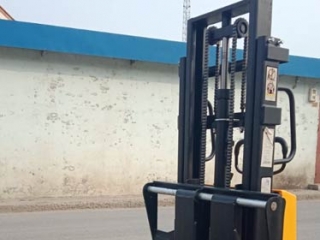 Semi-Electric Hydraulic Stacker Price Guide For WarehouseSemi-electric stackers fit short stacking in small warehouses. Prices vary by load, lifting height and battery, covering 1t,1.5t and 2t models for comparison.
Do you like ?0
Read more -
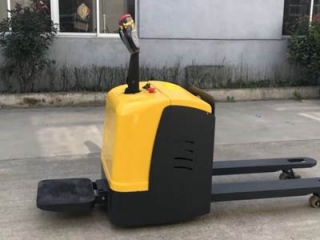 Operating Procedures for Ride-on Full Electric Pallet TruckRide-on electric pallet trucks suit long-distance and high-frequency warehouse handling. Standardize pre-operation inspection and workflow to eliminate risks and improve efficiency.
Do you like ?0
Read more -
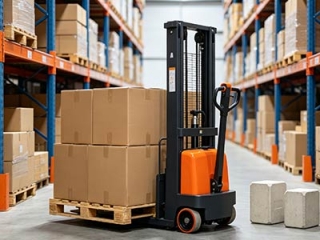 How to Choose Load Capacity for Manual Hydraulic StackerManual stacker selection requires considering load attenuation and offset load. Follow four scientific rules including safety margin and fork pallet matching for proper load specification.
Do you like ?0
Read more -
 Direct Source Factory for Small Electric Forklifts | NewnewtonBuying forklifts from source factories saves markup and speeds up after-sales service. Check qualifications carefully to distinguish real manufacturers from OEM traders.
Do you like ?0
Read more








