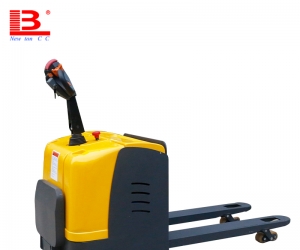
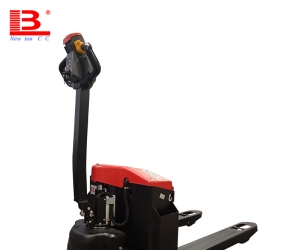
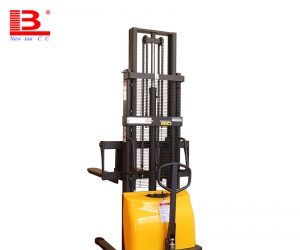
For warehouse loading, truck-mounted handling and small-space operations, the portable pallet jack has become essential equipment for small and medium-sized enterprises thanks to its lightweight and labor-saving design. With so many models and uneven quality on the market, a poor choice can lead to oil leaks, deformation or stiff operation. So how to choose a manual hydraulic pallet truck wisely? Follow these key points to avoid buying mistakes.
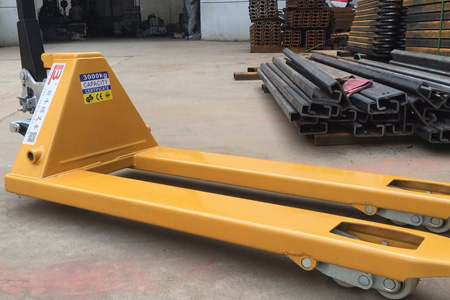
First, check body material and load capacity
Portable does not mean inferior quality. High-quality models use integrally formed thickened steel plates for a stable, deformation-resistant frame. Select a load capacity based on your daily cargo weight — 1.5-ton to 2-ton models are sufficient for most scenarios. Avoid overpaying for excessive capacity or risking overload with undersized units, which shorten service life and create hazards.
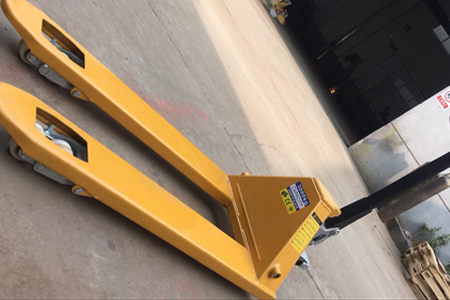
Second, inspect the hydraulic system
The hydraulic system is the core of a portable manual hydraulic pallet truck. A quality pump offers smooth lifting, no oil leakage, stable descent and effortless operation. Inferior pumps often fail to lift properly, drop suddenly or leak oil. Always check cylinder sealing and prioritize quiet, explosion-proof units with slow-lowering functions for enhanced safety.
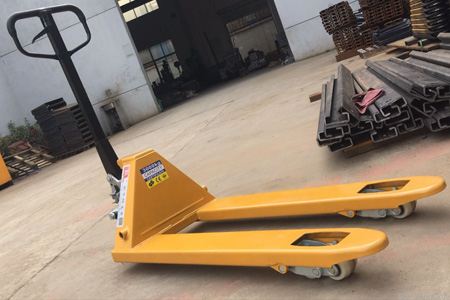
Third, evaluate portability and maneuverability
A truly reliable portable pallet jack is compact, moderately weighted, easy to push and highly maneuverable. It works smoothly in narrow aisles, truck containers and elevators. Many models feature foldable or lightweight structures for easy transport and storage, a key advantage over standard pallet trucks.
By understanding these three core factors before purchasing, you can greatly reduce the risk of choosing a low-quality product and enjoy trouble-free daily use. As a factory with decades of experience, we are ready to answer any further questions you may have.
-
 Is Stand-on Counterbalance Stacker Brand Ranking Reliable?When selecting ride-on counterbalance stackers, brand lists are only for reference. Verify qualifications, core parts and after-sales supply based on warehouse conditions.
Do you like ?0
Read more -
 Core Components Check for Light Electric Walkie StackerWhen choosing walkie stackers, durability relies on four key parts: mast, frame, hydraulic system and battery, instead of merely appearance.
Do you like ?0
Read more -
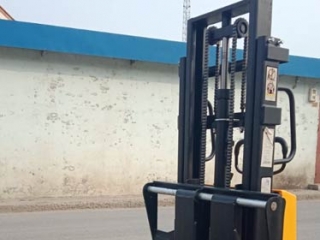 Semi-Electric Hydraulic Stacker Price Guide For WarehouseSemi-electric stackers fit short stacking in small warehouses. Prices vary by load, lifting height and battery, covering 1t,1.5t and 2t models for comparison.
Do you like ?0
Read more -
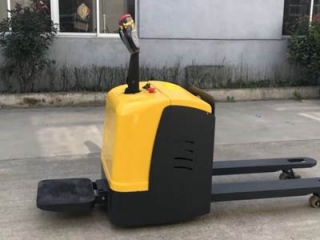 Operating Procedures for Ride-on Full Electric Pallet TruckRide-on electric pallet trucks suit long-distance and high-frequency warehouse handling. Standardize pre-operation inspection and workflow to eliminate risks and improve efficiency.
Do you like ?0
Read more -
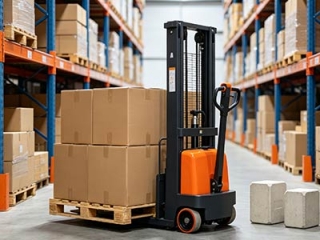 How to Choose Load Capacity for Manual Hydraulic StackerManual stacker selection requires considering load attenuation and offset load. Follow four scientific rules including safety margin and fork pallet matching for proper load specification.
Do you like ?0
Read more -
 Direct Source Factory for Small Electric Forklifts | NewnewtonBuying forklifts from source factories saves markup and speeds up after-sales service. Check qualifications carefully to distinguish real manufacturers from OEM traders.
Do you like ?0
Read more