How To Extend Battery Service Life For Semi-electric Stacker Trucks, 2026 Guide
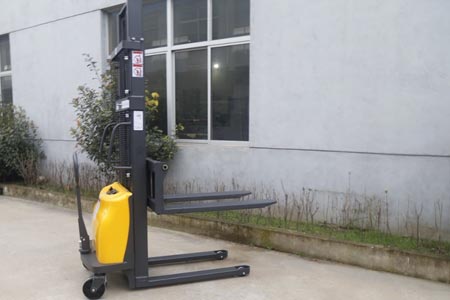
Semi-electric Stacker Trucks are widely adopted in small and medium warehouses. Nevertheless, all material handling equipment will develop faults after long-term operation, especially batteries, the core power component. With identical stacker trucks, some batteries remain stable for 3–5 years before replacement, while others start failing within just one year. This article shares proven Semi-electric Stacker Battery Maintenance methods to maximize battery service life.
Reference Service Lifespan (Under Standard Maintenance)
Lead-acid traction battery for semi-electric stacker trucks: Single-shift operation, 1000–1500 charge-discharge cycles, service life 3–5 years. Source: White Paper on Industrial Warehouse Traction Batteries 2025
LiFePO4 battery for semi-electric stacker trucks: 2000~3000 cycles, 5–8 years service life with proper operation. Source: Global Material Handling Power System Report, RUNTX Machinery, 2026
Service Life Loss Caused By Improper Operation
Regular deep discharge before charging: Reduce battery lifespan by 35%–50%
Frequent overcharging & charging under high temperature: Reduce battery lifespan by 25%–35%
Long-term idle storage without supplementary charging: Lead-acid batteries lose up to 45% capacity within 3 months Source: 2025 Battery Working Condition Test Report, Berance Power Supplier
Fault Distribution of Lead-acid Batteries on Semi-electric Stacker Trucks
Deep discharge & overcharge (41%) > Low electrolyte & sulfation (23%) > Corroded terminals (16%) > Idle undercharged storage (12%) > Mismatched charger (8%) Source: Newnewton internal after-sales maintenance records, 537 battery service tickets from 2024–2026
Lead-acid Battery Maintenance
Charge & Discharge Management (Top Priority)
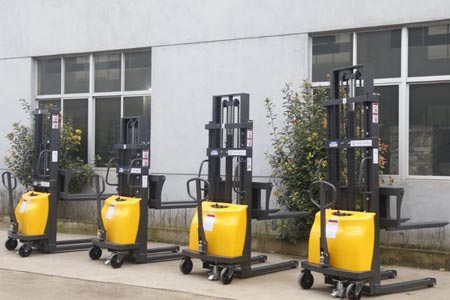
Avoid deep discharge: Start charging immediately when residual capacity reaches 30%; never run the truck until full shutdown.
Standard charging duration: 8–10 hours. After the charger turns green, add 0.5 hours floating charge in summer, 1–2 hours in winter. Continuous charging over 12 hours is forbidden.
Complete charging within 12 hours after discharge to prevent permanent plate sulfation.
Electrolyte Level Management
Visual inspection every week under normal temperature; shorten to every 5 days in hot summer.
Standard liquid level: 10–15 mm above plates. Only add distilled / deionized water; tap water and dilute sulfuric acid are prohibited.
Refill water only after the battery is fully charged.
Terminal & Environment Maintenance
Clean white corrosive oxide on battery terminals monthly. Coat terminals with vaseline after drying to prevent rust.
Charging area must be ventilated, ambient temperature controlled between 5℃ and 35℃. Do not charge under direct sunlight.
Conduct equalization charging once per month to ease uneven voltage among single cells.
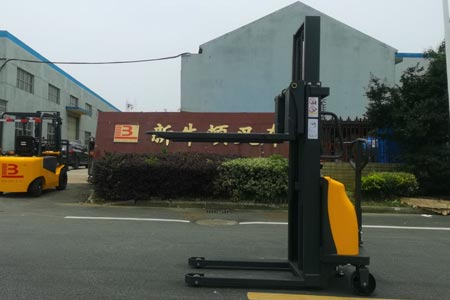
Long-term Idle Storage Standard
If idle for more than 14 days, fully charge lead-acid batteries before storage. Recharge every 15 days to avoid sulfation caused by undercharge.
Maintenance Specifications For LiFePO4 Semi-electric Stacker Trucks
Sealed maintenance-free lithium batteries require totally different maintenance strategies. Do not apply lead-acid maintenance rules.
Charge & discharge: Avoid continuous operation below 20% capacity; long-term full-charge storage is not recommended.
Charging tips: Let the battery cool down after heavy-duty operation before charging. Charging below 0℃ is forbidden.
Idle storage rule: Maintain 50%–60% capacity for long downtime, store in dry ventilated space. Recharge every 3 months.
Daily inspection: Only check for bulging casing and loose wiring plugs. Do not add water or perform equalization charging. Cell balancing is automatically completed by BMS.
If you follow all above maintenance standards, you can effectively protect your stacker batteries, extend service life and cut replacement costs.
-
 Direct Source Factory for Small Electric Forklifts | NewnewtonBuying forklifts from source factories saves markup and speeds up after-sales service. Check qualifications carefully to distinguish real manufacturers from OEM traders.
Do you like ?0
Read more -
 5 Troubleshooting Reasons for Slow Lifting Speed of Electric ForkliftSlow fork lifting is a common electric forklift fault. Check battery voltage, hydraulic oil, filter, pump and multi-way valve to quickly locate the root cause.
Do you like ?0
Read more -
 Lithium-ion Warehouse Forklift Brands Review, Advantages and DisadvantagesLithium forklift brands vary greatly, including major manufacturers, original factories and dealers. Compare Heli, Hangcha, Noblift, BYD to select models matching your budget.
Do you like ?0
Read more -
 Price Reference of Hydraulic Dock Leveler for Warehouse Loading BayHydraulic dock levelers include fixed and mobile types with large price gaps. Load capacity, steel and hydraulic systems are key factors to consider for procurement.
Do you like ?0
Read more -
 Charging & Storage Taboos for Lithium-ion Double Pallet Electric TruckLithium battery double pallet trucks suffer heavy discharge under load. Follow charging, storage and operation rules to slow cell aging and cut replacement costs.
Do you like ?0
Read more -
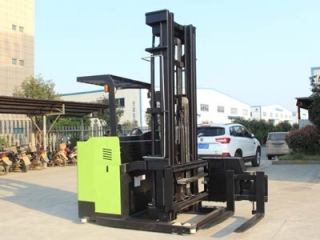 High-level Stacking Safety Notes for Electric Three-way ForkliftThree-way electric forklifts face collision and falling risks in narrow aisles. Follow standard operating procedures for pre-check, traveling, stacking and finishing to ensure warehouse safety.
Do you like ?0
Read more