Semi-electric Stacker VS Manual Stacker Full Pros & Cons Comparison 2026
This article delivers a comprehensive Semi-electric Stacker VS Manual Stacker Pros & Cons Comparison, offering clear reference for procurement personnel to fully distinguish the two stackers and make all-round equipment selection decisions.
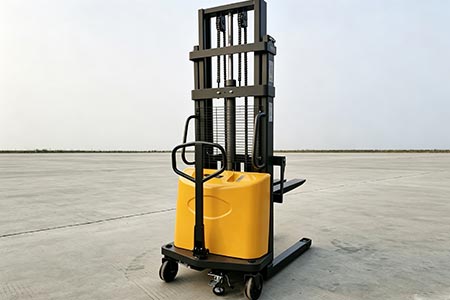
Semi-electric Stacker
Advantages
Lifting relies on motor-driven hydraulic system instead of manual pumping, effectively reducing operator fatigue during frequent stacking operations. Uniform and stable lifting speed shortens stacking cycle time, ideal for workplaces with repetitive pallet stacking tasks. Customizable extra-high mast options, with maximum lifting height generally over 3 meters, compatible with multi-layer high-level rack storage. Most models are equipped with sealed lithium batteries requiring no regular fluid replenishment; daily maintenance only includes wheel cleaning and pipeline inspection. Compact overall size fits standard warehouse aisles and freight elevators, taking up minimal storage space when idle.
Disadvantages
Built-in motors and batteries increase total dead weight. Heavy pushing resistance occurs under full load, making it unsuitable for long-distance cargo transportation. Equipped with extra electric parts including controllers, wiring harnesses and drive motors, bringing hidden electrical failure risks that pure mechanical manual stackers do not have. Operation relies on battery power. Electric lifting stops once power drains, requiring dedicated charging time; limited application in sites without stable power supply. Higher upfront procurement cost. Identical load capacity and basic lifting height models cost far more than manual hydraulic stackers. Strict ground condition requirements. Potholed floors, numerous thresholds and long slopes raise pushing resistance and accelerate wear of wheels and chassis.
Manual Hydraulic Stacker
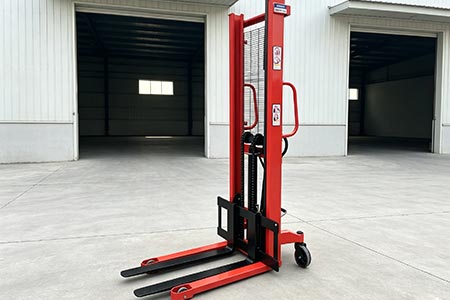
Advantages
Pure mechanical hydraulic structure without electrical components, low purchase cost with light budget pressure for occasional low-frequency usage. Power-free operation allows normal work during power outages, in areas without charging sockets and explosion-proof workshops, boasting wider applicable scenarios. No battery counterweight leads to light overall weight. Flexible to push under empty or light load, perfect for tight spaces and container internal handling. Easy daily maintenance. Wearing parts only consist of oil seals, rollers and pin shafts; universal spare parts support self-replacement repair. Few failure points and stable mechanical performance. The truck can still operate normally after long-term idle storage.
Disadvantages
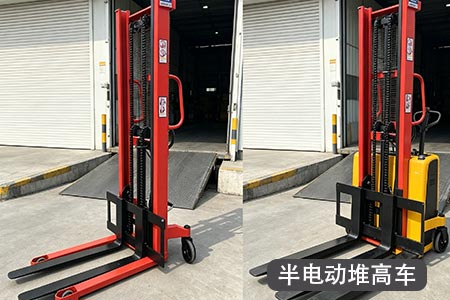
Lifting fully depends on manual foot pumping. Heavier loads and higher lifting heights demand more pumping cycles, causing severe fatigue after long-hour operation. Slow lifting progress with tiny height gain per pump stroke, extending total handling time for mass inbound and outbound cargo. Limited maximum lifting height. Standard versions top out at 2.5m; high-lift models become extremely heavy and hard to operate, unable to match racks with three or more tiers. Long-term frequent heavy-duty use speeds up abrasion of hydraulic pumps and cylinders, increasing the occurrence of oil seal leakage failures. Continuous pumping under high full load triggers frame shaking and weak stability of stacked goods at height.
In conclusion, semi-electric stackers and manual stackers have respective strengths to satisfy diverse warehouse operation demands. The above clear Semi-electric Stacker VS Manual Stacker Pros & Cons Comparison provides solid support for your equipment procurement.
-
 Direct Source Factory for Small Electric Forklifts | NewnewtonBuying forklifts from source factories saves markup and speeds up after-sales service. Check qualifications carefully to distinguish real manufacturers from OEM traders.
Do you like ?0
Read more -
 5 Troubleshooting Reasons for Slow Lifting Speed of Electric ForkliftSlow fork lifting is a common electric forklift fault. Check battery voltage, hydraulic oil, filter, pump and multi-way valve to quickly locate the root cause.
Do you like ?0
Read more -
 Lithium-ion Warehouse Forklift Brands Review, Advantages and DisadvantagesLithium forklift brands vary greatly, including major manufacturers, original factories and dealers. Compare Heli, Hangcha, Noblift, BYD to select models matching your budget.
Do you like ?0
Read more -
 Price Reference of Hydraulic Dock Leveler for Warehouse Loading BayHydraulic dock levelers include fixed and mobile types with large price gaps. Load capacity, steel and hydraulic systems are key factors to consider for procurement.
Do you like ?0
Read more -
 Charging & Storage Taboos for Lithium-ion Double Pallet Electric TruckLithium battery double pallet trucks suffer heavy discharge under load. Follow charging, storage and operation rules to slow cell aging and cut replacement costs.
Do you like ?0
Read more -
 High-level Stacking Safety Notes for Electric Three-way ForkliftThree-way electric forklifts face collision and falling risks in narrow aisles. Follow standard operating procedures for pre-check, traveling, stacking and finishing to ensure warehouse safety.
Do you like ?0
Read more