
Differences Between Full Electric & Semi Electric Self-loading Stacker Compariso
Self-loading stackers, also known as truck-mounted forklifts, feature compact portable design and have become essential tools for cargo loading, unloading and truck transportation. Two mainstream versions are available on the market: semi electric and full electric models. This article explains the Differences Between Full Electric & Semi Electric Self-loading Stacker to simplify your procurement decision.
Basic Definition & Power Structure
Semi Electric Self Loading Stacker
Only the lifting system is equipped with an electric hydraulic power unit. All moving actions including forward, backward and positioning rely entirely on manual pushing and pulling, without drive motors or travel controllers. The battery only supplies power for lifting, featuring small capacity and light overall weight. Operators push manually to shift position and align with truck beds.

Full Electric Self Loading Stacker
Dual motors control both lifting and travelling. Forward, reverse and steering are fully electronically operated with no manual pushing required. Equipped with drive wheels, speed regulation controllers and large-capacity power batteries. It supports automatic truck climbing; operators only manipulate the handle to drive the unit onto and off truck containers with minimal physical labor.
Labor Burden Comparison
Semi electric: Labor is saved only during lifting. Shifting, truck alignment and cargo movement inside containers all depend on manpower. Heavy pushing resistance occurs with full loads, long-distance transfer or ramps, causing operator fatigue under high daily unloading frequency.
Full electric: Integrated electric control for travel and lifting. Operators simply adjust speed via the handle even with loaded pallets or frequent movement inside truck beds, drastically cutting physical exhaustion for long continuous single-person shifts.
Loading & Unloading Efficiency
Semi electric: Manual force is required for every alignment and cargo relocation, extending working time for frequent truck loading/unloading. Suitable for low daily unloading volume.

Full electric: Steady electric travel and automatic truck climbing eliminate manual boosting. Consistent transfer speed inside and outside containers enables handling more delivery vehicles within the same time frame, ideal for high-frequency urban distribution and multi-branch delivery.
Truck Climbing Performance
Semi electric: Manual assistance is mandatory to climb onto truck beds. Climbing difficulty rises sharply with high truck chassis or ground thresholds.
Full electric: Built-in drive motor delivers independent power to climb on and off containers. Minor ramps and thresholds require no human effort, compatible with all box trucks and flatbed delivery vehicles.
Safety Electronic Control System
Semi electric: Only fitted with lifting burst valve and emergency stop switch, without electronic protection for travelling.

Full electric: Multi-layer electronic safety protections including ramp anti-slip, overload power cut, travel speed limit and auto stop upon handle release. Higher stability during climbing and in-container operation, lowering risks of cargo falling and vehicle sliding.
Storage & Portability
Semi electric: Light dead weight, easy for one person to push and store in truck corners.
Full electric: Extra drive motor and large battery increase overall weight; electric travel function is needed when moving for storage.
Selection Suggestions
Choose semi electric self-loading stacker if: Low daily delivery volume, small single unloading quantity; short delivery routes without frequent truck boarding; flat ground free of thresholds and long ramps; limited budget, only occasional replenishment for stores and short-distance sporadic loading/unloading.
For heavier and more intensive working conditions, the full electric self-loading stacker is the ideal choice without hesitation.
-
 Functions Of Extendable Platform On Self-Propelled Scissor LiftFixed aerial platforms need frequent repositioning. Self-propelled lifts with extending decks expand working reach without moving the machine, ideal for factory piping and high warehouse light maintenance.
Do you like ?0
Read more -
 What To Note For Winter Starting Of Internal Combustion ForkliftDiesel forklifts suffer hard starting and rough idling in cold weather due to fuel, battery and lubrication issues. Switch to low-freezing diesel, preheat and inspect batteries, oil and cooling systems.
Do you like ?0
Read more -
 What Are The Benefits Of Free Lift On Stand-On Reach StackerFree lift feature of reach stackers is vital for low-height warehouses. Only forks rise at first without raising the outer mast, avoiding overhead beams for low warehouses and container loading.
Do you like ?0
Read more -
 Is Walkie Counterbalance Stacker Suitable For Cold Storage UsePedestrian counterbalance stackers work in cold storage only with low-temp upgrades on electrics, battery, hydraulics and anti-slip tires. Follow cold room rules to avoid condensation and skidding issues.
Do you like ?0
Read more -
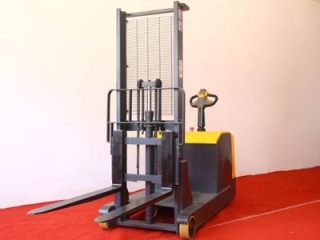 Is Stand-On Counterbalance Stacker Suitable For Floors With Height DifferenceHydraulic oil of manual stackers shall be inspected regularly based on operation frequency. Maintain standard oil level. Replace contaminated oil with 46# anti-wear hydraulic oil and bleed air during oil change.
Do you like ?0
Read more -
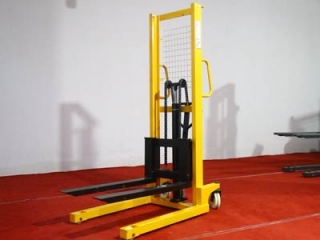 Manual Hydraulic Stacker: Hydraulic Oil Maintenance & Replacement GuideHydraulic oil for manual stackers needs regular checks with no fixed cycle. Check frequency depends on usage. Keep oil level in range; replace dirty oil with 46# anti-wear hydraulic oil and bleed air properly.
Do you like ?0
Read more








