
Battery Maintenance Guide for Onboard Electric Self-elevating Trucks
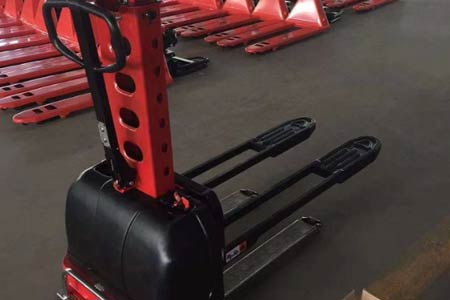
It will be too late if you find frequent power loss when using a self-elevating truck. This symptom means the battery has been damaged. To reduce battery failure rate and extend service life, you can master these self-elevating truck battery maintenance tips to improve daily equipment maintenance skills.
The most important step is proper charging management. Do not recharge until the battery is fully drained. Deep discharge will damage plates and cause power loss. Top up the battery promptly after each operation. The charging area should be ventilated and dry, away from high temperature or open rain exposure. Observe the charger status during charging. Cut off power immediately for inspection once abnormality occurs. Never use mismatched chargers.
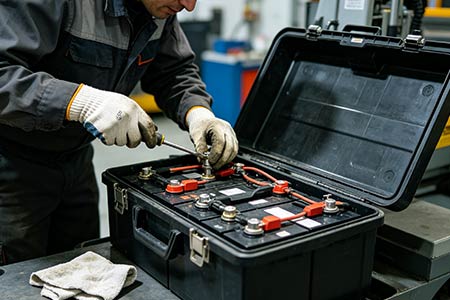
Regularly inspect the battery appearance. Check whether wiring terminals are loose or oxidized. Dirty terminals will increase resistance and cause poor connection. The battery may show full power while draining rapidly during operation. Clean contact surfaces and tighten wires when oxidation appears. Also check if the casing is bulging or leaking. Stop using the battery immediately if these problems exist.
Control working load properly. If the onboard electric self-elevating truck is overloaded for a long time, the battery will discharge with large current continuously, accelerating power consumption and leading to frequent power loss. Battery activity decreases under low temperature and available capacity drops. Reserve sufficient power in advance and avoid continuous operation with insufficient power.
For long-term storage, recharge the battery periodically. Batteries will self-discharge while standing idle. Permanent damage from power loss will happen if the battery stays uncharged for a long time. Keep the storage place away from moisture and direct sunlight, and keep the battery surface clean and dust-free.
If the battery of onboard electric self-elevating truck is severely aged and still drains quickly after repeated maintenance, you can contact us for professional inspection and matched battery purchasing solutions.
-
 3-step Troubleshooting for Reduced Load Capacity of Manual Hydraulic TruckManual hydraulic pallet trucks often fail to lift or sink due to oil shortage, pressure leakage and air intake. Three-step inspection can quickly restore the equipment’s load-bearing performance.
Do you like ?0
Read more -
 What is Pedestrian Counterbalance Stacker & Basic Operating StepsPedestrian counterbalance stackers with rear weights fit narrow aisles with high cost performance. Standard operating procedures improve warehouse efficiency and ensure operational safety.
Do you like ?0
Read more -
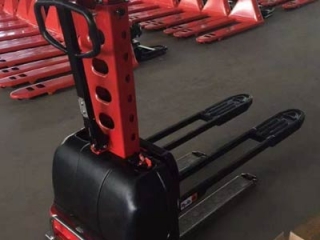 Battery Maintenance Guide for Onboard Electric Self-elevating TrucksFrequent power loss on self-loading stackers is mainly caused by improper battery maintenance. Standardize daily charging, inspection and storage to extend battery service life.
Do you like ?0
Read more -
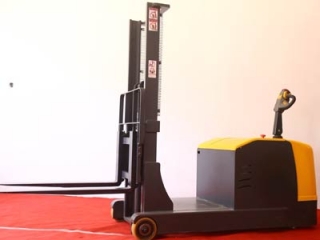 4 Dimensions Comparison: Reach Stacker and Counterbalance Stacker for WarehouseReach stackers and counterbalance stackers differ greatly in structure and application. Compare aisle width, load capacity, scenarios and maintenance costs for accurate warehouse selection.
Do you like ?0
Read more -
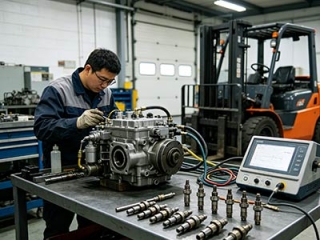 Causes of Black Smoke Failure of Outdoor Diesel Forklift & TroubleshootingBlack smoke from diesel forklift exhaust outdoors is mainly caused by insufficient fuel combustion. Distinguish temporary working conditions from persistent faults to reduce engine damage.
Do you like ?0
Read more -
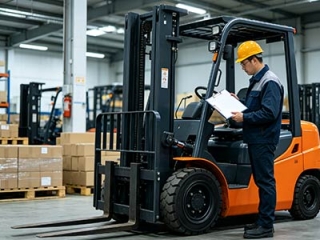 License Requirement for Warehouse Stand-on Counterbalance StackerWhether ride-on counterbalance stackers require operation certificates depends on equipment type. Operators need N1 forklift licenses for specified models to avoid regulatory risks.
Do you like ?0
Read more








