Causes of Black Smoke Failure of Outdoor Diesel Forklift & Troubleshooting
Black exhaust smoke is one of the most common faults when an outdoor working diesel forklift operates under heavy loads. It is necessary to clarify why does diesel forklift emit black smoke so as to eliminate faults in time. In most cases, the problem is caused by insufficient fuel combustion. Continuous faulty operation will lead to higher fuel consumption, reduced power performance, and even permanent engine damage, shortening the overall service life of the forklift.
Insufficient air supply is the primary cause. Outdoor working sites are usually dusty, which easily blocks the air filter and reduces air intake into the cylinder. Insufficient air leads to incomplete diesel combustion and obvious black exhaust smoke. For construction sites and gravel yards with heavy dust, the air filter inspection and replacement cycle should be shortened properly.
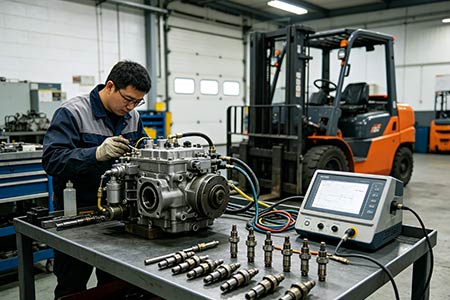
Abnormal fuel systems also cause black smoke failure. Worn or stuck fuel injectors will deteriorate fuel atomization, making diesel enter the cylinder in liquid droplets. Excessive oil supply from the high-pressure oil pump will also cause incomplete combustion. In addition, inferior diesel with many impurities is prone to oil circuit blockage and aggravates the black smoke problem.
Aging engine parts will further worsen the condition. Worn pistons and piston rings reduce cylinder compression pressure and combustion efficiency. Poor valve sealing also affects air intake. The black smoke phenomenon will be more serious when the outdoor working diesel forklift undertakes long-term heavy-load operation.
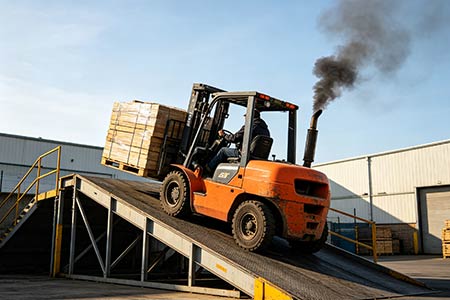
Working conditions and operating habits are also key factors. Long-term heavy-load climbing and frequent sharp acceleration will instantly increase fuel injection volume beyond the engine combustion capacity, resulting in temporary black smoke. This kind of transient smoke is normal and does not require maintenance after stable operation resumes.
During inspection, distinguish temporary smoke caused by working conditions from continuous faulty smoke. Check and replace the air filter first, confirm qualified diesel fuel, and test fuel injectors and high-pressure pumps. If no abnormality is found, further check cylinder pressure and valve tightness. Avoid long-time heavy-load operation before troubleshooting to prevent secondary damage.
Targeted inspection and maintenance can effectively reduce the black smoke failure rate of outdoor working diesel forklift. If you need professional diesel forklift maintenance guidance and fault solutions, feel free to contact us.
-
 3-step Troubleshooting for Reduced Load Capacity of Manual Hydraulic TruckManual hydraulic pallet trucks often fail to lift or sink due to oil shortage, pressure leakage and air intake. Three-step inspection can quickly restore the equipment’s load-bearing performance.
Do you like ?0
Read more -
 What is Pedestrian Counterbalance Stacker & Basic Operating StepsPedestrian counterbalance stackers with rear weights fit narrow aisles with high cost performance. Standard operating procedures improve warehouse efficiency and ensure operational safety.
Do you like ?0
Read more -
 Battery Maintenance Guide for Onboard Electric Self-elevating TrucksFrequent power loss on self-loading stackers is mainly caused by improper battery maintenance. Standardize daily charging, inspection and storage to extend battery service life.
Do you like ?0
Read more -
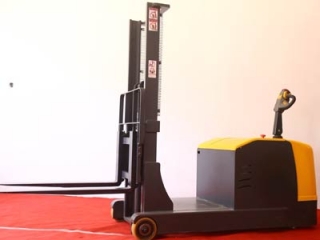 4 Dimensions Comparison: Reach Stacker and Counterbalance Stacker for WarehouseReach stackers and counterbalance stackers differ greatly in structure and application. Compare aisle width, load capacity, scenarios and maintenance costs for accurate warehouse selection.
Do you like ?0
Read more -
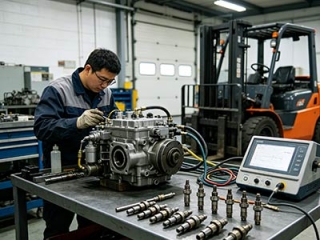 Causes of Black Smoke Failure of Outdoor Diesel Forklift & TroubleshootingBlack smoke from diesel forklift exhaust outdoors is mainly caused by insufficient fuel combustion. Distinguish temporary working conditions from persistent faults to reduce engine damage.
Do you like ?0
Read more -
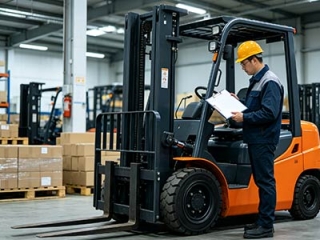 License Requirement for Warehouse Stand-on Counterbalance StackerWhether ride-on counterbalance stackers require operation certificates depends on equipment type. Operators need N1 forklift licenses for specified models to avoid regulatory risks.
Do you like ?0
Read more