4 Dimensions Comparison: Reach Stacker and Counterbalance Stacker for Warehouse
Many warehouse buyers struggle to choose between reach stacker and counterbalance stacker during equipment procurement. Although both machines complete pallet stacking tasks, they adopt different structural designs and fit completely different working conditions. This detailed reach stacker vs counterbalance stacker comparison covers four core dimensions to help warehouses make fast and accurate selection.
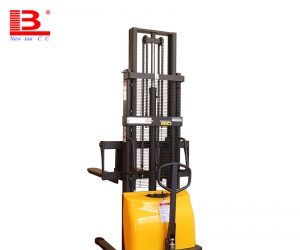
Aisle Space Occupation The reach stacker realizes pallet stacking through forward and backward movement of the mast without counterweight design. It features a small turning radius and adapts to narrow aisle warehouses, working smoothly even with compact shelf spacing. In contrast, the counterbalance stacker relies on rear counterweight to offset cargo weight, requiring a larger turning space. It demands wider warehouse aisles and is more suitable for open storage areas.
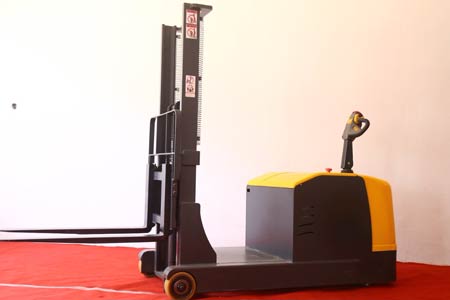
Load and Lifting Performance Under the same specification, the reach stacker supports higher lifting height and delivers better stability during high-level stacking, making it ideal for high-rack warehousing. The counterbalance stacker owns a heavy and stable chassis with strong ground grip, performing steadily in short-distance heavy-load handling. However, its maximum lifting height is generally lower, and body shaking is more obvious during high-level operation.
Applicable Scenarios The reach stacker is mainly used for three-dimensional shelf storage and high-position stacking scenarios, focusing on rack loading and unloading, while its long-distance transfer efficiency is average. The counterbalance stacker balances stacking and factory transportation capabilities. It can work indoors for warehouse stacking and support short-distance outdoor cargo transfer, featuring wider site adaptability.
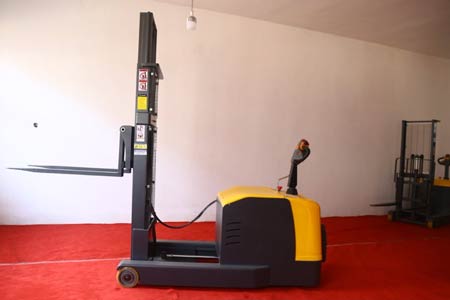
Procurement and Maintenance Cost As professional warehouse handling equipment, the stand-on full electric reach stacker has a complex hydraulic and mast structure, resulting in higher purchase cost and higher technical requirements for later maintenance. The counterbalance stacker has a simpler structure with highly universal accessories, lower upfront procurement cost and easier daily inspection and maintenance.
Warehouses can measure aisle width, shelf height and daily cargo weight before selection, and choose suitable equipment according to actual operation modes. If you are unsure about the most suitable stacking equipment for your warehouse, contact us with your working conditions to obtain professional selection solutions and quotation references.
-
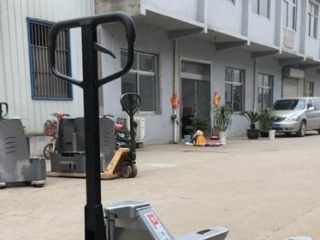 3-step Troubleshooting for Reduced Load Capacity of Manual Hydraulic TruckManual hydraulic pallet trucks often fail to lift or sink due to oil shortage, pressure leakage and air intake. Three-step inspection can quickly restore the equipment’s load-bearing performance.
Do you like ?0
Read more -
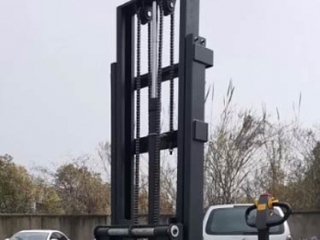 What is Pedestrian Counterbalance Stacker & Basic Operating StepsPedestrian counterbalance stackers with rear weights fit narrow aisles with high cost performance. Standard operating procedures improve warehouse efficiency and ensure operational safety.
Do you like ?0
Read more -
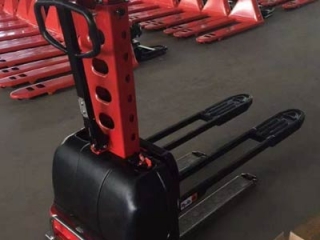 Battery Maintenance Guide for Onboard Electric Self-elevating TrucksFrequent power loss on self-loading stackers is mainly caused by improper battery maintenance. Standardize daily charging, inspection and storage to extend battery service life.
Do you like ?0
Read more -
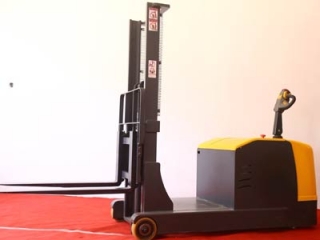 4 Dimensions Comparison: Reach Stacker and Counterbalance Stacker for WarehouseReach stackers and counterbalance stackers differ greatly in structure and application. Compare aisle width, load capacity, scenarios and maintenance costs for accurate warehouse selection.
Do you like ?0
Read more -
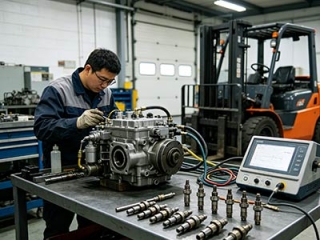 Causes of Black Smoke Failure of Outdoor Diesel Forklift & TroubleshootingBlack smoke from diesel forklift exhaust outdoors is mainly caused by insufficient fuel combustion. Distinguish temporary working conditions from persistent faults to reduce engine damage.
Do you like ?0
Read more -
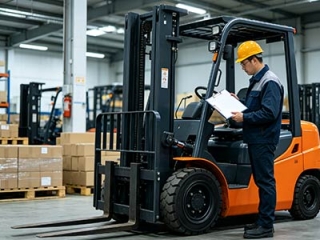 License Requirement for Warehouse Stand-on Counterbalance StackerWhether ride-on counterbalance stackers require operation certificates depends on equipment type. Operators need N1 forklift licenses for specified models to avoid regulatory risks.
Do you like ?0
Read more