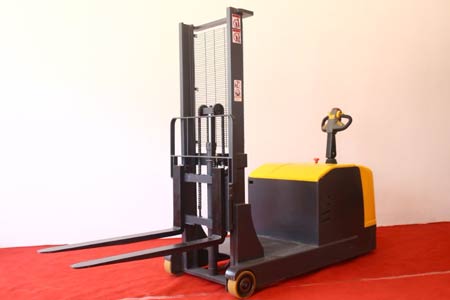
Stand-on counterbalance stacker realizes high stacking by rear counterweight, suitable for narrow aisle warehouses with double-side pallet access. Many buyers refer to various brand ranking lists during selection. However, most online rankings adopt inconsistent statistical standards. Some only calculate total sales without distinguishing equipment types. Therefore, you cannot simply rely on stand-on counterbalance stacker brand ranking to select a qualified stand-on counterbalance stacker manufacturer.
Limitations of brand ranking lists Most rankings count total sales of all forklift categories, without separate segmented data for stand-on counterbalance stacker. Some lists are paid promotion rather than real product quality evaluation. A famous brand’s good reputation on ordinary stackers does not mean its stand-on counterbalance models fit your warehouse working conditions. OEM products may also appear on ranking lists using brand names, while actual production and quality control are undertaken by subcontractors, leading to unstable quality.
Verify manufacturer qualification and production capacity Check whether the manufacturer owns production qualifications for industrial vehicles and if products have passed load tests. For export orders, verify certificates such as CE. Confirm whether the factory independently produces frames and masts or merely assembles outsourced parts. Manufacturers with complete whole-machine production capacity provide stable quality control and support non-standard customization. They can adjust configurations according to warehouse aisle width and lifting height.
Check core component configuration Counterweight, mast, hydraulic system and electric control system are four core parts of counterbalance stackers. Counterweight mass and layout directly affect anti-tipping performance during high lifting. Mast steel thickness and welding technology determine anti-deformation capacity under high stacking conditions. Hydraulic power units and seals reduce oil leakage during long-term lifting. Electric control systems control travel speed and corner speed limit to guarantee operation safety. For lithium versions, check battery protection grade and cycle life. Lithium configuration is preferred for high-frequency operations.
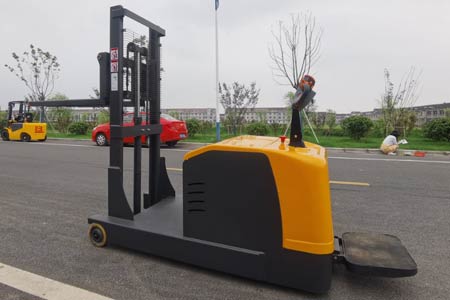
Evaluate adaptability for on-site working conditions Select stand-on counterbalance stacker according to warehouse aisle width, ground flatness, maximum lifting height and daily operation frequency. Even well-known brands cannot work normally if the minimum turning radius fails to match the aisle. Load attenuation exists during high stacking. Reserve safety load margin instead of only referring to the rated load on nameplates.
Assess after-sales service and spare parts supply Confirm the whole machine warranty period and local maintenance sites before purchase. Wheels, oil seals and contactors are wearing parts for stackers. Reliable manufacturers maintain sufficient spare parts inventory and quick after-sales response to shorten equipment downtime. Once small-brand models stop production, replacement spare parts will be hard to source and raise long-term maintenance costs.
To sum up, stand-on counterbalance stacker brand ranking is only a preliminary reference instead of decisive criteria. Prioritize matching warehouse working conditions, verify product configuration, production qualification and after-sales system. Compare samples and real project cases comprehensively to pick durable stand-on counterbalance stacker from a reliable stand-on counterbalance stacker manufacturer and achieve cost reduction and efficiency improvement in warehouses.
-
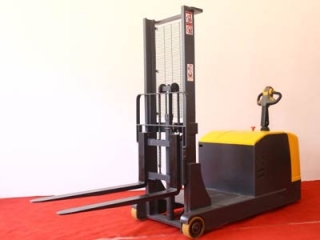 Is Stand-on Counterbalance Stacker Brand Ranking Reliable?When selecting ride-on counterbalance stackers, brand lists are only for reference. Verify qualifications, core parts and after-sales supply based on warehouse conditions.
Do you like ?0
Read more -
 Core Components Check for Light Electric Walkie StackerWhen choosing walkie stackers, durability relies on four key parts: mast, frame, hydraulic system and battery, instead of merely appearance.
Do you like ?0
Read more -
 Semi-Electric Hydraulic Stacker Price Guide For WarehouseSemi-electric stackers fit short stacking in small warehouses. Prices vary by load, lifting height and battery, covering 1t,1.5t and 2t models for comparison.
Do you like ?0
Read more -
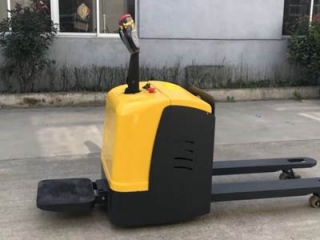 Operating Procedures for Ride-on Full Electric Pallet TruckRide-on electric pallet trucks suit long-distance and high-frequency warehouse handling. Standardize pre-operation inspection and workflow to eliminate risks and improve efficiency.
Do you like ?0
Read more -
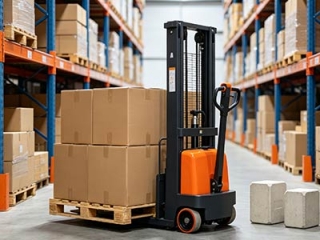 How to Choose Load Capacity for Manual Hydraulic StackerManual stacker selection requires considering load attenuation and offset load. Follow four scientific rules including safety margin and fork pallet matching for proper load specification.
Do you like ?0
Read more -
 Direct Source Factory for Small Electric Forklifts | NewnewtonBuying forklifts from source factories saves markup and speeds up after-sales service. Check qualifications carefully to distinguish real manufacturers from OEM traders.
Do you like ?0
Read more