
4 Core Differences Between Reach and Counterbalance Electric Stackers
Many warehouse purchasers lack clear judgement for electric stacker selection guide. A detailed stand-on reach vs counterbalance stacker comparison allows you to fully weigh scenario adaptability, performance and cost to select ideal warehouse stacking equipment.
Aisle Space Requirement The stand-on reach stacker adopts a telescopic mast design. The main body does not need to enter the shelf aisle, occupying narrow working space and fitting dense high-level stereoscopic warehouses perfectly. This core advantage is an important reference for electric stacker selection guide. By contrast, the stand-on counterbalance stacker relies on rear counterweight to maintain stability. The whole vehicle needs to drive into the aisle, requiring wider passage and turning space, which is not suitable for narrow-channel intensive storage scenarios.
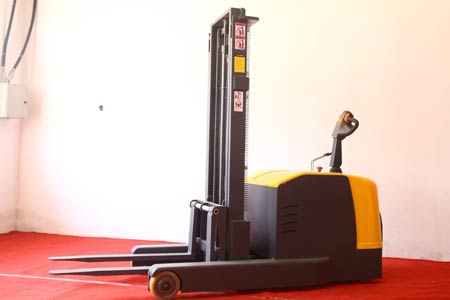
Lifting Performance and Load Attenuation The reach stacker bears goods through front outriggers, with controllable load attenuation at high lifting heights and stable high stacking performance, making it suitable for frequent high-lift operations. The counterbalance stacker has no front outriggers, supporting double-sided pallet access without pallet bottom restrictions. Nevertheless, higher lifting height brings more serious load attenuation. Reserving enough safety margin is a key principle in stand-on reach vs counterbalance stacker comparison.
Floor and Pallet Adaptability Equipped with front support legs, the reach stacker requires flat ground and open-bottom pallets, with strict limits on site conditions and pallet types. The counterbalance stacker has no outrigger restrictions, compatible with single-sided, double-sided and special pallets, and adapts to ordinary ground environments with stronger flexibility. Checking on-site conditions is indispensable in electric stacker selection guide.
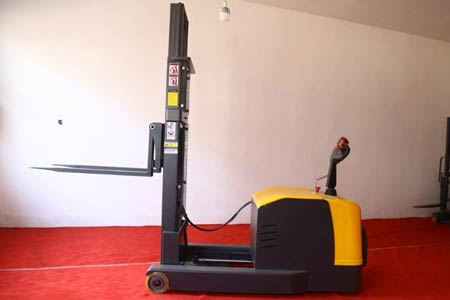
Procurement and Maintenance Cost With the same load capacity and lifting height, the reach stacker has a complex telescopic mast and hydraulic structure, leading to higher purchase price and complicated later maintenance. The counterbalance stacker features a simple overall structure, highly universal accessories, low failure rate and lower operation cost, which is more suitable for warehouses with limited budgets and simple working conditions.
In short, professional stand-on reach vs counterbalance stacker comparison covers aisle demand, high-lift performance, site adaptability and operating cost. Following a scientific electric stacker selection guide helps match suitable equipment and improve warehouse handling efficiency. Leave your aisle width, maximum lifting height and cargo load to get professional model recommendation.
-
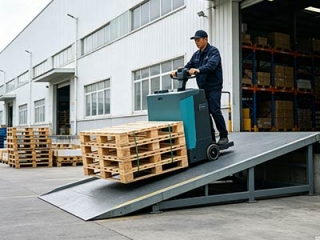 DC vs AC Drive for Walk-behind Lithium Pallet Truck Principle IntroductionWalk-behind electric pallet trucks have DC and AC drives affecting power and lifespan. DC costs less while AC offers stronger climbing and longer service.
Do you like ?0
Read more -
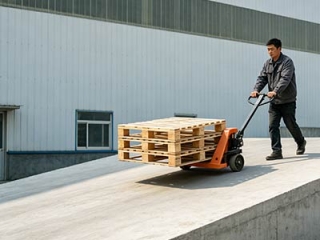 Risks of Using Manual Pallet Jack on Ramps & Safety TipsManual pallet trucks carry safety risks on ramps. They are only for slopes within 5%. Control load and operation, and avoid slippery steep slopes.
Do you like ?0
Read more -
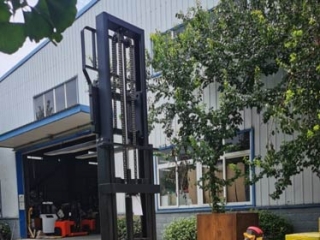 5 Practical Features of Walk-behind Counterbalance Stacker for Narrow WarehouseWalk-behind counterbalance stackers have no front outriggers. Compact for narrow aisles, they handle various pallets with stable lithium battery power.
Do you like ?0
Read more -
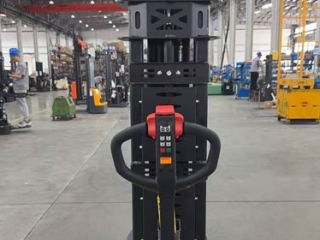 3 Steps to Troubleshoot Lifting System of Self-loading Truck ForkliftElectric self-loading stackers suffer lifting faults from bumps. Check power supply, hydraulic lines and control valves for quick basic troubleshooting.
Do you like ?0
Read more -
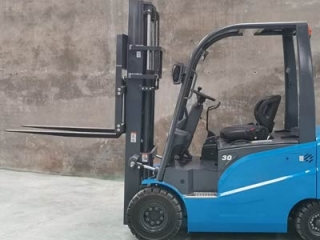 3 Ton Diesel Forklift Market Price & Influencing Factors3 ton diesel forklifts serve outdoor heavy loads. Its price relates to mast, engine and attachments. Distinguish bare unit price and check emission standards.
Do you like ?0
Read more -
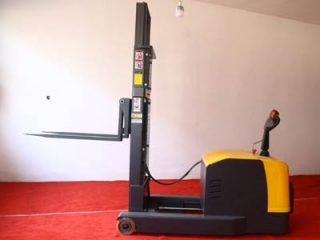 4 Core Differences Between Reach and Counterbalance Electric StackersRide-on reach stackers and counterbalance stackers differ in aisle, high-lift performance and maintenance. Select models by warehouse and pallet parameters.
Do you like ?0
Read more








