Can manual hydraulic stacker be used with oil leakage? Some warehouse owners think slight oil seepage will not affect lifting and plan to postpone maintenance. However, hydraulic oil transfers pressure, and leakage will trigger a chain of problems with rising risks during operation.
At the slight seepage stage, seals of cylinders or valves have aged and sealing gaps become larger. The machine cannot hold pressure while lifting, leading to weak lifting and automatic lowering under load. If goods are raised high, uncontrolled fork drop may cause pallets and materials to fall, which can easily injure workers and damage goods.
As leakage worsens, continuous hydraulic oil loss reduces lubrication inside the pump. It accelerates wear on cylinder walls and valve spools. A simple seal replacement may turn into full hydraulic assembly replacement, and repair costs rise sharply.
Spilled hydraulic oil leaves slippery stains on the floor. Workers may slip when walking or moving equipment, and oil stains are hard to clean. Dust and iron filings stick to oil and enter the hydraulic circuit, scratching cylinder walls and causing permanent damage. In food and raw material storage zones, oil drips can contaminate goods and cause cargo loss.
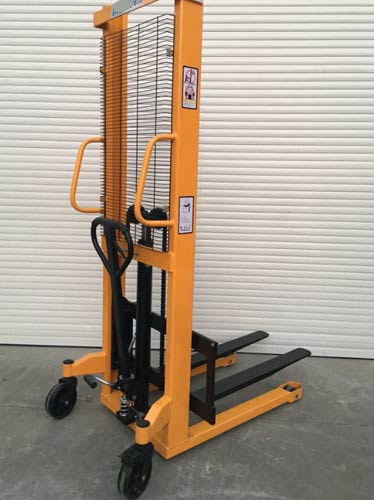
Stop heavy-load operation immediately once oil leakage is found. Check the leakage point to confirm whether it is caused by loose pipe joints, aged seals or scratched cylinder surfaces.
For small warehouse hydraulic stacker, tighten loose joints and test. Replace matching oil seals if seals are damaged. If the cylinder wall is scratched, continuous repair is not recommended to prevent repeated pressure loss. Refill hydraulic oil of the same specification after repair. Test lifting cycles without load and confirm stable pressure holding before reuse.
FAQ
Q: Can I use it temporarily without load if only a little oil seeps out?
A: Not recommended. Load dropping cannot be seen under no-load condition, and pressure failure risk appears once loaded.
Q: Can I buy any hydraulic oil to refill?
A: Choose matched hydraulic oil. Mixing oil of different viscosity speeds up seal damage.
Q: Will leakage happen again after repair?
A: Stable performance after replacement if only oil seals are aged. High recurrence risk if cylinder walls are scratched.
-
 Wholesale Electric Stacker Directly From Chinese ManufacturerNewnewton is a direct manufacturer of electric stackers, supplying stock, custom, OEM and full-container export orders with complete documents.
Do you like ?0
Read more -
 What Are the Fixing Methods for Truck-Mounted ForkliftTruck-mounted forklifts may shift during transit. Use crossed straps, anchor chains and steel stops together with forks lowered and power off.
Do you like ?0
Read more -
 Best Pallet Stacker: How to Choose the Right Pallet Stacker for Your WarehouseDo not buy stackers only by price. Watch load derating, aisle size and pallet fit. Check load curves and site conditions to avoid mistakes.
Do you like ?0
Read more -
 Narrow Aisle Warehouse Selection: Advantages of Small Walkie StackerCompact walkie electric stackers suit old warehouses with narrow aisles around 2.2m. Measure clear aisle width and stacking parameters before selection.
Do you like ?0
Read more -
 Hydraulic Semi-Electric Stacker | Price & Configuration Guide1.5t semi-electric stackers have big price gaps from battery, mast steel, hydraulic unit and frame. Compare full specs instead of rated capacity only.
Do you like ?0
Read more -
 Can Manual Hydraulic Stacker Be Used With Oil LeakageStop using leaking manual stackers. Oil leakage causes load dropping, part wear and slippery floors, bringing safety risks especially in food warehouses.
Do you like ?0
Read more