Hydraulic Dock Ramp: Fixed or Mobile Type for Warehouse Loading
Hydraulic dock ramp connects trucks and warehouse loading docks. Many buyers cannot tell the difference between fixed and mobile hydraulic dock ramp, which leads to mismatched equipment or installation problems after purchase. There are clear boundaries for their application scenarios. How to choose between fixed and mobile loading ramp? This article explains it clearly.
The fixed hydraulic dock ramp is embedded inside the dock foundation and integrated with the platform. Its platform height is adjusted by the hydraulic system for fixed loading spots. It features heavy load capacity and stable operation.
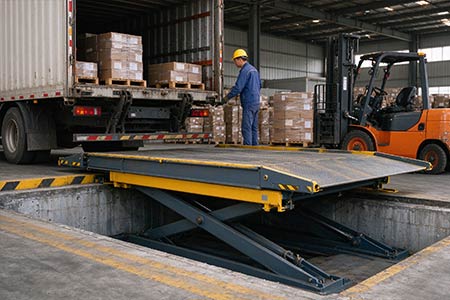
It suits factories with fixed docks and frequent truck arrivals, such as finished goods warehouses and logistics transfer docks. It can handle dozens of loading cycles daily with low failure rate under heavy-duty use. Its disadvantage is civil work required for foundation excavation, longer installation time, and it cannot be relocated after installation, serving only one dock.
The mobile hydraulic dock ramp requires no civil construction. Fitted with wheels at the bottom, it can be towed by forklifts to connect trucks anywhere loading is needed. It works for sites without permanent docks and scattered loading points, such as temporary yards, partner factories and multiple separate loading gates. Its strengths are flexibility, low upfront cost and fast delivery, ready for use once received. Its limitation is lower maximum load and faster wear under continuous high-frequency work. Anti-slip fixation is required for every use with extra safety attention.
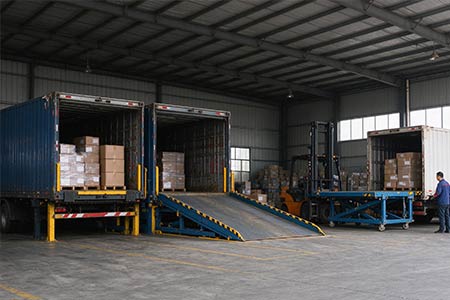
Two simple rules support your selection. Pick the fixed model if loading spots stay unchanged with large daily throughput. Choose the mobile one for no dock, variable loading positions or occasional temporary loading. Check the height range of truck decks as well, since the two ramp types have different adjustment limits to match your regular vehicles.
Some factories buy both types of hydraulic dock ramp. Fixed units on main docks sustain daily turnover, while mobile ones stand by for unexpected shipments, balancing stability and flexibility. Contact us if you need customized purchasing plans for your warehouse.
-
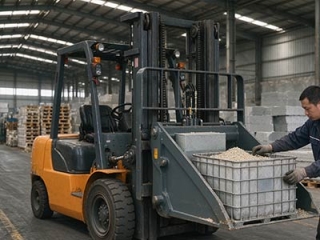 Customized Forklift Attachments to Meet Diverse Warehouse DemandsCustom forklift attachments handle irregular goods like pipes and rolls. Check gravity and load curve to avoid risks from shifted load center.
Do you like ?0
Read more -
 Hydraulic Dock Ramp: Fixed or Mobile Type for Warehouse LoadingFixed and mobile hydraulic dock levelers differ greatly in installation, load and flexibility. Match your dock, frequency and site to avoid mismatches.
Do you like ?0
Read more -
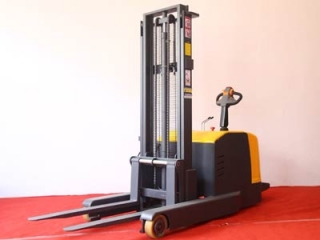 Stand-on Electric Reach Stacker Solution for Dense Racking Automated WarehouseStand-on reach stackers help new material warehouses expand storage slots without heavy construction. The telescopic mast cuts aisle width for dense racks.
Do you like ?0
Read more -
 Legless Walk Stacker Solve Space Limits for Fixed Warehouse RacksLegless walkie counterbalance stackers suit renovated old warehouses. They fit narrow aisles and closed-bottom pallets without rack modification.
Do you like ?0
Read more -
 AGV Forklift Fork Alignment Error Causes and Site Working Condition NotesAGV forklifts rely on sensors for auto fork alignment. Positioning is affected by site conditions. Understand alignment logic and control surroundings to reduce failures.
Do you like ?0
Read more -
 How Does Truck-Mounted Self-Lifting Stacker Work for City DeliveryLight electric self-loading stackers let one driver load pallets inside trucks without tailgates, yet they have limits on load, space and working conditions.
Do you like ?0
Read more