AGV Forklift Fork Alignment Error Causes and Site Working Condition Notes
Will the fork alignment of AGV forklifts go wrong and what working conditions affect it? Different from manual operation, the AGV autonomous forklift completes automatic fork alignment with sensors and algorithms. Its positioning accuracy is vulnerable to site environment interference. Many smart warehouses suffer from alignment deviation and pallet insertion failure at the initial launch stage and require repeated debugging for stable operation. Mastering the automatic fork alignment principle of AGV forklift helps you avoid these troubles.
There are three main core positioning methods for AGV forklift alignment: laser SLAM natural navigation, QR code navigation and visual recognition. Laser navigation builds models based on environmental contours, QR code navigation relies on landmark coordinates, and visual solutions directly identify pallet features. After the system calculates the pallet’s position and angle, it automatically adjusts the vehicle posture and controls the forks to insert into pallet openings at a steady speed.
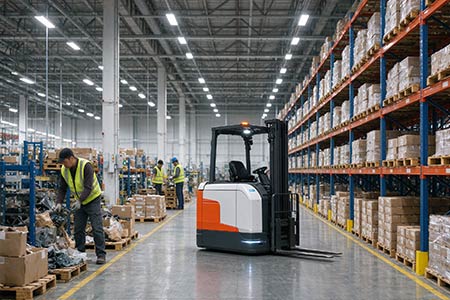
In one raw material smart warehouse, the buyer only focused on the nominal accuracy of equipment and ignored stacked goods beside racks. Frequent alignment failures occurred after commissioning. On-site inspection showed randomly stacked cartons blocked the contour scanned by laser, which shifted the rack coordinates recognized by the algorithm and caused fork offset.
Ground conditions are another major influencing factor. Ground joints, pits, dust and slippery surfaces bring cumulative errors to the AGV odometer, miscalculating driving distance and gradually causing alignment drift. Pallet status also matters greatly. Deformed, damaged, reflective plastic pallets or debris under pallets easily trigger visual misjudgment and pallet insertion failure.
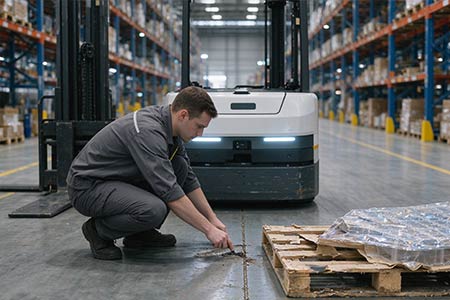
Light changes disturb visual AGV units as well. Direct sunlight through warehouse gates and insufficient lighting at night weaken image recognition stability. Uneven load and tilted pallet gravity can rotate the pallet slightly on racks. Once out of the preset compensation range of the AGV, inaccurate alignment appears.
To reduce alignment errors, keep aisles tidy, unify pallet specifications and stabilize lighting for site management. In the early project stage, select navigation schemes according to ground and pallet types and set reasonable recognition tolerance ranges.
Even with excellent accuracy parameters, AGV autonomous forklift still faces higher alignment failure risks in messy warehouses. Stable operation relies on standardized site management.
-
 Customized Forklift Attachments to Meet Diverse Warehouse DemandsCustom forklift attachments handle irregular goods like pipes and rolls. Check gravity and load curve to avoid risks from shifted load center.
Do you like ?0
Read more -
 Hydraulic Dock Ramp: Fixed or Mobile Type for Warehouse LoadingFixed and mobile hydraulic dock levelers differ greatly in installation, load and flexibility. Match your dock, frequency and site to avoid mismatches.
Do you like ?0
Read more -
 Stand-on Electric Reach Stacker Solution for Dense Racking Automated WarehouseStand-on reach stackers help new material warehouses expand storage slots without heavy construction. The telescopic mast cuts aisle width for dense racks.
Do you like ?0
Read more -
 Legless Walk Stacker Solve Space Limits for Fixed Warehouse RacksLegless walkie counterbalance stackers suit renovated old warehouses. They fit narrow aisles and closed-bottom pallets without rack modification.
Do you like ?0
Read more -
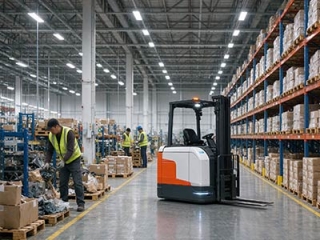 AGV Forklift Fork Alignment Error Causes and Site Working Condition NotesAGV forklifts rely on sensors for auto fork alignment. Positioning is affected by site conditions. Understand alignment logic and control surroundings to reduce failures.
Do you like ?0
Read more -
 How Does Truck-Mounted Self-Lifting Stacker Work for City DeliveryLight electric self-loading stackers let one driver load pallets inside trucks without tailgates, yet they have limits on load, space and working conditions.
Do you like ?0
Read more