
Heavy-duty Stacker Selection: Calculate Load Margin For High-level Stacking
For high-level stacking tasks, stackers need sufficient load margin. The effective residual load capacity keeps dropping as the lifting height increases. Long-term operation close to load limit easily causes frame deformation and structural cracks. Many purchasers wonder how to select tonnage for large capacity stacker.
It is necessary to distinguish rated load and residual effective load clearly: Lifting height ≤2.5m (low-level stacking): residual load is close to rated value, with 5%-10% capacity attenuation; 2.5m–3.5m lifting height (medium & high stacking): effective load decreases by 12%-20%; 3.5m–5m lifting height (high-level stacking): effective load attenuation reaches 22%-32%.
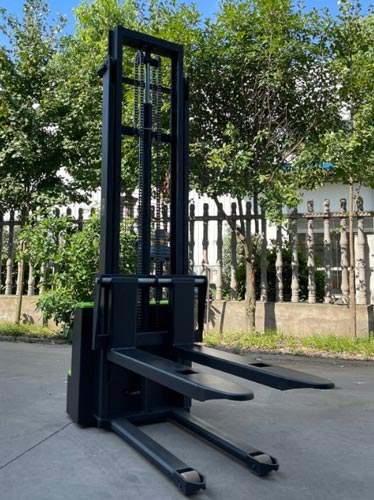
Reference Standards for Reserved Load Margin Under Different Working Conditions
In accordance with general selection specifications of the industrial vehicle industry, three reference schemes are sorted out: Smooth indoor ground, lifting height below 3 meters 10% load margin is recommended. For example, if the maximum cargo weight is 1.8 tons, a stacker with rated load of 2 tons is the minimum option.
High racking, lifting height 3–4.5m with daily frequent continuous operation Reserve 20%-25% load margin. If the heaviest cargo reaches 1.6 tons under high lifting conditions, a 2-ton heavy load stacker is recommended.
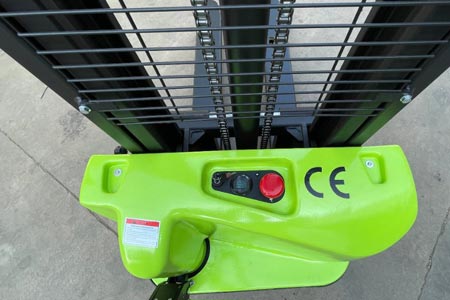
Extreme working conditions: lifting over 4.5m, uneven ground, ramps, two-shift nonstop operation Reserve 30% load margin. Uneven ground leads to center of gravity offset and further weakens the vehicle’s stable carrying capacity.
Obviously, tonnage selection should not only take pallet size, cargo weight and operation frequency into consideration. The impact brought by lifting height cannot be ignored. If full-load operation is frequent, counterbalance type large capacity stacker is highly recommended.
Feel free to inform us of your warehouse rack height, and we can provide customized warehouse handling solutions.
-
 Direct Source Factory for Small Electric Forklifts | NewnewtonBuying forklifts from source factories saves markup and speeds up after-sales service. Check qualifications carefully to distinguish real manufacturers from OEM traders.
Do you like ?0
Read more -
 5 Troubleshooting Reasons for Slow Lifting Speed of Electric ForkliftSlow fork lifting is a common electric forklift fault. Check battery voltage, hydraulic oil, filter, pump and multi-way valve to quickly locate the root cause.
Do you like ?0
Read more -
 Lithium-ion Warehouse Forklift Brands Review, Advantages and DisadvantagesLithium forklift brands vary greatly, including major manufacturers, original factories and dealers. Compare Heli, Hangcha, Noblift, BYD to select models matching your budget.
Do you like ?0
Read more -
 Price Reference of Hydraulic Dock Leveler for Warehouse Loading BayHydraulic dock levelers include fixed and mobile types with large price gaps. Load capacity, steel and hydraulic systems are key factors to consider for procurement.
Do you like ?0
Read more -
 Charging & Storage Taboos for Lithium-ion Double Pallet Electric TruckLithium battery double pallet trucks suffer heavy discharge under load. Follow charging, storage and operation rules to slow cell aging and cut replacement costs.
Do you like ?0
Read more -
 High-level Stacking Safety Notes for Electric Three-way ForkliftThree-way electric forklifts face collision and falling risks in narrow aisles. Follow standard operating procedures for pre-check, traveling, stacking and finishing to ensure warehouse safety.
Do you like ?0
Read more








