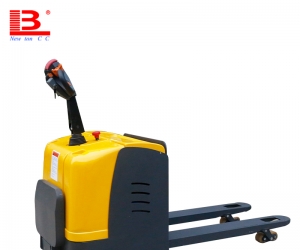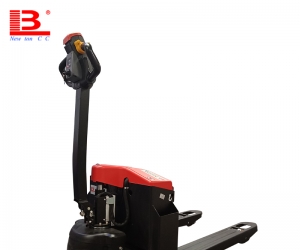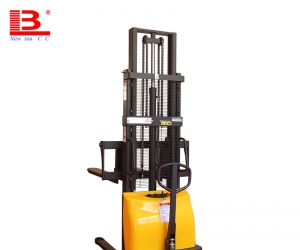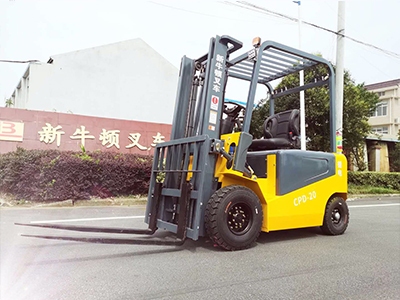
Theoretically speaking, it is slight, and local corrosion and rust have no effect on the use. So what kind of rust and corrosion will affect the use? Let's first analyze the reasons for the corrosion and rust of electric storage forklifts. There are generally two reasons for corrosion and rust. One is related to the use environment of small electric forklifts, and the other is related to its own structural design.
If small electric forklifts are used in harsh environments such as ports and docks, corrosion and rust in this environment are the general internal parts of the handling equipment will be corroded, and the use will definitely be affected. We usually need to pay attention to the maintenance of the forklift, carefully clean up the surface and the inside of the forklift, and often use lubricating oil.
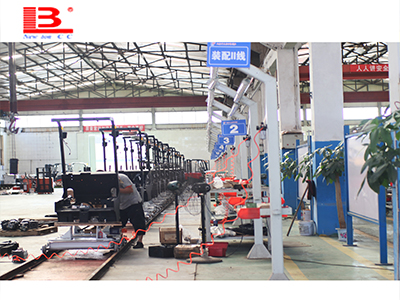
For small electric forklifts used in indoor warehouses, the corrosion will not be so serious. As long as you pay attention to maintenance, a little rust on the surface will not delay the use, but you must also pay attention to repairing the corroded places and repainting in time. It is best to maintain work.
Of course, there are also some harsh indoor environments, such as a relatively humid or high temperature environment in the warehouse, and the situation where the warehouse is full of polluting gases that will corrode small electric forklifts. In this environment, operators cannot bear it. , The machine will also have problems. In severe cases, it will directly corrode the forklift battery and motor, and the forklift battery or motor will release corrosive gas or liquid after being corroded. This will cause a vicious circle and seriously affect the use of small electric forklifts.
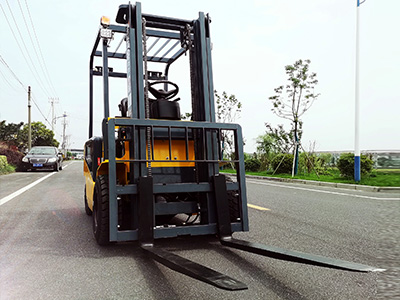
All of the above are corrosion caused by the influence of the environment in which small electric forklifts are used. There is also a case of corrosion related to the structural design of the electric forklift. It includes his application materials, structural waterproof design, production technology of parts, and its own protective measures. These are also directly related to the anti-corrosion ability of the forklift, and also directly related to the problem of whether it can be used normally after being corroded.
The above content is shared with you by the warehouse forklift manufacturer. If you have any other questions, please feel free to call for consultation.
-
 Customized Forklift Attachments to Meet Diverse Warehouse DemandsCustom forklift attachments handle irregular goods like pipes and rolls. Check gravity and load curve to avoid risks from shifted load center.
Do you like ?0
Read more -
 Hydraulic Dock Ramp: Fixed or Mobile Type for Warehouse LoadingFixed and mobile hydraulic dock levelers differ greatly in installation, load and flexibility. Match your dock, frequency and site to avoid mismatches.
Do you like ?0
Read more -
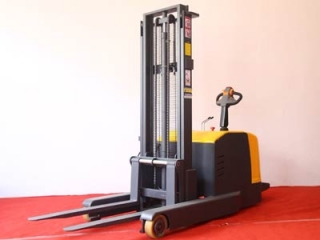 Stand-on Electric Reach Stacker Solution for Dense Racking Automated WarehouseStand-on reach stackers help new material warehouses expand storage slots without heavy construction. The telescopic mast cuts aisle width for dense racks.
Do you like ?0
Read more -
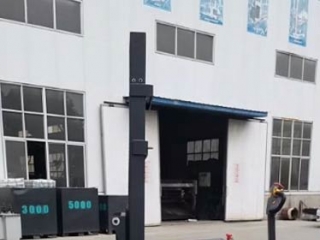 Legless Walk Stacker Solve Space Limits for Fixed Warehouse RacksLegless walkie counterbalance stackers suit renovated old warehouses. They fit narrow aisles and closed-bottom pallets without rack modification.
Do you like ?0
Read more -
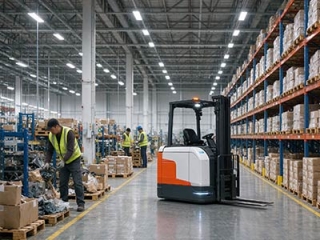 AGV Forklift Fork Alignment Error Causes and Site Working Condition NotesAGV forklifts rely on sensors for auto fork alignment. Positioning is affected by site conditions. Understand alignment logic and control surroundings to reduce failures.
Do you like ?0
Read more -
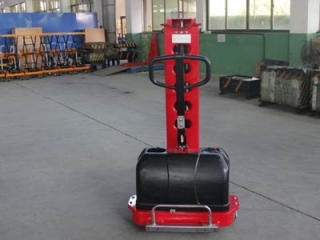 How Does Truck-Mounted Self-Lifting Stacker Work for City DeliveryLight electric self-loading stackers let one driver load pallets inside trucks without tailgates, yet they have limits on load, space and working conditions.
Do you like ?0
Read more