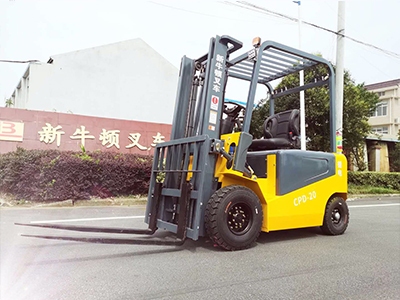
Our electric forklift manufacturers have repeatedly emphasized that safety is the first priority when driving electric forklifts in accordance with regulations. However, some people always have a fluke mentality, and accidents often occur due to overload and partial load. Small electric forklifts must pay attention to safety in the process of loading, unloading, and handling, and necessary safety measures should be taken.
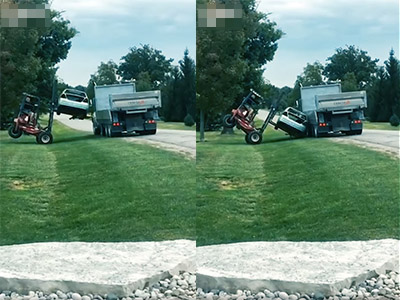
The above picture ↑The forklift driver underestimated the weight of the car, and directly lifted the forklift up by a lifting car. One is that the forklift driver is blindly self-confident and does not actually pick up the goods according to the actual load of the forklift, or does not have a good understanding of the increased load ratio of the forklift. Then there is the application of professional equipment for hoisting of cars instead of forklifts.
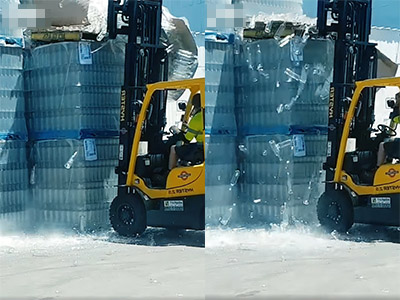
Picture above ↑Before using a forklift to fork the goods, please confirm whether the goods are well packed. When loading fragile goods, the driver should take care to avoid injury in the event of an accident. In the event of an accident, you must first protect yourself.
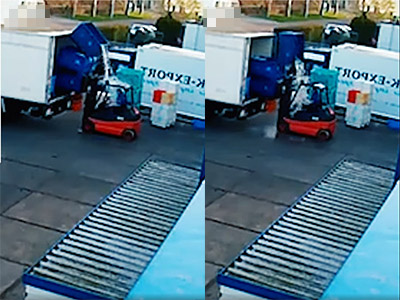
The picture above↑ uses a small electric forklift to lift up three water tanks. When loading the cargo, the top of the cargo directly overturns the top of the water tank. The liquid in the water tank is poured directly from the top of the driver's head. First of all, the driver has insufficient knowledge and experience of the operating environment. Then there is the super high cargo. In addition, the cargo has not been sealed, especially for this kind of liquid, it is necessary to take measures to seal it and prevent it from falling.
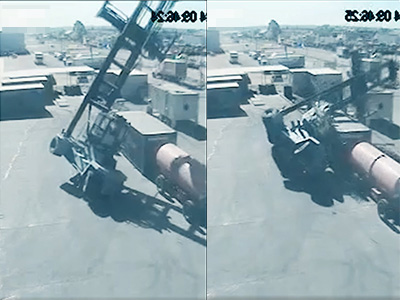
The picture above ↑The fork travels at extreme speed when it is lifted to the highest point, and it does not decelerate in advance when turning, resulting in a sharp turn, shifting the center of gravity, and overturning the vehicle. Also, the counterweight of the forklift is not enough to suppress the inertia caused by sharp turns.
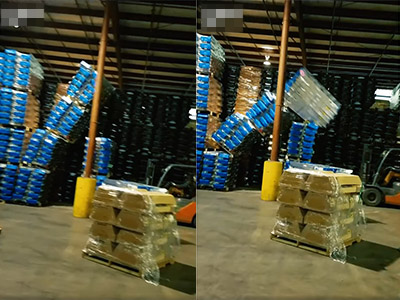
The above picture ↑The goods are not neatly placed on the shelves, but the goods and the goods are stacked together, which is easy to tip over. Fortunately, the forklift driver reacted quickly, reversing and avoiding the smashed goods, and the consequences were unthinkable.
Friendly reminders from warehousing forklift manufacturers, follow regulations, and safety first.
-
 Customized Forklift Attachments to Meet Diverse Warehouse DemandsCustom forklift attachments handle irregular goods like pipes and rolls. Check gravity and load curve to avoid risks from shifted load center.
Do you like ?0
Read more -
 Hydraulic Dock Ramp: Fixed or Mobile Type for Warehouse LoadingFixed and mobile hydraulic dock levelers differ greatly in installation, load and flexibility. Match your dock, frequency and site to avoid mismatches.
Do you like ?0
Read more -
 Stand-on Electric Reach Stacker Solution for Dense Racking Automated WarehouseStand-on reach stackers help new material warehouses expand storage slots without heavy construction. The telescopic mast cuts aisle width for dense racks.
Do you like ?0
Read more -
 Legless Walk Stacker Solve Space Limits for Fixed Warehouse RacksLegless walkie counterbalance stackers suit renovated old warehouses. They fit narrow aisles and closed-bottom pallets without rack modification.
Do you like ?0
Read more -
 AGV Forklift Fork Alignment Error Causes and Site Working Condition NotesAGV forklifts rely on sensors for auto fork alignment. Positioning is affected by site conditions. Understand alignment logic and control surroundings to reduce failures.
Do you like ?0
Read more -
 How Does Truck-Mounted Self-Lifting Stacker Work for City DeliveryLight electric self-loading stackers let one driver load pallets inside trucks without tailgates, yet they have limits on load, space and working conditions.
Do you like ?0
Read more