Why do you need to add distilled water to the semi-electric stacker battery?

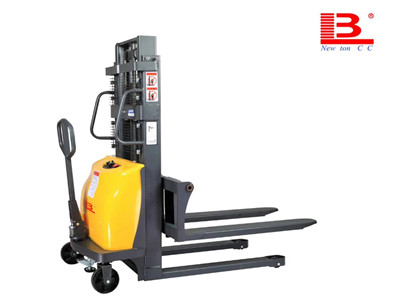
When buying a semi electric stacker, electric forklift manufacturers will remind the forklift battery to add water for a certain period of time, but tap water or purified water cannot be added to the forklift battery. Distilled water must be used. Why?
During the charging and discharging process of the semi electric stacker, due to the electrolysis and evaporation of the battery of the semi electric stacker, the water in the electrolyte will gradually decrease, thereby causing the electrolyte level to drop. If it is not replenished in time, it may shorten the service life of the battery of the semi electric stacker. The water added in the battery of the semi electric stacker should be distilled water, and should not be replaced with pure drinking water. Because the purified water contains a variety of trace elements, it will have an adverse effect on the battery of the semi electric stacker.
Ordinary batteries used in semi electric stacker should be replenished with water once a month, and other types of batteries should be supplemented with distilled water on a regular basis depending on the water consumption. For semi electric stacker batteries that are not in use temporarily, the replenishment of water can be delayed for several months.
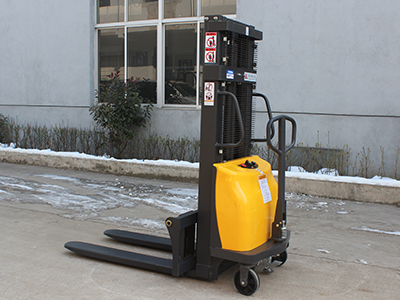
After replenishing the battery of the semi electric stacker, the battery should be supplemented in an appropriate amount. If the battery of some semi electric stacker has a rapid drop in liquid level and frequent water replenishment, check whether the limit voltage of the semi electric stacker regulator is adjusted too high. Too high will cause overcharging, high water consumption, and fast evaporation. This situation can be solved by adjusting the limit voltage of the semi electric stacker. If some batteries drop quickly, check for short circuits. In addition, it depends on whether there are cracks in the battery tank of the semi electric stacker, and whether the electrolyte is leaking, and it must be handled according to the actual situation.
-
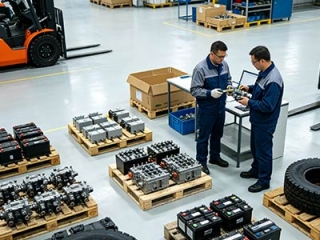 5 Strict Inspection Stages of Newnewton Forklift Before DeliveryForklift factory inspection determines equipment stability. Taizhou manufacturers adopt five testing procedures from parts sampling to full-load tests for reliable quality.
Do you like ?0
Read more -
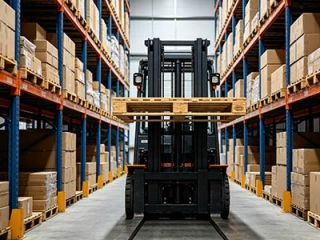 Introduction to Straddle Leg Function of Stacker and Damage ImpactsSupport legs are core load-bearing structures of stackers. They prevent tipping, bear loads and guide pallets, requiring daily maintenance for safe operation.
Do you like ?0
Read more -
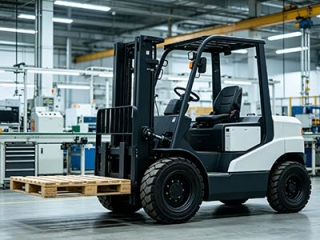 3 Sets of Workshop Narrow Aisle Forklift Solutions from Forklift ManufacturerNarrow workshop aisles limit handling efficiency. Professional forklift manufacturers provide three forklift solutions for different narrow aisle working conditions.
Do you like ?0
Read more -
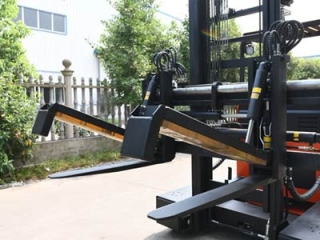 6 Steps to Learn Standard Operation of Full Electric Four-way ForkliftFull-electric four-way forklifts handle long materials with vertical and horizontal travel. Standardize six operating procedures to avoid operational risks.
Do you like ?0
Read more -
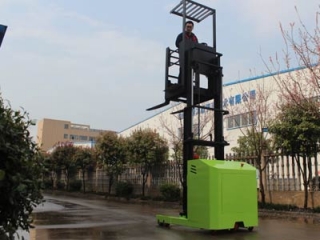 Electric order picker vs manual order picker, warehouse order pickerWhen choosing order pickers, compare electric and manual models from efficiency, workload, scenarios, cost and safety to match your warehouse working conditions.
Do you like ?0
Read more -
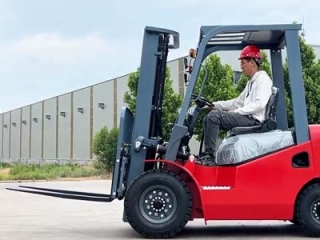 What Items Can Be Customized for Diesel Forklift OEM ServiceFor diesel forklift OEM, clarify customizable ranges to avoid delivery deviation. Factories support logo, mast, cabin and document customization.
Do you like ?0
Read more