4 Key Points of Forklift Turning Radius for Warehouse Rack Planning
Many companies only focus on storage space when building new warehouses or renovating existing rack systems. They overlook forklift turning radius. After rack installation, insufficient aisle space prevents forklifts from turning and accessing pallets normally. Rack rework brings extra costs and project delays. You should never ignore the impact of forklift turning radius on warehouse layout.
Distinguish minimum turning radius from working aisle width Minimum turning radius refers to the turning path of the outermost steering point when the forklift runs without load. This value is not equal to the required rack aisle width. When designing aisles, extra space for pallets, overhanging goods and safety clearance must be reserved besides forklift turning radius. If aisles are built only according to turning radius, space will be tight. Forklifts may scratch racks and goods during stacking operations.
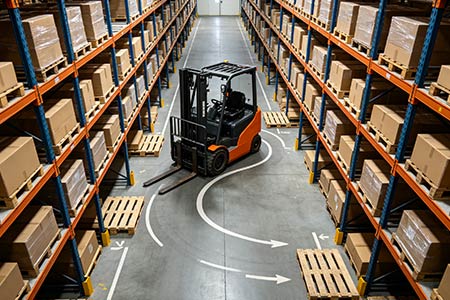
Compare turning radius of different models Warehouse forklifts have great differences in turning performance. 3-wheel electric forklifts and reach stackers feature small turning radius, ideal for narrow aisle rack layout. Conventional sit-down internal combustion forklifts need wider aisles due to larger turning radius. Walkie stackers have compact bodies and flexible rotation, suitable for small warehouses and low rack applications. Avoid applying unified aisle standards. Always refer to the parameter of your selected forklift model.
Consider pallet size and overhanging cargo Pallet length and goods extending beyond pallet edges will raise actual space demand. The same forklift requires different aisle width for long materials and standard pallets. Calculate aisle dimension based on your frequently used pallet and cargo sizes during rack planning. Larger cargo overhang requires bigger safety clearance.

Reserve safety allowance Human operating errors exist in daily warehouse work. Aisle design cannot adopt extreme minimum values. Reserved safety gaps lower the risk of collision between forks, truck body and racks. Warehouses with high operation frequency and many new operators need larger safety margins to reduce rack damage and cargo loss.
Following these four rules helps you create a proper warehouse layout. You can design storage space matching compact turning radius warehouse forklift, add more rack positions and boost overall warehouse capacity. Contact us for rack layout calculation. Provide your warehouse dimension and pallet size, we will recommend suitable forklifts and aisle width.
-
 CE Documentation Checklist for Forklift Shipment to EU MarketNewnewton forklift factory provides compliant CE certificates for EU export. Verify model match, validity and docs to avoid port detention and customs hold-up.
Do you like ?0
Read more -
 4 Key Points of Forklift Turning Radius for Warehouse Rack PlanningIgnoring forklift turning radius in warehouse rack planning causes narrow aisles and rework. Calculate radius and aisle width with safety margin to raise storage capacity.
Do you like ?0
Read more -
 5 Key Notes for Warehouse Forklift Polyurethane Tire ReplacementPolyurethane tires for forklifts may crack and cause safety hazards. Learn replacement standards covering specs, bearings, torque and trial run to ensure stable operation.
Do you like ?0
Read more -
 Fault Diagnosis and Daily Care Guide for Walkie Straddle StackerSudden faults of walkie straddle stackers delay warehouse work and raise repair costs. Learn common troubleshooting and daily maintenance to reduce equipment operation losses.
Do you like ?0
Read more -
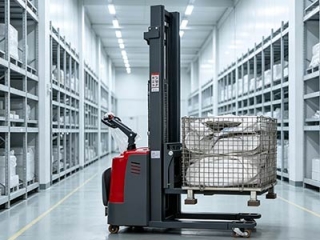 Stand-on Double Pallet Stacker Features & OEM Custom ServiceRide-on double pallet stackers carry two pallets to cut trips and boost turnover. Explore its benefits, scenarios and OEM custom options for non-standard warehouses.
Do you like ?0
Read more -
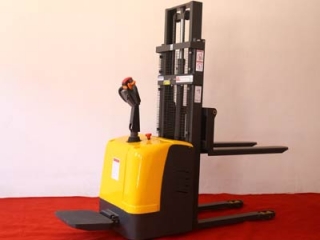 Selection Guide of High-level Stand-on Electric Stacker with Lithium BatteryLead-acid stackers slow charging disrupt multi-shift work. Lithium ride-on stackers support fast charging. Check load curve and BMS protection during selection.
Do you like ?0
Read more