
Many warehouse buyers hesitate between walkie and rider stackers when purchasing electric stackers. Both can handle pallet stacking and high-level storage, yet they differ greatly in operation mode and working conditions. Wrong selection hurts efficiency and increases operator fatigue. We carry out walkie electric stacker and rider stacker comparison from multiple dimensions to support your decision.
A walkie stacker has no standing platform. Operators walk along with the unit. It features a compact body and small turning radius, ideal for narrow aisles and short transfer distances. It costs less and takes up less aisle space, showing great flexibility in small and medium warehouses with dense racks and scattered storage locations.
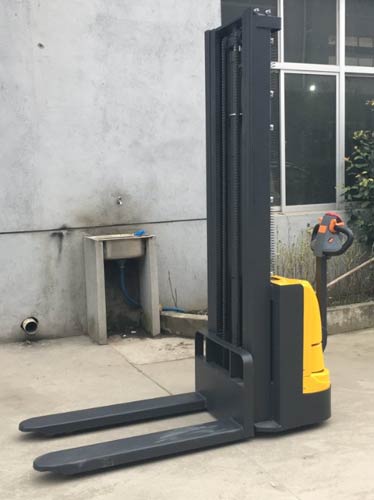
It is light in weight and brings less pressure on floors, suitable for normal concrete and epoxy surfaces. It is easy to operate, and new staff can master it after simple training. The downside is that operators need to keep walking for round trips, which causes fatigue during long shifts, so it is not recommended for high-volume and long-distance transport.
A rider stacker is equipped with a standing platform. Operators stand on the machine instead of walking all the way, which greatly reduces physical strain. It suits warehouses with large outbound volume, long transfer routes and multi-shift continuous work. Its travel speed can be set higher for faster bulk pallet stacking and turnover, performing well in large finished goods warehouses and assembly line material supply.
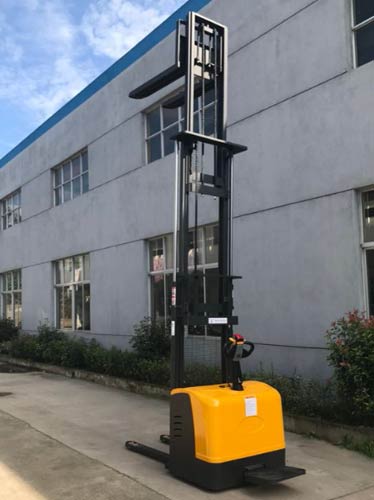
However, the rider stacker has a larger overall size and requires wider safety aisles. It is less flexible to turn and yield in tight spaces, and its purchase price and maintenance cost are relatively higher.
Neither type is universally better. Your choice depends on aisle width, average transfer distance and daily working hours. Pick walkie stacker vs rider stacker according to your site: walkie electric stacker is preferred for narrow aisles, short trips and limited budgets; rider models work better for long distances, high throughput and reduced operator workload.
Share your warehouse aisle size, daily stacking frequency and transfer length, and we will help you pick the proper stacker model.
-
 Three Certificates For Legal Operation Of Site Diesel ForkliftHeavy-duty diesel forklifts on construction sites require N1 operator certificate, equipment registration and biennial inspection reports instead of driving licenses. They must not run on public roads for safety audits.
Do you like ?0
Read more -
 Lithium Double Pallet Stacker For E-Commerce Peak ShipmentE-commerce warehouses face aisle congestion during peak sales. Lithium stand-on double pallet stackers carry two pallets per trip with fast charging to speed shipments. Verify aisle, pallet and floor conditions before selection.
Do you like ?0
Read more -
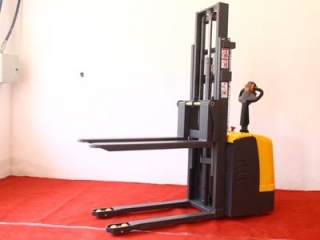 Key Parameters For Narrow Aisle Rider Stacker SelectionFor narrow-aisle stand-on electric stackers in dense warehouses, check aisle width, load center, mast and turning radius besides capacity and lift height. Leave safety margin; do not rely only on no-load data.
Do you like ?0
Read more -
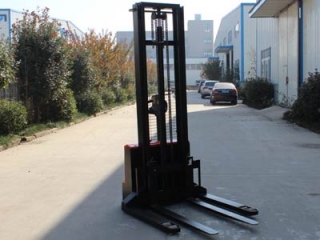 Adjustable Outrigger Straddle Stacker For Mixed PalletsMixed pallet sizes cause jamming risks. Adjustable-straddle walkie electric stackers have two adjustment structures: bolt holes and hand screws. Power off before adjusting, lock legs and confirm the range matches pallets.
Do you like ?0
Read more -
 Walkie And Rider Stacker Comparison For Warehouse SelectionBuyers often choose between walkie and stand-on electric stackers. Compact low-cost walkie models suit short trips in narrow aisles, while stand-on versions ease long multi-shift work. Evaluate aisle, distance and workload.
Do you like ?0
Read more -
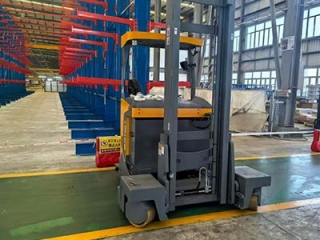 Selection Guide Of Four-Way Forklift For Profile WarehouseLong profiles and pipes take wide aisles and are hard to turn. Four-directional electric forklifts travel crosswise without sharp turns to save space. Check cargo size, floor and battery and know its limits.
Do you like ?0
Read more








