Which Is Better: Walk-behind Or Stand-on Mini Electric Stacker Buying Guide 2026
When purchasing electric stackers for small warehouses in 2026, the top question to clarify is Which Is Better: Walk-behind Or Stand-on Mini Electric Stacker. These two types fit totally different working scenarios with obvious gaps in cost and throughput; there is no universal superior option, only the most suitable one for your storage layout. This guide covers full comparison details.
Core Features & Applicable Scenarios of Walk-behind Electric Stacker
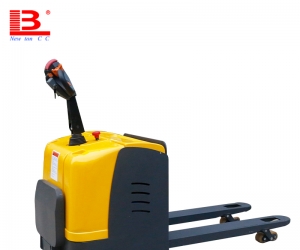
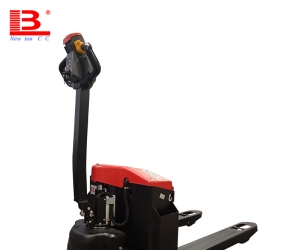
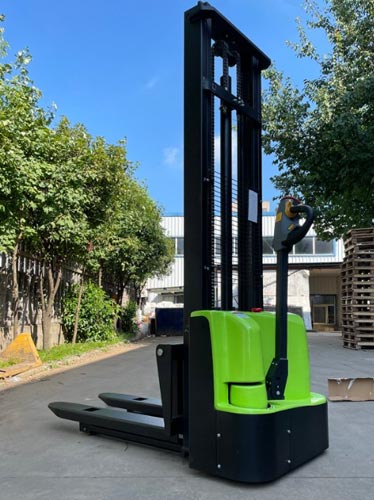
Walk-behind stackers have no standing footplate or safety guardrails with ultra-simplified compact frames. Operators follow the truck on foot and control travel & lifting via the handle.
Space Advantages
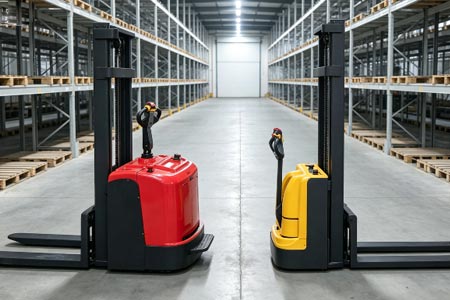
Narrow overall width and ultra-small turning radius, compatible with minimum 1.6m clear narrow aisles. It navigates freely in densely racked small warehouses, frequently passing through freight elevators and narrow doorways. No rack removal or aisle widening required for old storage facilities.
Lower Procurement & Running Cost
Under identical load capacity, ex-factory price is 20%–30% cheaper than stand-on models. Equipped with small-capacity lithium batteries for low power consumption. Without standing platforms and guardrails, fewer wearing parts are involved; daily maintenance only requires dust cleaning and wiring inspection with minimal service fees.
Working Limitations
Travel speed is limited to around 3km/h, recommended one-way transfer distance within 50 meters. Operators walk the whole shift, prone to leg fatigue after over 4 continuous working hours, unsuitable for high-frequency long-distance stacking. Limited options on load capacity and max lifting height, unable to handle double pallets or ultra-high mast stacking.
Matching Warehouse Types
Community e-commerce front warehouses, convenience store & beauty retail back storage, small garment warehouses, temporary semi-finished goods zones in workshops. Ideal for sites with daily operation ≤4 hours, short transfer routes, light cargo and tight procurement budgets.
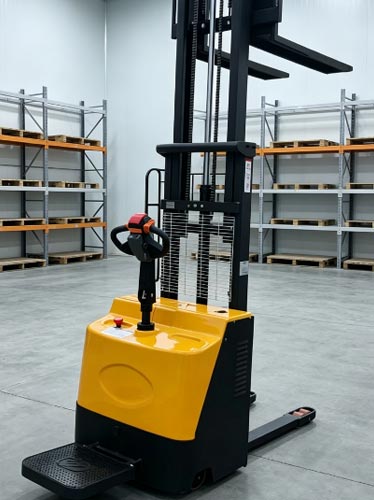
Core Advantages & Working Limitations of Stand-on Electric Stacker
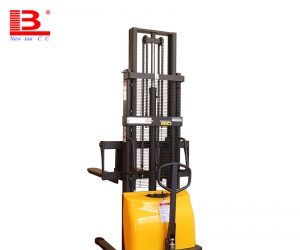
The Stand-on Electric Stacker comes with foldable standing footplates and safety guard arms for operators to ride while controlling, the mainstream high-efficiency solution for small & medium warehouses.
Higher Operation Throughput
Higher-power drive motor delivers travel speed of 5–6km/h with over 8 hours full-load runtime. It covers 100–300m cross-warehouse routes per trip, achieving 60% higher pallet stacking volume than walk-behind units within the same timeframe. Supports extended masts and double-pallet simultaneous transport for high-level rack storage and bulk cargo turnover.
Reduce Operator Physical Fatigue
Operators stand on the truck instead of walking nonstop, greatly lowering exhaustion during all-day continuous shifts. It cuts labor rotation costs for warehouses with surging daily orders.
Working Limitations
Wider overall frame requires minimum 1.8m aisles for right-angle stacking; frequent rack collision risks in compact warehouses below 1.8m width. Higher upfront investment cost, and operators need professional operation certificates, resulting in weak cost performance for scattered small storage spaces.
Matching Warehouse Types
Medium e-commerce sorting warehouses, hardware processing workshops, logistics transit staging zones. Suitable for facilities with daily stacking over 6 hours, long cross-warehouse distances, high pallet turnover frequency and high-level rack storage demands.
Final Selection Summary
Neither walk-behind nor Stand-on Electric Stacker is absolutely better — suitability depends entirely on your site conditions.
Choose walk-behind stackers if: Warehouse aisle width <1.8m, short daily operation hours, limited budget, narrow space requiring frequent elevator access, light cargo with low stacking frequency.
Choose stand-on electric stackers if: Daily stacking over 6 hours, long cross-warehouse transfer distances, massive daily pallet throughput, demand for high masts / double-pallet transport, and need to reduce staff physical fatigue.
If you are unsure about model matching, contact our factory specialists to customize the right specification based on your actual warehouse layout and daily workload to answer Which Is Better: Walk-behind Or Stand-on Mini Electric Stacker.
-
 Newnewton Forklift Export, Canton Fair Electric Warehouse Forklift ManufacturerAt the 140th Canton Fair, Newnewton displays full electric warehouse equipment, including cold storage and explosion-proof models with CE, OEM and export support.
Do you like ?0
Read more -
 Electric Forklift Factory Direct Quotation, Warehouse Handling EquipmentSame model electric forklifts have varied quotes due to different configurations. Provide load, lift, working conditions and certifications for accurate direct factory pricing.
Do you like ?0
Read more -
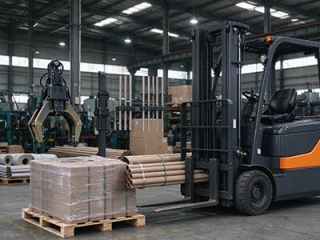 5 Common Working Scenarios for Customized Warehouse Forklift SolutionsStandard forklifts fail to fit special warehouse conditions. The factory offers customization for narrow aisles, cold rooms, explosion-proof and outdoor heavy-load scenarios.
Do you like ?0
Read more -
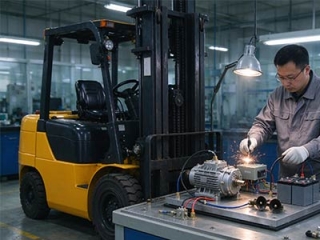 What Tests Are Conducted Before Explosion Proof Forklift DeliveryExplosion-proof forklifts are for flammable and dusty warehouses. They pass strict tests on structure, electrics, temperature and hydraulics before delivery.
Do you like ?0
Read more -
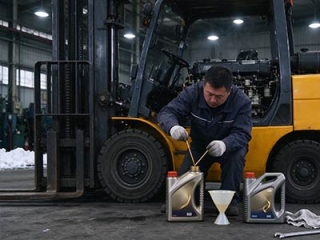 How to Maintain Internal Combustion Forklift in Cold WinterInternal combustion forklifts suffer hard starting and fuel icing in cold weather. Maintain fuel, oil, battery and cooling systems for winter use.
Do you like ?0
Read more -
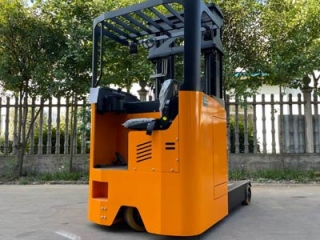 2 Ton Sit-down Reach Stacker, Sit-on Electric Reach Stacker2-ton seated reach stackers fit narrow aisle high rack warehouses. Its extending mast works for two-shift stacking; watch aisle size and high lift capacity deration.
Do you like ?0
Read more