Master the Safe Unloading Procedure for Stackers · Safer Daily Operation
Master the standard safe unloading procedure for stackers, and you can use your equipment with greater confidence.
If you work with a stacker, you must follow standard steps during unloading. Proper and regulated operation ensures efficient handling and protects both operators and loaded goods. Below is the complete process.
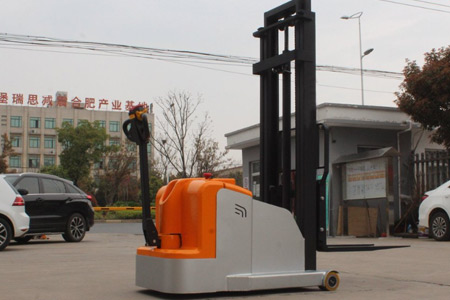
Align slowly and approach the target steadily.
A pedestrian counterbalanced stacker moves flexibly, but alignment must be slow and careful. Drive at a low speed toward racks or containers. Keep the machine straight and align the forks parallel to the pallets. Do not rush forward or push goods with tilted forks, which may cause falling pallets, drifting bodies and rollover risks.
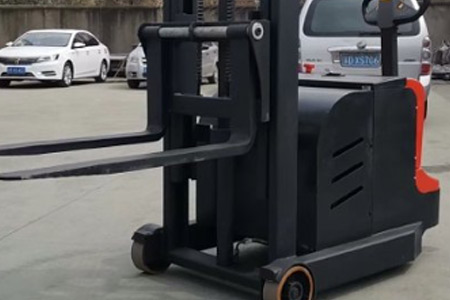
Lower and adjust the forks, and confirm balanced loading.
After alignment, lower the forks gently and adjust the height to support the pallet evenly. Check whether goods are centered, tilted or hanging outside. Do not unload when gravity deviates, as this leads to tipping. Adjust first, and then place down for better safety.
Drop the forks at a steady speed and unload slowly.
During formal unloading, keep every movement steady. Avoid fast dropping or sudden releasing. Fast falling makes goods shake and collapse, and damages the hydraulic system. Lower the forks little by little. After the forks leave the pallet and the goods stand stable, move backward slowly.
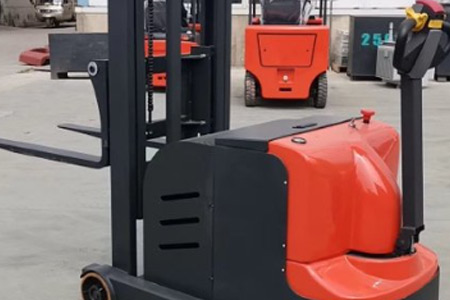
Move back and park the stacker in standard order.
Drive your pedestrian counterbalanced stacker straight backward at low speed. Do not turn sharply or lower forks while reversing. After leaving the working area, drop the forks to the lowest position, park in the marked zone, cut off power and pull the hand brake. Charge the machine in time when idle, so as to extend overall service life.
-
 Is Stand-on Counterbalance Stacker Brand Ranking Reliable?When selecting ride-on counterbalance stackers, brand lists are only for reference. Verify qualifications, core parts and after-sales supply based on warehouse conditions.
Do you like ?0
Read more -
 Core Components Check for Light Electric Walkie StackerWhen choosing walkie stackers, durability relies on four key parts: mast, frame, hydraulic system and battery, instead of merely appearance.
Do you like ?0
Read more -
 Semi-Electric Hydraulic Stacker Price Guide For WarehouseSemi-electric stackers fit short stacking in small warehouses. Prices vary by load, lifting height and battery, covering 1t,1.5t and 2t models for comparison.
Do you like ?0
Read more -
 Operating Procedures for Ride-on Full Electric Pallet TruckRide-on electric pallet trucks suit long-distance and high-frequency warehouse handling. Standardize pre-operation inspection and workflow to eliminate risks and improve efficiency.
Do you like ?0
Read more -
 How to Choose Load Capacity for Manual Hydraulic StackerManual stacker selection requires considering load attenuation and offset load. Follow four scientific rules including safety margin and fork pallet matching for proper load specification.
Do you like ?0
Read more -
 Direct Source Factory for Small Electric Forklifts | NewnewtonBuying forklifts from source factories saves markup and speeds up after-sales service. Check qualifications carefully to distinguish real manufacturers from OEM traders.
Do you like ?0
Read more