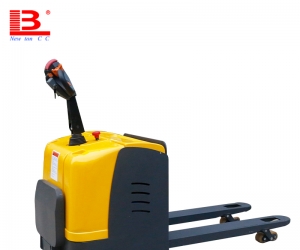
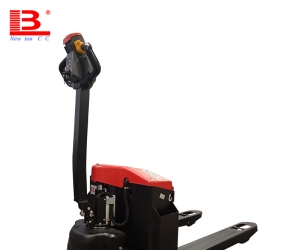
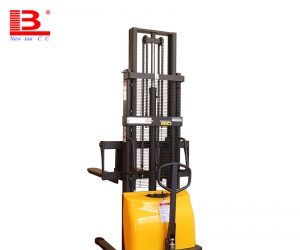
The Compact Walkie Counterbalance Stacker minimizes the impact of outriggers when handling pallets in daily operation, making it ideal for narrow aisles and sites without loading docks. Since this forklift relies on counterweight for stability, extra care is required during operation. In 2026, we hope every user can master the proper operation of this practical forklift quickly and safely.
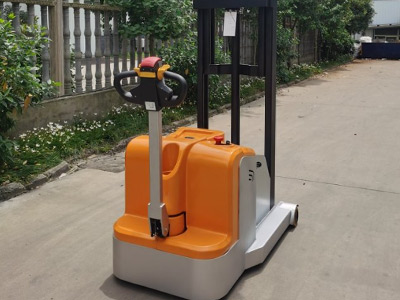
Standard Operation Steps (Step-by-Step)
Approach the Pallet and Adjust the ForksHold the control handle firmly with both hands.Slowly drive the stacker directly in front of the pallet.Set the fork height slightly below the pallet holes, then align and insert carefully.
Lift the LoadPress the lift button to raise the forks smoothly.Keep the load 10–20 cm above the ground before moving; avoid lifting too high.Ensure the load center is balanced—no offset or overloading.
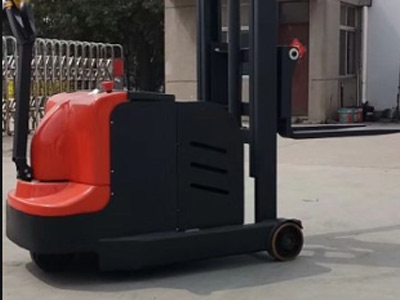
Transport the LoadGrip the control handle, push the speed switch gently, and start slowly.Move at a constant speed; avoid sudden acceleration or sharp braking.Slow down when turning and watch for nearby people and obstacles.Move carefully in small spaces and narrow aisles for maximum safety.
Stack and Place the LoadDrive to the target location, stop the Walkie Counterbalance Stacker completely.Lift slowly to the target height and align with the storage position.After confirming the load is stable, withdraw the forks slowly.Never lift or lower the forks while driving.
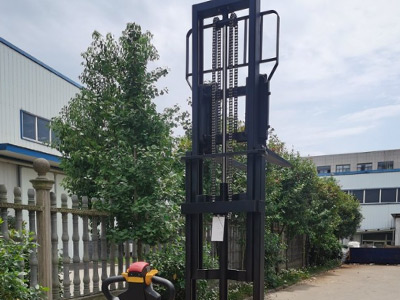
Finish the WorkLower the forks to the lowest position.Park the stacker in the designated area, apply the brake or cut off the power.Clean debris from the wheels and forks.
In summary, you will find that How to Operate a Walkie Counterbalance Stacker is not difficult, but there are many important details. These seemingly small details are the key to safe and efficient forklift operation. This guide is designed to help you work safer, easier, and more efficiently with your walkie counterbalance stacker in 2026.
-
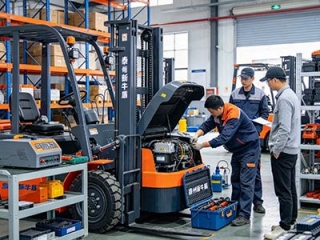 Taizhou newnewton Forklift Manufacturer IntroductionAvoid selecting warehouse forklifts only by unit price. Check site conditions, certificates and after-sales. Newnewton, Taizhou source factory, provides full product range, CE certification, customization and reliable spare parts supply.
Do you like ?0
Read more -
 Semi-electric Stacker vs Manual Stacker Cost ComparisonWhen buying stacking equipment for small warehouses, compare semi-electric stackers and manual stackers from cost, efficiency and maintenance to balance upfront expense and long-term investment.
Do you like ?0
Read more -
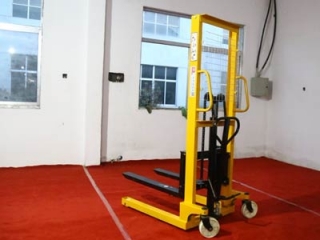 CE Certification for Manual Hydraulic StackerNewnewton manual hydraulic stackers exported to EU need CE certification complying with 2006/42/EC and EN1757-1, including safety assessment, technical documents and product compliance checks.
Do you like ?0
Read more -
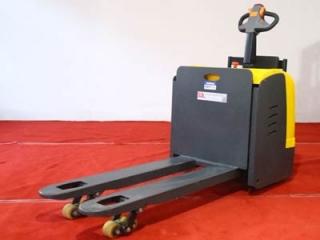 Stand-on vs Walk-behind Electric Pallet Truck ComparisonUnderstand the differences between stand-on and pedestrian electric pallet trucks in operation, efficiency, aisle requirements and costs. Choose the right model based on warehouse scale, transfer distance and order volume.
Do you like ?0
Read more -
 Operation Notes for Electric Self Elevating TruckPedestrian electric stackers cover tiered brand options with different features. International brands offer stable performance at high cost, while domestic brands and factory suppliers provide better cost performance and customization.
Do you like ?0
Read more -
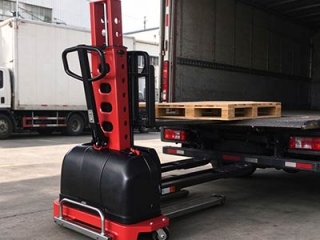 Operation Notes for Electric Self-elevating Truck | Truck Mounted Forklift SafetTruck-mounted self-loading forklifts fixed on truck tails handle cargo without loading docks. Control load and cargo gravity, inspect equipment and avoid soft slopes to prevent tipping and falling goods.
Do you like ?0
Read more