
Operation Notes for Electric Self-elevating Truck | Truck Mounted Forklift Safet
Correct operation of truck mounted forklift and electric self-elevating truck is essential for daily cargo loading and unloading safety. The truck mounted forklift features a self-elevating structure, which can be directly installed at the rear of the truck to finish loading and unloading without fixed platforms. It is widely used for short-distance transportation and multi-point unloading. However, variable working environments and irregular operations easily cause safety accidents. Mastering professional operation notes helps operators standardize the whole process of truck mounted forklift loading and unloading.
Keep stable cargo status during operation. Place goods centrally on the forks and ensure the center of gravity stays within the load range. Never overload the electric self-elevating truck. Keep stacked goods firm to prevent sliding and falling during lifting and unloading.
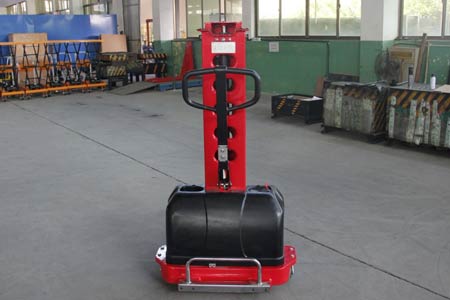
Perform all lifting and lowering movements at low and stable speed. Avoid sudden lifting, sudden dropping and sharp turning during truck mounted forklift operation.
Strictly prohibit personnel from standing under the forks or staying within the working range of the truck mounted forklift to avoid injuries caused by falling cargo or equipment tipping over.
Complete cargo picking and placing in one single operation. Do not suspend goods at height for a long time during self-elevating truck working.
During truck transportation, lower the forks to the lowest position and lock the elevating mechanism. Make sure the electric self-elevating truck is fully folded and fixed before truck departure. Avoid sudden braking and sharp turning while driving to prevent equipment displacement and loosening.
Complete double inspection of truck and equipment before starting work. Park the truck on firm and flat ground, tighten the handbrake and install anti-slip wheel stoppers to prevent sliding.
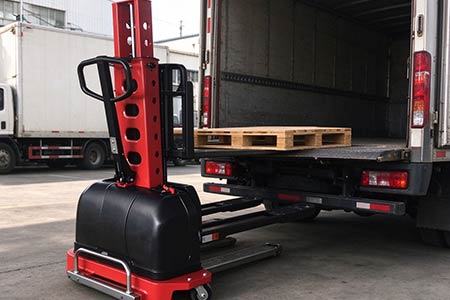
Check the hydraulic pipelines, tires, chains and battery conditions of the truck mounted forklift. Confirm no fork deformation, no welding crack and sensitive control buttons. Do not perform loading and unloading on sloped or soft ground, as insufficient ground bearing capacity will cause equipment tilting.
After finishing operation, clean up debris on the forks, fully retract the electric self-elevating truck and turn off the power. Conduct daily cleaning and inspection. Stop using the equipment and arrange timely maintenance if oil leakage, abnormal noise or other faults occur.
Operators must be familiar with the full operating procedure and rated load limit of the truck mounted forklift. Do not take risky shortcut operations. Standard operation of electric self-elevating truck effectively prolongs equipment service life and ensures on-site personnel safety. Contact us for professional operation training documents if needed.
-
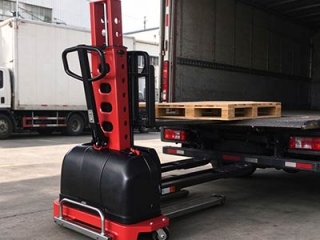 Operation Notes for Electric Self-elevating Truck | Truck Mounted Forklift SafetTruck-mounted self-loading forklifts fixed on truck tails handle cargo without loading docks. Control load and cargo gravity, inspect equipment and avoid soft slopes to prevent tipping and falling goods.
Do you like ?0
Read more -
 Warehouse Double Pallet Truck vs Standard Pallet JackDouble pallet jacks differ greatly from standard models in applicable working conditions. Double pallet jacks deliver higher handling efficiency but require wider aisles and better floors, while ordinary jacks are compact and cost-effective for general wa
Do you like ?0
Read more -
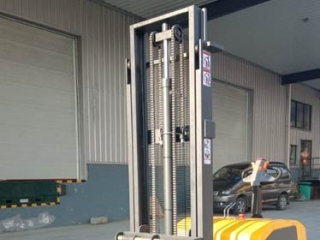 Stand-on Reach Stacker Pros & Cons for Narrow Aisle High-rack WarehousingStand-on reach stackers suit dense narrow-aisle warehouses with a movable mast and 6-meter maximum lifting height. They boost storage capacity but feature complex structures, higher maintenance costs and stricter floor requirements.
Do you like ?0
Read more -
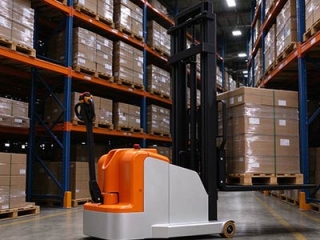 Walk-behind Counterbalance Stacker Wholesale Cost & Warehouse Buying GuideStand-on reach stackers suit dense narrow-aisle warehouses with a movable mast and 6-meter maximum lifting height. They boost storage capacity but feature complex structures, higher maintenance costs and stricter floor requirements.
Do you like ?0
Read more -
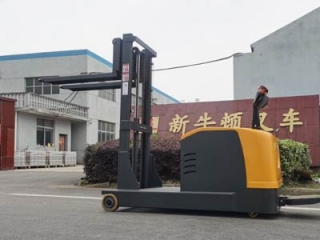 Legless Stand-on Counterbalance Stacker Minimum Stacking Aisle Parameter GuideStand-on counterbalance stackers rely on counterweights for stability without support legs. Its right-angle stacking aisle ranges from 1900mm to 2200mm, requiring reasonable spacing planning for safe operation.
Do you like ?0
Read more -
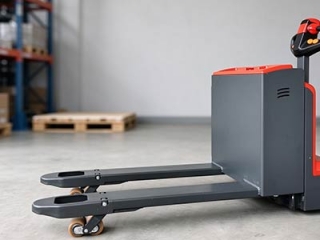 Narrow Aisle Walkie Electric Pallet Jack Wheel Replacement StepsTire wear of pedestrian electric pallet trucks in narrow aisles easily causes slipping and shelf collision issues. Standardize the full tire replacement process and maintenance steps to ensure stable operation.
Do you like ?0
Read more








