
Legless Stand-on Counterbalance Stacker Minimum Stacking Aisle Parameter Guide
When selecting a counterbalance stacker, many buyers struggle with proper specification matching. Improper parameter selection may cause the truck unable to pass smoothly between racks after delivery, wasting both capital and time. Therefore, it is vital to figure out what the minimum turning aisle for stand-on counterbalance stacker is before purchase.
Different from straddle stackers, the counterbalance stacker adopts legless structure. It relies on cast iron counterweight at the tail to keep stability during operation and delivers convenient cargo handling to meet high-efficiency and safe warehouse transport requirements. Its aisle width differs greatly from other forklift types, mainly determined by its turning radius and fork length.
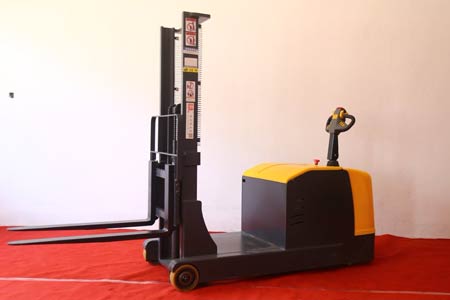
For conventional legless stand-on counterbalance stacker working with 1200mm Euro pallets, the right-angle stacking aisle generally ranges from 1900mm to 2200mm. If pallet size increases or cargo overhangs outward, the reserved aisle width needs to be widened accordingly. Planning merely based on body dimensions may lead to collision between cargo corners and rack beams.
During pre-project planning, apart from stacking aisle, safety clearance on both sides should also be reserved. Normally about 100mm clearance on each side is kept to compensate for operation deviation. Ground flatness also affects turning performance. Obvious height difference on the floor will shift the actual turning path of the truck, so it is recommended to reserve a slightly wider aisle.
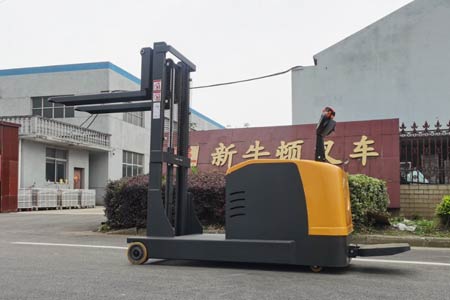
Before equipment selection, confirm the pallet size, cargo overhang dimension and on-site ground condition of legless stand-on counterbalance stacker. Original manufacturers can provide accurate aisle layout solutions according to working conditions to avoid usage troubles after on-site installation. You can consult for equipment parameters and warehouse layout suggestions if needed.
-
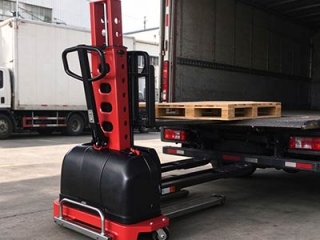 Operation Notes for Electric Self-elevating Truck | Truck Mounted Forklift SafetTruck-mounted self-loading forklifts fixed on truck tails handle cargo without loading docks. Control load and cargo gravity, inspect equipment and avoid soft slopes to prevent tipping and falling goods.
Do you like ?0
Read more -
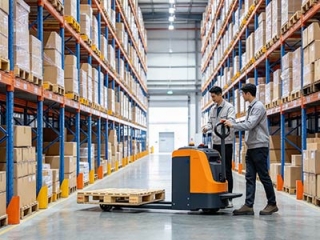 Warehouse Double Pallet Truck vs Standard Pallet JackDouble pallet jacks differ greatly from standard models in applicable working conditions. Double pallet jacks deliver higher handling efficiency but require wider aisles and better floors, while ordinary jacks are compact and cost-effective for general wa
Do you like ?0
Read more -
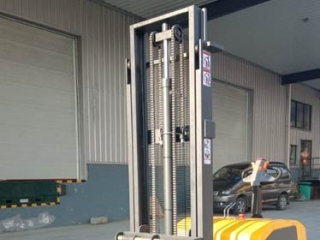 Stand-on Reach Stacker Pros & Cons for Narrow Aisle High-rack WarehousingStand-on reach stackers suit dense narrow-aisle warehouses with a movable mast and 6-meter maximum lifting height. They boost storage capacity but feature complex structures, higher maintenance costs and stricter floor requirements.
Do you like ?0
Read more -
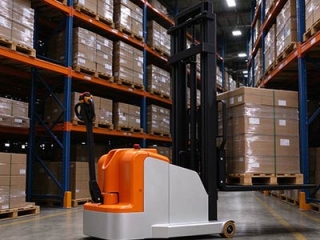 Walk-behind Counterbalance Stacker Wholesale Cost & Warehouse Buying GuideStand-on reach stackers suit dense narrow-aisle warehouses with a movable mast and 6-meter maximum lifting height. They boost storage capacity but feature complex structures, higher maintenance costs and stricter floor requirements.
Do you like ?0
Read more -
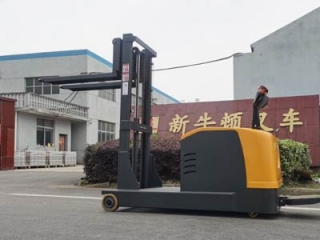 Legless Stand-on Counterbalance Stacker Minimum Stacking Aisle Parameter GuideStand-on counterbalance stackers rely on counterweights for stability without support legs. Its right-angle stacking aisle ranges from 1900mm to 2200mm, requiring reasonable spacing planning for safe operation.
Do you like ?0
Read more -
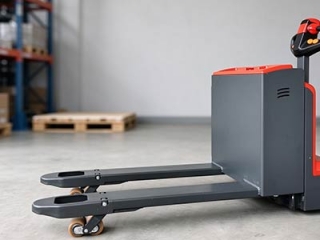 Narrow Aisle Walkie Electric Pallet Jack Wheel Replacement StepsTire wear of pedestrian electric pallet trucks in narrow aisles easily causes slipping and shelf collision issues. Standardize the full tire replacement process and maintenance steps to ensure stable operation.
Do you like ?0
Read more








