Electric Pallet Truck Brand Ranking 2026 | Top Warehouse Forklift Manufacturers
Planning to adopt a Stand-on Full Electric Stacker to boost warehouse productivity but worried about complicated operation? This article sorts out the complete Stand-on Full Electric Stacker Operation Procedure. Even new operators can get familiar and start working quickly following standardized steps.
Startup & Power-on Procedure
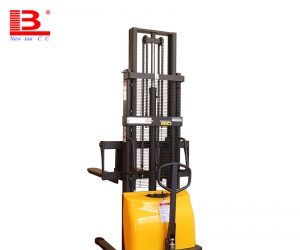
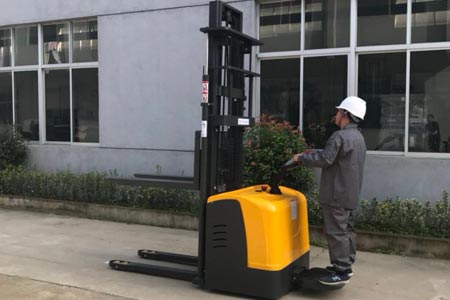
Stand firmly on the anti-slip platform inside guardrails; do not lean any part of your body outside the truck outline. Pull out the red main emergency stop button to pop it up. Insert the key and turn clockwise to switch on power, wait for instrument self-check to finish. Lift & lower empty forks around 10cm twice to bleed air out of the hydraulic pipeline. Activate low-speed mode on the tiller, sound the horn to warn surrounding staff before moving off.
Basic Travel Operation (Core For New Operators)
Tiller control logic: Tilt the handle downwards. Turn thumb roller forward = forward travel; turn backward = reverse. Release the thumb roller, and the truck brakes automatically.
Start-up: Rotate the roller gently without sudden acceleration. Maintain low speed all the time under full load.
Transport height: Keep forks 10–15cm above ground during transit; tilt mast slightly backward to prevent cargo sliding.
Speed limits: ≤5km/h empty load in main aisles; ≤3km/h full load; ≤2km/h for turning, narrow aisles and pedestrian zones.
Turning rules: Reduce speed in advance. Never make sharp turns with elevated loads. Stand-on stackers have higher center of gravity with high rollover risk.
Ramp operation: Maximum gradient 5%. Travel backwards downhill with forks facing uphill. Avoid coasting or sudden braking. Obstructed vision: If cargo blocks forward sight, drive backward slowly; assign a signalman if necessary.
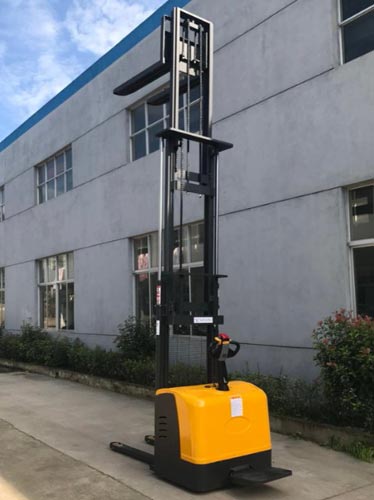
Picking Pallets On Ground
Drive slowly straight towards the pallet, align forks centrally with pallet pockets and stop at 30cm distance. Lower forks to 2–3cm beneath the pallet base. Move forward slowly and fully insert forks into the pallet (insertion depth ≥ 2/3 of fork length). Partial or offset fork insertion is prohibited. Lift the pallet 10cm off the ground. Check if goods are centered and stable. After confirming stability, reverse slowly away from the pallet area. Lower forks to standard transit height (10–15cm) and drive to the stacking position.
High-level Stacking
Drive slowly to the front of target rack, keep the truck perpendicular to rack beams and stop 30cm away. Lift cargo slowly to 5cm above rack level. Do not steer or move the truck during lifting. Fine-tune position to align pallet with rack, then move forward at constant low speed to place pallet above rack beams. After full stop, lower forks steadily to rest the pallet on rack beams. Lower forks another 2–3cm to fully separate forks from pallet bottom. Reverse slowly and completely pull out from rack without hitting rack uprights. Once fully withdrawn, lower forks to transit height and proceed to next task.
Retrieving Goods From Racks
Align empty truck perpendicular to rack and approach slowly, stop at 30cm distance. Raise forks to match the bottom height of rack pallet. Drive forward slowly and fully insert forks underneath the pallet. Lift forks 5cm to separate pallet from rack beams. Reverse slowly to pull the pallet completely out of the rack. Lower forks to 10cm above ground and transport to unloading zone. At destination, align with pallet position on ground, lower forks all the way down and withdraw forks to finish unloading.
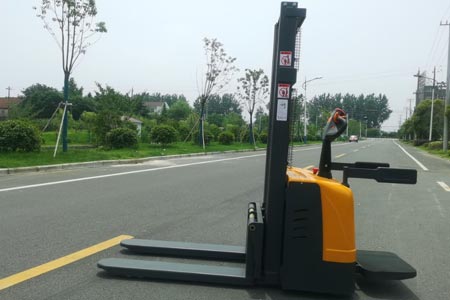
Parking & Shutdown
After all handling tasks, lower forks fully to ground. Drive slowly to designated parking area. Do not park in aisles, ramps or fire escape routes. Return tiller to neutral position; auto brake activates after releasing accelerator roller, engage hand brake. Turn key counter-clockwise to cut power, then press down the red emergency stop button for total power cut-off. Clear plastic straps and debris wrapped around forks; wipe battery and control panel. If battery level drops below 20%, move the truck to charging station. Disconnect battery plug for long-term storage.
The complete Stand-on Full Electric stacker trucks Operation Procedure is listed above. Feel free to contact us for further discussion or safety training materials.
-
 Direct Source Factory for Small Electric Forklifts | NewnewtonBuying forklifts from source factories saves markup and speeds up after-sales service. Check qualifications carefully to distinguish real manufacturers from OEM traders.
Do you like ?0
Read more -
 5 Troubleshooting Reasons for Slow Lifting Speed of Electric ForkliftSlow fork lifting is a common electric forklift fault. Check battery voltage, hydraulic oil, filter, pump and multi-way valve to quickly locate the root cause.
Do you like ?0
Read more -
 Lithium-ion Warehouse Forklift Brands Review, Advantages and DisadvantagesLithium forklift brands vary greatly, including major manufacturers, original factories and dealers. Compare Heli, Hangcha, Noblift, BYD to select models matching your budget.
Do you like ?0
Read more -
 Price Reference of Hydraulic Dock Leveler for Warehouse Loading BayHydraulic dock levelers include fixed and mobile types with large price gaps. Load capacity, steel and hydraulic systems are key factors to consider for procurement.
Do you like ?0
Read more -
 Charging & Storage Taboos for Lithium-ion Double Pallet Electric TruckLithium battery double pallet trucks suffer heavy discharge under load. Follow charging, storage and operation rules to slow cell aging and cut replacement costs.
Do you like ?0
Read more -
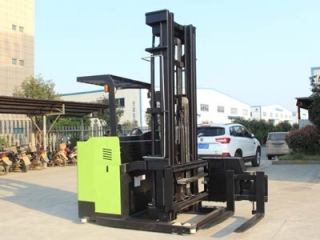 High-level Stacking Safety Notes for Electric Three-way ForkliftThree-way electric forklifts face collision and falling risks in narrow aisles. Follow standard operating procedures for pre-check, traveling, stacking and finishing to ensure warehouse safety.
Do you like ?0
Read more