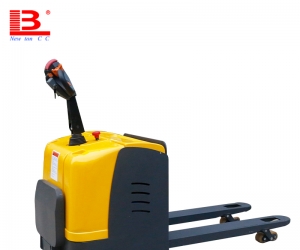
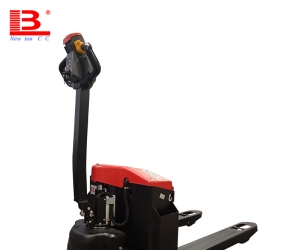
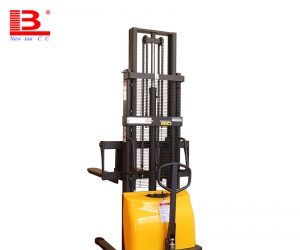
At present, the ride-on counterbalance stacker has become the core equipment for medium and small tonnage material handling. Many enterprises and factories are attracted by its strong handling capacity and flexible operation, hoping to solve traditional problems such as difficult unloading, narrow aisle jamming and pallet limitation caused by standard leg-type forklifts. Today I will give a detailed explanation of this product to help you fully understand this equipment.
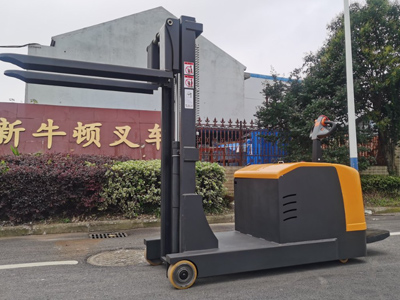
Structural Advantages: No Front Legs, Rear Counterweight
This forklift mainly relies on cast iron counterweights at the rear to maintain load balance, which achieves the same effect as supporting legs. To overcome the problems of traditional leg-type forklifts, the rear counterweight design is adopted. This allows the forks to directly enter various pallets and keep stable without ground support points. The emergence of the legless counterbalance stacker brings new handling solutions.
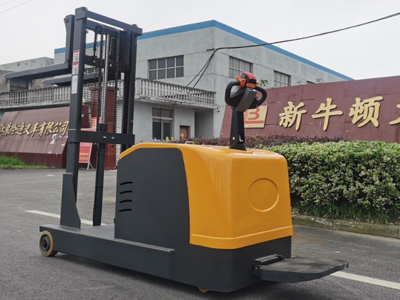
After optimization in 2026, further improvements have been made based on the shortcomings of traditional counterbalance forklifts and the characteristics of the ride-on electric stacker, with better flexibility and stability, making operation easier and more efficient.
Space AdaptabilityThe overall design is more scientific and compact, reducing the turning radius. It can turn flexibly in 2‑meter narrow aisles, and works well in small and medium‑sized e‑commerce warehouses and workshop material areas.
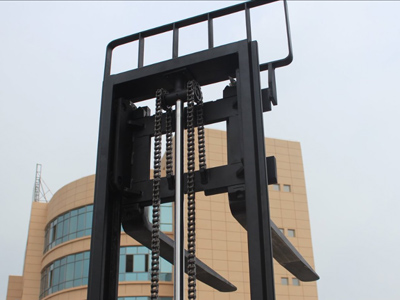
Mast UpgradeTo expand application scenarios and improve efficiency for high stacking and heavy load handling, the mast adopts imported high‑strength steel over 2 cm thick, with tilt functions to ensure goods stay stable during lifting.
Durable ForksForged and integrally cast forks provide stronger load capacity. Without front legs, the forklift fits all kinds of pallets including Tian‑style, Jiu‑style, Chuan‑style and customized non‑standard pallets.
In short, this equipment not only keeps the flexibility of the traditional ride-on electric stacker, but also performs better in pallet handling and high stacking. It is suitable for various scenarios and demands, and greatly improves work efficiency.
-
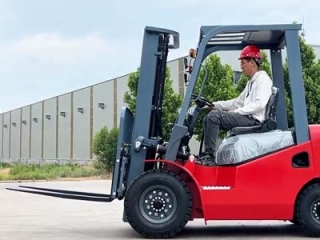 What Items Can Be Customized for Diesel Forklift OEM ServiceFor diesel forklift OEM, clarify customizable ranges to avoid delivery deviation. Factories support logo, mast, cabin and document customization.
Do you like ?0
Read more -
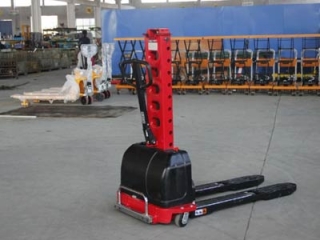 Price Reference for Electric Self-loading Stacker Direct from FactoryElectric self-loading stackers can be placed on trucks for convenient loading and stacking. Working height, load and battery types influence the final purchase price.
Do you like ?0
Read more -
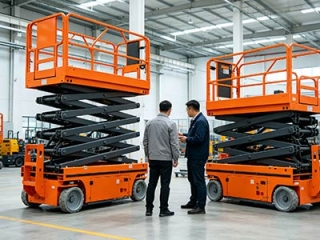 5 Load Standard Points for Electric Self-propelled Scissor Lift SelectionWhen purchasing self-propelled scissor lifts, pay attention to load parameters including rated load, offset limits and slope attenuation for safety.
Do you like ?0
Read more -
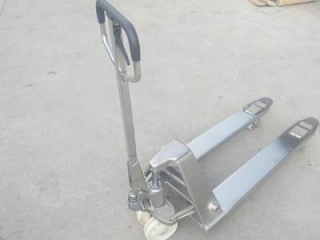 5 Key Parameters for Bulk Purchase of Stainless Steel Hand Pallet JackStainless steel manual pallet trucks are for clean warehouses. Check material, load, forks, hydraulics and wheels for bulk purchase.
Do you like ?0
Read more -
 6 Daily Maintenance Items for Ride-on Double Pallet StackerHigh throughput in e-commerce warehouses causes quick wear. Six inspection items for ride-on double pallet stackers cut failures and repair costs.
Do you like ?0
Read more -
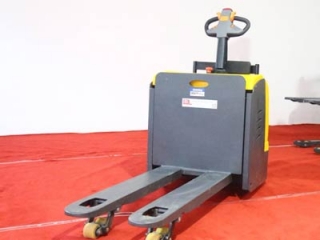 Which is Better, Ride-on or Walk-behind Electric Pallet JackWhen buying electric pallet trucks, compare ride-on and pedestrian types by distance, aisle, workload and budget for warehouse selection.
Do you like ?0
Read more