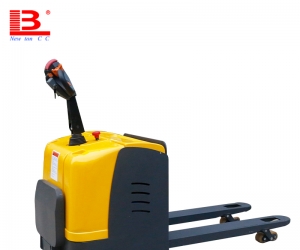
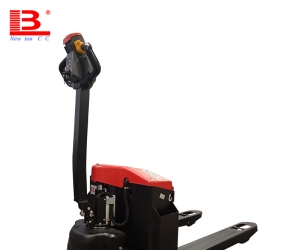
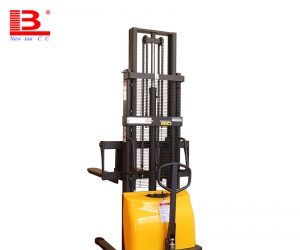
Many warehouses focus on the stand-on counterbalance stacker when upgrading equipment,but do not clearly understand its structure, legless design and other details, so they don’t know how to choose the right stand-on counterbalance stacker.In this article, we explain everything clearly to help you choose correctly and use it safely.
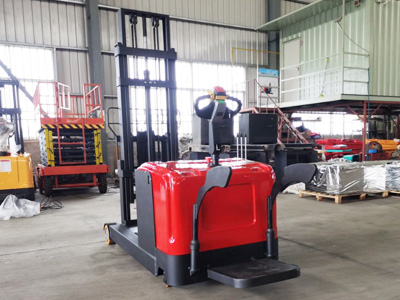
First, let’s look at the structure of stand-on counterbalance stacker.Its biggest feature is no front outriggers. It achieves balance using the counterweight at the rear of the machine,equipped with a stand-on operating platform, electric drive and electric lifting system.The overall structure is compact, stable in center of gravity and flexible in control.The mast lifts vertically, and the forks require no support points.It can lift cargo smoothly and turn freely in narrow spaces – the core advantage over standard leg-type stackers.
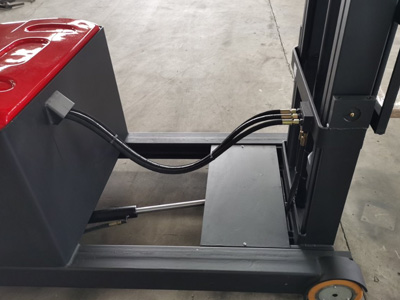
Next, let’s cover application scenarios of legless stackers.With no front outriggers, it is especially suitable for truck loading and unloading without a platform.It also performs well in small warehouses, narrow-aisle workshops, cold rooms, supermarket backyards and other space-limited areas.It has low requirements for ground conditions, compatible with various pallets and sites.Whether for full-pallet transfer or high-level stacking, it handles tasks easily with strong practicability.
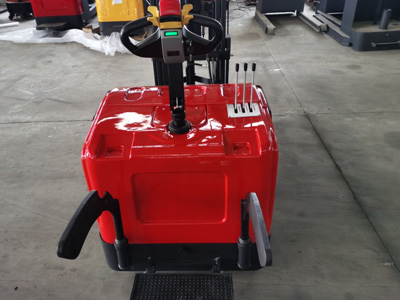
Finally, we focus on how to choose a stand-on counterbalance stacker.
Check load capacity and lifting height to match your daily cargo weight and rack height.
Pay attention to battery life and motor performance to ensure stable long-time operation.
Inspect operation comfort and safety features, such as emergency reverse, anti-slip pedals, and overload protection.
Choose factory-direct brands with complete after-sales service for better long-term reliability.
-
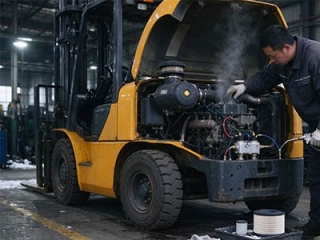 How to Fix Hard Starting of Industrial Diesel Forklift in WinterFuel forklifts struggle to start in cold winter. Check fuel, lubrication, battery and preheating parts, use suitable oil and pre-inspect to avoid damage.
Do you like ?0
Read more -
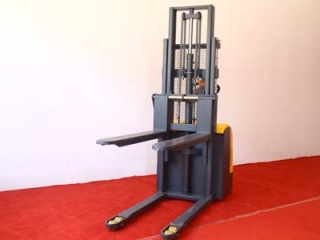 Load Capacity Specs of Ride-on Double Pallet StackerRider double pallet stacker carries two pallets. Note load capacity deration at height, aisle width, fork size and battery type for safe operation.
Do you like ?0
Read more -
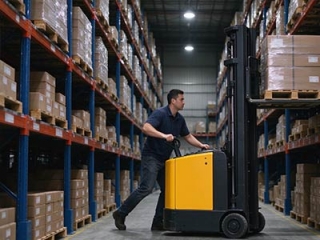 Electric Walk-behind Stacker from Stacker Manufacturing FactoryCompact electric walkie stacker works in narrow aisles. Lithium or lead acid battery available. Newnewton supplies OEM, CE certified units for domestic and export orders.
Do you like ?0
Read more -
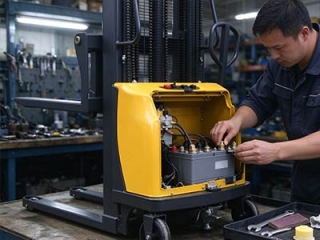 What To Do When Semi-Electric Stacker Runs Out of PowerSemi-electric stacker suddenly power off? Troubleshoot battery, wiring and switches. Follow safe emergency lowering steps and regular battery maintenance.
Do you like ?0
Read more -
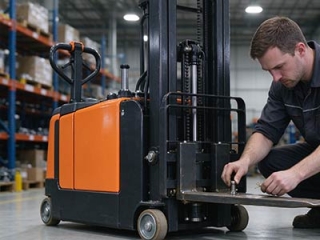 Manual Hydraulic Stacker Repair: 5 Worn Parts & Maintenance TipsManual hydraulic stackers wear fast under frequent use. Learn inspection for 5 vulnerable parts to prevent breakdowns and keep warehouse operations stable.
Do you like ?0
Read more -
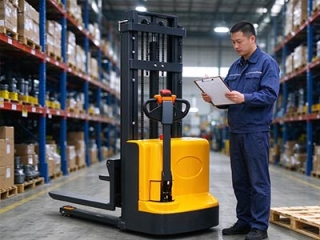 Do You Need a Forklift License for Walk-behind Electric StackerNot all electric walkie stackers require forklift licenses. Check nameplate specs against the special equipment catalog; internal training is mandatory for non-regulated models.
Do you like ?0
Read more