
Dense automated warehouses often have to balance aisle width, stacking height and handling efficiency. Ordinary stacking equipment can hardly meet all these demands at the same time. A sit-down reach telescopic lifting stacker is specially developed for such warehouse pain points and performs excellently in high-level dense storage scenarios.
Here are its main advantages. The telescopic reach fork structure supports high stacking in narrow aisles. The mast and forks can extend forward, so the main body does not need to get close to the rack. The machine can pick and place goods while staying in a safe position.
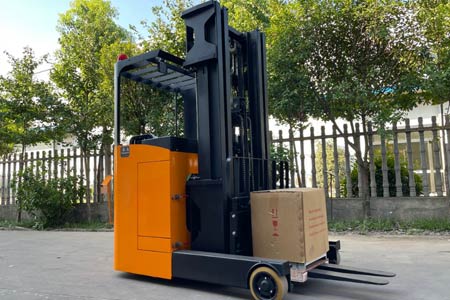
Compared with fixed-mast stackers, it requires a narrower working aisle. It can increase storage density in existing high rack areas without rack modification and works for beam racks and double-deep rack access.
The sit-down operation mode suits long-duration continuous work. Operators tend to get tired quickly on walk-behind models under high-frequency, repeated stacking tasks, which disrupts the workflow. The sit-down design allows operators to work in a stable sitting position with a wide field of view. The control handle layout fits operating habits. For two-shift warehouses with heavy inbound and outbound volumes, operators can maintain steady work rhythm and stable throughput.
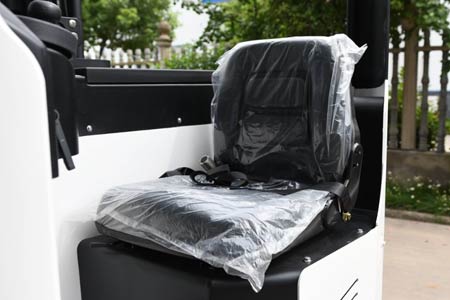
It achieves better compatibility between load capacity and lifting height. Standard small stackers suffer obvious load loss when lifting height increases. Optimized in structure, this sit-down reach electric stacker maintains favorable load performance at medium and high lifting heights, supporting full pallet storage on high racks. This feature brings great value to raw material warehouses and finished goods transfer warehouses with large cargo batches and standard pallets that require both high lifting capacity and stable load.
One point to note during selection: it has a larger body size than walk-behind reach stackers, so you need to calculate the turning space of aisles in advance. If your warehouse focuses on high-level dense storage with frequent loading and unloading, the sit-down reach electric stacker is a good option to balance storage capacity and handling efficiency. Feel free to contact us for detailed specifications and quotations.
-
 3 Core Advantages of Sit-Down Reach Telescopic StackerRide-on reach stackers suit narrow-aisle high stacking for dense warehouses. No rack modification needed, balancing storage density, continuous operation and medium-high lifting capacity.
Do you like ?0
Read more -
 How to Find a Reliable Forklift Manufacturer for Warehouse UseWarehouse buyers often meet middlemen posing as manufacturers with low-price traps and poor after-sales. Verify production qualifications, quotation details and custom capacity to find reliable forklift suppliers.
Do you like ?0
Read more -
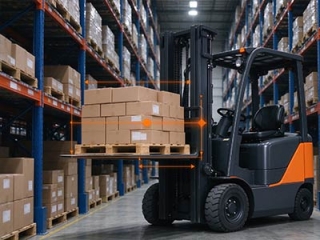 What Is the Load Center of a Forklift? 2 Key Points to UnderstandMany buyers only check rated load and ignore load center. It is the horizontal distance from load gravity to fork root; offset gravity reduces capacity and brings tipping risks.
Do you like ?0
Read more -
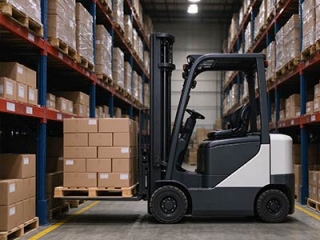 Custom Narrow Aisle Electric Forklift for Compact Workshop Production LinesNarrow aisles in old factories cause collision risks for standard forklifts. Custom narrow aisle electric forklifts with optimized body suit tight workshop material transfer.
Do you like ?0
Read more -
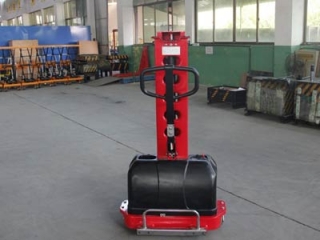 Self Loading Pallet Stacker: Solve Loading Trouble for Remote DeliveryLong-distance multi-stop fleets struggle with no forklifts at drop-off sites. Truck-mounted self-loading forklifts let drivers handle stacking alone and boost delivery turnover.
Do you like ?0
Read more -
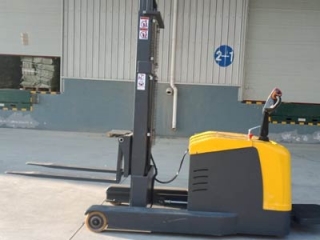 3 Mast Types: Stand-on Reach Stacker for Different Rack HeightsWhen selecting stand-on reach stackers, check mast retracted height besides rack levels. 1/2/3-stage masts have different lifting ranges; consider clearance, load and rack height.
Do you like ?0
Read more








