
3 Mast Types: Stand-on Reach Stacker for Different Rack Heights
What height racks fit a stand-on reach electric stacker? If you select a stand-on reach stacker only by the number of rack layers and ignore the overall height when the mast retracts, you may find the machine cannot pass through warehouse doors or overhead pipes after delivery. The reach stacker achieves high stacking via telescopic masts. Single-stage, two-stage and three-stage masts match different rack height ranges with distinct adaption logic.
A single-stage mast has a simple structure without multi-section telescopic parts and delivers clear visibility. Its lifting height is generally within 2 meters, suitable for low racks with no more than two layers. After retraction, the whole machine stays low, with fast response and low maintenance cost. It is widely used for low stacking in raw material storage zones and picking areas, and not designed for high rack operations.
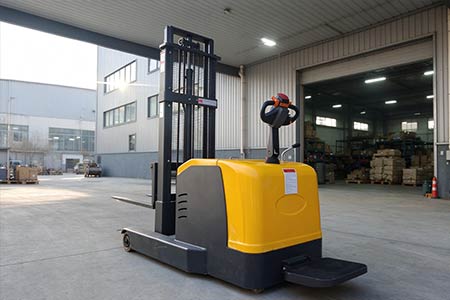
The two-stage mast is the standard and most widely used option in warehouses, with a lifting range from 2.5 meters to 4 meters for three to four layers of racks. It balances lifting height and stability with minor load attenuation, and works well in standard warehouses without high floor height requirements. Most regular reach models from newnewton offer two-stage masts in stock with short lead times.
The three-stage mast comes with full free lift function. It keeps a low body when retracted and can reach 4.5 meters to 6 meters, matching racks above four layers. It is ideal for warehouses with limited ceiling height yet high stacking demands. The forks can rise independently first without extending the main mast, so it can smoothly enter containers and limited-height warehouse passages. Its shortcoming is slightly blocked visibility during high lifting due to extra mast sections.
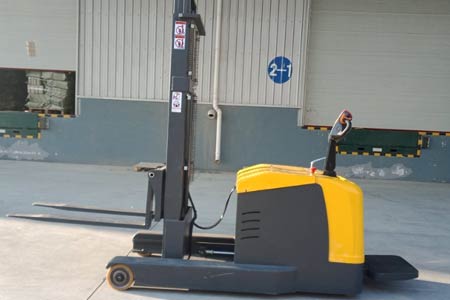
Besides rack height, you also need to check warehouse clear height, aisle width and rated load during selection. The residual load capacity of the vehicle drops when lifted high. If goods on the top rack are heavy, sufficient load margin should be reserved.
For rack storage stand-on reach stacking trucks, three-stage full free masts are preferred for high racks, two-stage masts for common multi-layer racks, and single-stage masts for low picking and stacking. Proper configuration prevents idle equipment and waste.
-
 3 Mast Types: Stand-on Reach Stacker for Different Rack HeightsWhen selecting stand-on reach stackers, check mast retracted height besides rack levels. 1/2/3-stage masts have different lifting ranges; consider clearance, load and rack height.
Do you like ?0
Read more -
 How Much Does a Counterbalance Electric Stacker CostWalkie counterbalance stackers have wide price gaps from specs, batteries, controls and options. Watch out for downgraded parts and hidden charges on low-price quotes.
Do you like ?0
Read more -
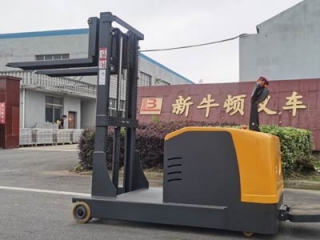 Narrow Aisle Stand-on Counterbalance Electric Stacker From newnewtonStand-on counterbalance stackers have no front legs to avoid pallet jamming and rack collision. It handles closed-bottom special pallets for compact old warehouse renovation.
Do you like ?0
Read more -
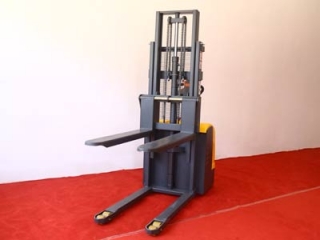 Stand-on Electric Double Pallet Stacker: Work Efficiency ComparisonStand-on double pallet stackers suit high-output warehouses. It carries two pallets at once for higher efficiency in wide aisles, not for narrow aisles or order picking.
Do you like ?0
Read more -
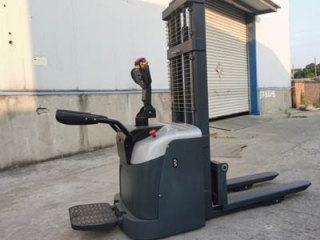 Stand-on Electric Pallet Stacker: How to Pick the Right BrandStand-on electric stackers vary by brand tiers. Avoid judging by brand only. Evaluate load, aisle, shifts and after-sales to cut long-term operation costs.
Do you like ?0
Read more -
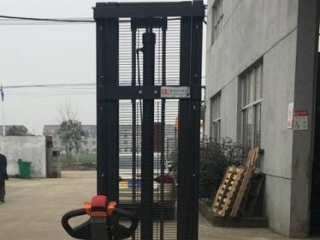 Adjustable Leg Walk-behind Electric Stacker for Multiple Pallet TypesAdjustable leg walkie straddle stackers fit mixed pallets. Variable leg width works for single/double-faced pallets, compact and stable for warehouses with mixed pallet sizes.
Do you like ?0
Read more








