Standard Daily/Monthly/Quarterly Maintenance Checklist For Semi-electric Stacker
In July 2026, temperatures exceed 35℃ across many regions. Dust and humid warehouse environments accelerate chain rust, hydraulic oil deterioration, battery degradation and wiring aging on the Semi-electric Stacker. This complete Complete Regular Maintenance Tutorial For Semi-electric Stacker follows GB/T 36507-2023 Industrial Trucks — Safety Rules for Application, Operation and Maintenance, dividing standardized maintenance into 3 tiers: daily pre-shift inspection, full monthly service and in-depth quarterly overhaul to extend equipment service life.
1. 5-Minute Daily Pre-shift Inspection (Power off before all checks, stop operation immediately for leakage & damage)
Mast & Fork Assembly
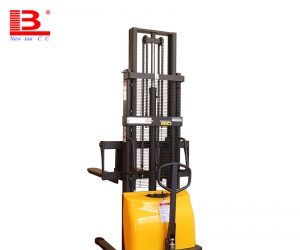
Visually inspect mast welds and forks for bending or cracks; clear carton scraps and plastic straps wrapped around lifting chains. Lift and lower empty forks twice to check for jamming, abnormal noise or automatic fork sinking.
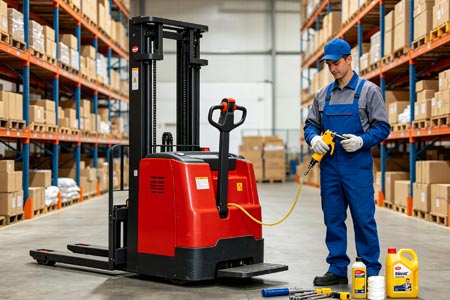
Travel Load Wheel Sets
Clean debris on wheel axles; ensure rollers rotate smoothly without blockage. Replace severely unilateral worn rollers to avoid pallet tilt and cargo damage.
Basic Hydraulic System Check
Lower forks fully to release hydraulic pressure, inspect cylinders and hose joints for oil stains & leakage. Keep oil level at the middle mark of the tank; top up with matching No.32 anti-wear hydraulic oil if insufficient.
Electrical & Control Components
Lift buttons rebound flexibly, emergency stop switch works normally; battery plugs are tight without loose connection, wire jackets intact without cracking; dashboard power display clear.
Daily Parking Standard
Remove all pallets after work, fully lower forks to release long-term cylinder compression deformation.
2. Full Standard Monthly Maintenance
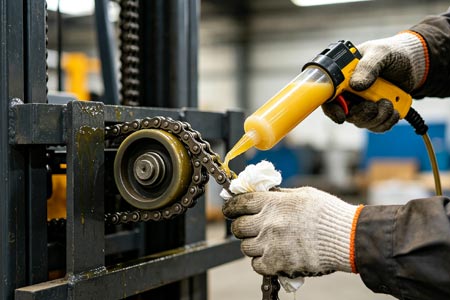
① Mast Chain & Guide Rail Lubrication
Wipe all dust off chains evenly, apply No.2 lithium-based grease, and wipe excess grease to avoid dripping onto goods. Adjust tension of two lifting chains, control sagging ≤20mm and keep consistent tightness; check chain links and pins for deformation or breakage. Inject grease into mast slide rails to eliminate jamming and abnormal lifting noise.
② In-depth Hydraulic System Overhaul
Tighten all hose joints; replace oil seals for slight seepage, wipe oil sludge with oil-absorbent rags. Check hydraulic oil transparency under high-temperature working conditions; replace full oil and clean tank filter if oil turns black or emulsified. 5-minute load pressure retention test after maintenance: qualified if forks do not sink.
③ Wheel Axle & Bearing Service
Disassemble travel and load wheel axles, clean sediment, inject bearing grease; replace rollers with over 50% wear.
④ Battery System (Differentiated Maintenance for Lead-Acid & Lithium, July High Temp Priority)
Lead-acid battery (critical for hot weather) Check electrolyte level weekly, maintain liquid 10–15mm above plates, only refill distilled water (tap water forbidden). Clean white corrosive powder on terminals with warm water, dry fully and coat with vaseline for rust prevention. Avoid fast charging at noon under high temperature; cool fully after full charge before operation, perform equalization charging once per month
Lithium battery (low-maintenance simplified process) Only wipe battery housing for moisture proof, check casing for bulging or breakage. Cool the unit for 30 minutes after heavy-duty high-temperature work before charging; store at 50%–60% state of charge for long idle periods. No water refilling or equalization charging required; only verify tightness of plug terminals.
3. In-depth Quarterly Overhaul
Full hydraulic fluid replacement: Drain all old oil completely, clean sediment at tank bottom, install brand-new hydraulic filter, refill compliant No.32 anti-wear hydraulic oil.
Disassemble & inspect lifting motor electrical parts: Remove motor housing to clear carbon powder, test carbon brush thickness and replace if worn over half. Measure motor insulation resistance ≥0.5MΩ; dry the motor if readings are too low.
Full vehicle wiring safety inspection: Check wire jackets section by section for extrusion damage and aging cracks, fit corrugated tubing for broken cables. Clean internal controller dust, inspect contactor contacts without burning or adhesion.
Structural safety inspection: Thoroughly check mast and frame welds for tiny cracks, retighten all loose bolts. Test full-load max lifting and manual push-pull performance.
Full load trial run: Cycle lifting & pushing for 30 minutes under no-load and rated load conditions; maintenance is qualified if no leakage, jamming or abnormal noise occurs.
To sum up, strictly follow the steps in this Complete Regular Maintenance Tutorial For Semi-electric Stacker to maximize the service life of your Semi-electric Stacker and cut long-term repair costs.
-
 Newnewton Forklift Export, Canton Fair Electric Warehouse Forklift ManufacturerAt the 140th Canton Fair, Newnewton displays full electric warehouse equipment, including cold storage and explosion-proof models with CE, OEM and export support.
Do you like ?0
Read more -
 Electric Forklift Factory Direct Quotation, Warehouse Handling EquipmentSame model electric forklifts have varied quotes due to different configurations. Provide load, lift, working conditions and certifications for accurate direct factory pricing.
Do you like ?0
Read more -
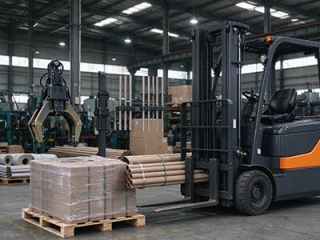 5 Common Working Scenarios for Customized Warehouse Forklift SolutionsStandard forklifts fail to fit special warehouse conditions. The factory offers customization for narrow aisles, cold rooms, explosion-proof and outdoor heavy-load scenarios.
Do you like ?0
Read more -
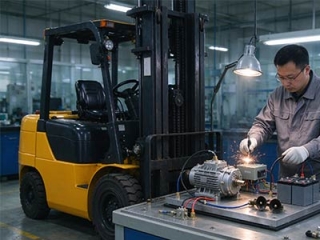 What Tests Are Conducted Before Explosion Proof Forklift DeliveryExplosion-proof forklifts are for flammable and dusty warehouses. They pass strict tests on structure, electrics, temperature and hydraulics before delivery.
Do you like ?0
Read more -
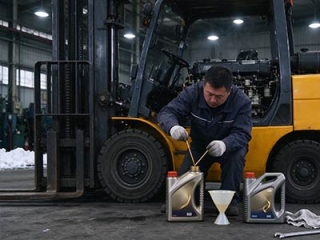 How to Maintain Internal Combustion Forklift in Cold WinterInternal combustion forklifts suffer hard starting and fuel icing in cold weather. Maintain fuel, oil, battery and cooling systems for winter use.
Do you like ?0
Read more -
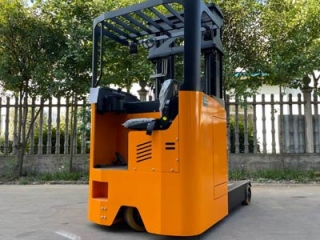 2 Ton Sit-down Reach Stacker, Sit-on Electric Reach Stacker2-ton seated reach stackers fit narrow aisle high rack warehouses. Its extending mast works for two-shift stacking; watch aisle size and high lift capacity deration.
Do you like ?0
Read more