
CE Certification for Self-Elevating Platform, Electric Self-Elevating Stacker
Electric self-elevating stackers can load and unload goods on trucks. They differ from regular warehouse stackers in working conditions and safety risks. When exporting to the EU, the CE solution for ordinary stackers cannot be adopted directly. Many foreign trade orders fail customs clearance due to wrong standards and incomplete technical documents.
It falls under the Machinery Directive, together with EMC and Low Voltage related standards. Full machine risk assessment, stability test, brake and hydraulic safety verification are required. Since it operates on truck chassis with large centre-of-gravity shift, stability calculation report is the key audit item to prevent overturning during lifting, loading and boarding.
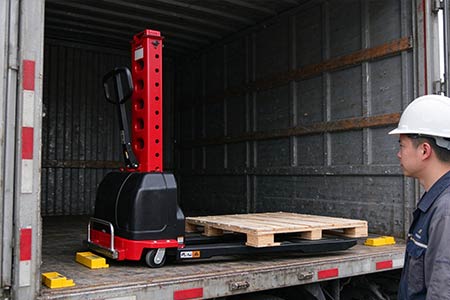
For safety devices, overload protection, emergency stop system and hydraulic burst valve are mandatory. The electric safety circuit shall comply with EN ISO 13849 functional safety requirements to avoid risks caused by pipe burst and misoperation. A typical mistake is using CE certificates of regular stackers for substitution.
As truck-mounted loading equipment, it is not designed for indoor stationary stacking. NB authorities will separately check the limit structure matched with trucks and anti-restart interlock. The technical package includes drawings, calculation documents and test reports, plus English operation and maintenance manuals with clear marks of rated load, centre-of-gravity limits and no-person warning.
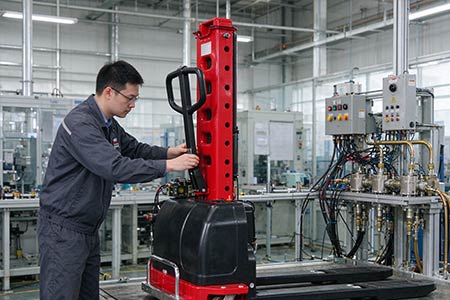
The nameplate must be clear and durable. The size and position of CE marking shall meet specifications with EU declaration of conformity. For CE certification for self-elevating platform, finalize the design according to EU harmonized standards in advance and prepare complete technical files. Voltage and warning labels can be adjusted for target countries to shorten rectification time.
FAQ
Q: Must NB notified bodies issue the CE certificate for self-elevating stackers?
A: It is high-risk lifting and loading machinery. Type examination by notified bodies is required. Self-declaration is not acceptable.
Q: Is re-certification needed after changing load capacity or fork length?
A: Changes to structure, stability or rated load require change assessment. Major modifications need new type tests.
Q: Can CE certificates of ordinary stackers be used for self-elevating stacker export?
A: No. Working conditions and risk models are different. Certificates are not interchangeable.
-
 CE Certification for Self-Elevating Platform, Electric Self-Elevating StackerSelf-loading electric stackers for EU export need dedicated CE certification. Stability calculation and full English documents are vital for customs clearance.
Do you like ?0
Read more -
 Periodic Inspection Tips for Heavy-Duty Double Pallet Electric TruckDouble pallet stackers have heavier load fluctuation. AC brushless motors with vector controllers rely on heat dissipation and torque margin for stable heavy-duty work.
Do you like ?0
Read more -
 How the Drive Motor Maintains Stable Power for Heavy-Duty Double Pallet StackerDouble pallet stackers have heavier load fluctuation. AC brushless motors with vector controllers rely on heat dissipation and torque margin for stable heavy-duty work.
Do you like ?0
Read more -
 Advantages of Lithium Walkie Straddle Stacker, Wide Leg Walkie Electric StackerAst, the right-angle stacking aisle, is critical for narrow-aisle walkie stackers. Leave safety margin instead of relying only on brand names for selection.
Do you like ?0
Read more -
 Which Brand Walkie Stacker Suits Narrow Aisles, Full Electric Walkie StackerAst, the right-angle stacking aisle, is critical for narrow-aisle walkie stackers. Leave safety margin instead of relying only on brand names for selection.
Do you like ?0
Read more -
 Stand-on Full Electric Stacker: Can It Climb Warehouse RampsSlopes at loading docks change load capacity of stand-on stackers. Do not use flat-ground ratings. Respect slope limits to prevent slipping and rolling away.
Do you like ?0
Read more








