
Many warehouses with loading docks have ramps of different heights. When buying stand-on electric stackers, buyers focus most on how is the climbing performance of stand-on stacker. The load and power performance of this stacker differ greatly between ramp conditions and flat ground. You cannot judge its capacity only by the rated load on flat ground.
Standard stand-on stackers generally have an empty-load climbing gradient of 8% to 10%. The recommended climbing gradient under full load is within 5%, which balances stability and safety. For on-site reference, a 300 mm high dock with a 6-meter-long ramp forms a 5% gradient, and most standard models can pass smoothly. If the ramp is steeper than 8%, power shortage and slipping may occur even without cargo. Long-term use will accelerate wear of drive motors, gears and batteries.
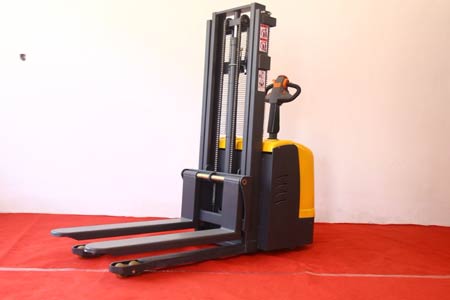
Here is a typical dock case. A finished packaging warehouse built a ramp with a 7% gradient. At first, the operator tried to climb with a full 2-ton load. The machine struggled to start and the wheels spun frequently. Later, they adjusted the operation method: reduce cargo weight for uphill transport and transfer goods in batches. Keep moving straight at low speed on the ramp, without turning or stacking goods on slopes. The machine works stably after adjustment.
Besides gradient, several details affect climbing performance. Ground material matters a lot. Epoxy floors and smooth cement ramps have poor traction and slip more easily at the same gradient. Rough anti-slip cement or textured ramps deliver better performance. Battery level also influences climbing. Low battery reduces motor output and weakens climbing capacity significantly. Ensure sufficient battery power before ramp operations.
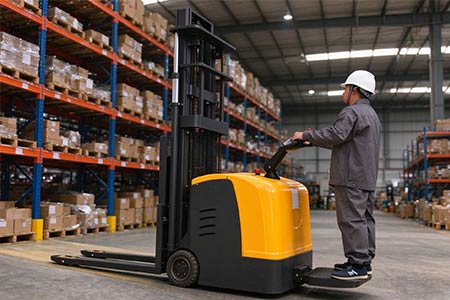
There are clear operation rules. Stackers are forbidden to turn, travel sideways, park or stack goods on ramps to prevent sliding and tipping. If frequent full-load ramp travel is required, inform the manufacturer of your working conditions in advance and select reinforced high-torque versions instead of using standard models for steep slopes.
Stand-on full electric stacker is mainly designed for indoor flat-ground stacking. Ramps are secondary working conditions. Controlling gradient and load is the reliable way to use it.
-
 CE Certification for Self-Elevating Platform, Electric Self-Elevating StackerSelf-loading electric stackers for EU export need dedicated CE certification. Stability calculation and full English documents are vital for customs clearance.
Do you like ?0
Read more -
 Periodic Inspection Tips for Heavy-Duty Double Pallet Electric TruckDouble pallet stackers have heavier load fluctuation. AC brushless motors with vector controllers rely on heat dissipation and torque margin for stable heavy-duty work.
Do you like ?0
Read more -
 How the Drive Motor Maintains Stable Power for Heavy-Duty Double Pallet StackerDouble pallet stackers have heavier load fluctuation. AC brushless motors with vector controllers rely on heat dissipation and torque margin for stable heavy-duty work.
Do you like ?0
Read more -
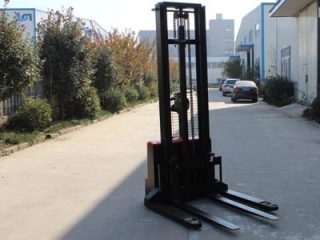 Advantages of Lithium Walkie Straddle Stacker, Wide Leg Walkie Electric StackerAst, the right-angle stacking aisle, is critical for narrow-aisle walkie stackers. Leave safety margin instead of relying only on brand names for selection.
Do you like ?0
Read more -
 Which Brand Walkie Stacker Suits Narrow Aisles, Full Electric Walkie StackerAst, the right-angle stacking aisle, is critical for narrow-aisle walkie stackers. Leave safety margin instead of relying only on brand names for selection.
Do you like ?0
Read more -
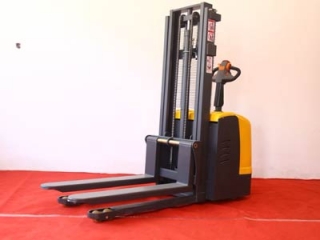 Stand-on Full Electric Stacker: Can It Climb Warehouse RampsSlopes at loading docks change load capacity of stand-on stackers. Do not use flat-ground ratings. Respect slope limits to prevent slipping and rolling away.
Do you like ?0
Read more








