
What Scenarios Are Suitable for a Ride-On Reach Truck? A Complete Guide
Many people know that reach trucks can work freely in narrow aisles and work well with racking systems. But since a ride‑on reach truck has a larger body, many customers ask: what scenarios are ride‑on reach truck applications most suitable for?
Scenario 1: High‑Level Rack Warehousing (Lifting Height 3m–8m+)
Standard stackers cannot reach high levels, and counterbalance forklifts lack stability.A ride‑on reach truck features extendable forks, making high‑level loading and unloading much safer.
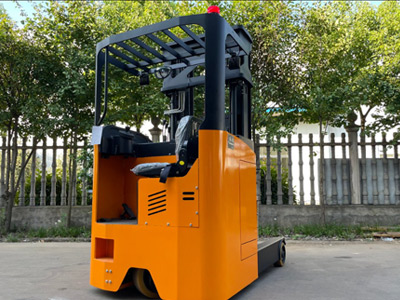
Scenario 2: Narrow‑Aisle Warehouses (Aisle Width Only 1.8–2.5m)
No large turning radius is needed. The forks extend forward while the body stays steady.This makes ride‑on reach truck applications ideal for extremely narrow passages and greatly improves warehouse space utilization.
Scenario 3: High‑Density & High‑Rack Storage
E-commerce warehouses, third‑party logistics centers, auto parts warehouses, cold‑chain warehouses, and more.These sites need more pallet positions, saved space, and fast turnover — all supported by a stable ride‑on reach truck.
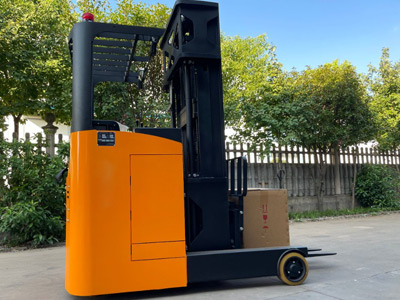
Scenario 4: Long‑Distance & High‑Frequency Handling
With a ride‑on design, operators do not need to walk and feel less fatigued.Faster travel speed makes ride‑on reach truck applications perfect for large warehouses and long‑distance tasks.
Scenario 5: Standard Palletized Cargo Handling
A ride‑on reach truck works best with standard pallets for full‑pallet inbound and outbound operations.Typical industries include food, electronics, hardware, daily chemicals, pharmaceuticals, and other regulated warehouses.
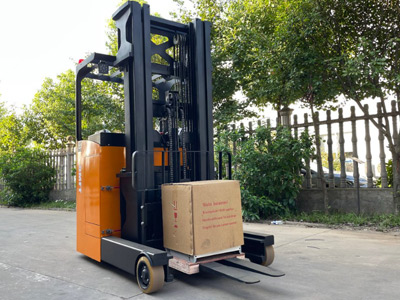
The ride‑on reach truck offers clear advantages in safety, comfort, and maneuverability.By understanding real ride‑on reach truck applications, you can greatly improve operational efficiency, solve low turnover and poor space usage issues, and help factories and warehouses work more smoothly and efficiently.
-
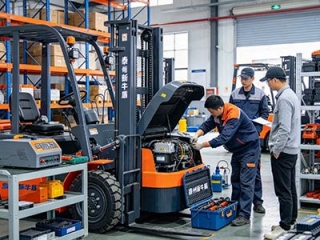 Taizhou newnewton Forklift Manufacturer IntroductionAvoid selecting warehouse forklifts only by unit price. Check site conditions, certificates and after-sales. Newnewton, Taizhou source factory, provides full product range, CE certification, customization and reliable spare parts supply.
Do you like ?0
Read more -
 Semi-electric Stacker vs Manual Stacker Cost ComparisonWhen buying stacking equipment for small warehouses, compare semi-electric stackers and manual stackers from cost, efficiency and maintenance to balance upfront expense and long-term investment.
Do you like ?0
Read more -
 CE Certification for Manual Hydraulic StackerNewnewton manual hydraulic stackers exported to EU need CE certification complying with 2006/42/EC and EN1757-1, including safety assessment, technical documents and product compliance checks.
Do you like ?0
Read more -
 Stand-on vs Walk-behind Electric Pallet Truck ComparisonUnderstand the differences between stand-on and pedestrian electric pallet trucks in operation, efficiency, aisle requirements and costs. Choose the right model based on warehouse scale, transfer distance and order volume.
Do you like ?0
Read more -
 Operation Notes for Electric Self Elevating TruckPedestrian electric stackers cover tiered brand options with different features. International brands offer stable performance at high cost, while domestic brands and factory suppliers provide better cost performance and customization.
Do you like ?0
Read more -
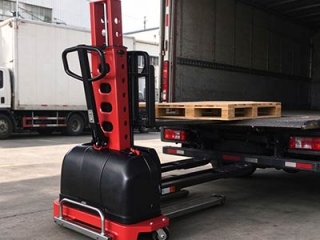 Operation Notes for Electric Self-elevating Truck | Truck Mounted Forklift SafetTruck-mounted self-loading forklifts fixed on truck tails handle cargo without loading docks. Control load and cargo gravity, inspect equipment and avoid soft slopes to prevent tipping and falling goods.
Do you like ?0
Read more








