Prohibited Operations For Scissor Lift Platform | 20 Safety Rules Summary
This article sorts out 20 standard Prohibited Operations For Scissor Lift Platform, standardizing daily operation of the Mobile Scissor Aerial Work Platform to improve construction safety & efficiency and eliminate major safety accidents.
1. Travel & Chassis Movement Prohibitions
Do not drive long distances or tow the machine while the platform is raised; only self-propelled models allow low-speed fine-tuning within a tiny range.
Never activate lifting function before four outriggers are fully extended and padded firmly with base plates.
Forbid sudden stops or sharp steering during lifting, which shifts gravity and causes operator falls.
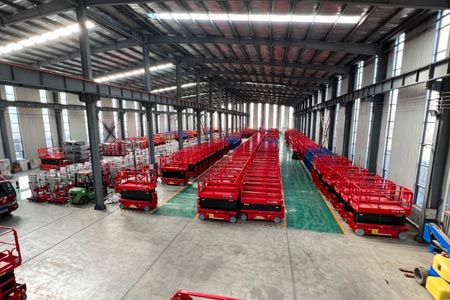
Do not drive up/down ramps or cross pits & trenches before the platform is fully lowered and scissor arms retracted.
Do not use the lift body to push/pull goods or other machinery; it cannot serve as a towing device.
Operators must not lean hard against or violently shake safety guardrails during lifting, which breaks overall balance.
2. Load & Personnel Loading Prohibitions
Strictly prohibit overloading or overcrowding; total weight of personnel and tools cannot exceed rated load capacity.
Do not stack heavy goods on one side of the platform; unbalanced load risks machine tipping.
No wooden boxes or ladders for extra height on the platform; climbing or stepping over guardrails is forbidden.
Do not hang heavy loads outside guardrails; the scissor lift must never be used as a crane for hoisting cargo.
3. Operator Safety Operation Rules
Personnel who are drunk, fatigued, untrained or uncertified are banned from operating the aerial platform.
Keep hands, feet and tools clear of scissor arm gaps to avoid crushing injuries during lifting movement.
Safety harness lanyards can only attach to the platform’s dedicated anchor points; never hook onto wall pipes or guardrails.
Operators shall not leave the raised platform unattended, to prevent unauthorized personnel from misoperating control switches.
4. Weather & Site Environment Restrictions
Outdoor aerial work is forbidden under wind force level 6 or above, thunderstorms, heavy fog and snow.
Lifting operation is prohibited on slopes steeper than 3°, cliff edges, soft muddy ground or slippery oil-stained floors.
Do not lift the platform close to high-voltage power lines without maintaining safe clearance to avoid electric shock hazards.
5. Modification & Fault Maintenance Bans
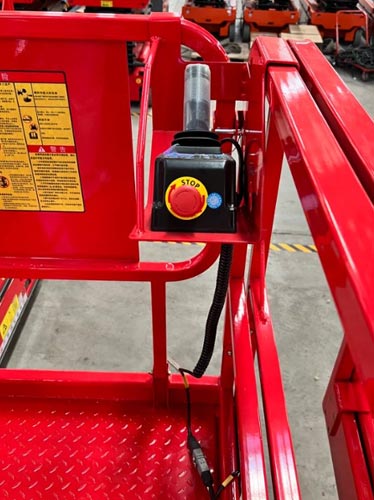
It is forbidden to remove, short-circuit or shield safety devices including emergency stop buttons, height limit switches and overload protection sensors.
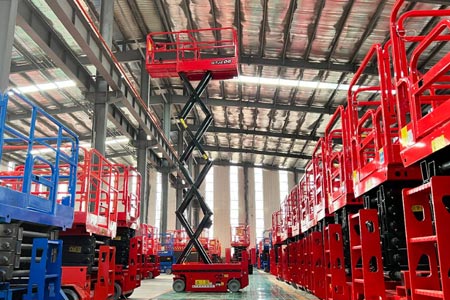
Non-professional technicians are not allowed to privately refit hydraulic pipelines, electric control systems or main scissor frame structures.
Stop all aerial work immediately if the platform has oil leakage, abnormal noise or jamming lifting; never operate faulty equipment.
All construction enterprises can apply these Prohibited Operations For Scissor Lift Platform to staff safety training. Abiding by all restrictions effectively avoids severe accidents such as high-altitude falls, machine tipping, crushing injuries and electric shock when using the Mobile Scissor Aerial Work Platform.
-
 Newnewton Forklift Export, Canton Fair Electric Warehouse Forklift ManufacturerAt the 140th Canton Fair, Newnewton displays full electric warehouse equipment, including cold storage and explosion-proof models with CE, OEM and export support.
Do you like ?0
Read more -
 Electric Forklift Factory Direct Quotation, Warehouse Handling EquipmentSame model electric forklifts have varied quotes due to different configurations. Provide load, lift, working conditions and certifications for accurate direct factory pricing.
Do you like ?0
Read more -
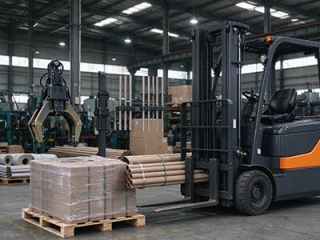 5 Common Working Scenarios for Customized Warehouse Forklift SolutionsStandard forklifts fail to fit special warehouse conditions. The factory offers customization for narrow aisles, cold rooms, explosion-proof and outdoor heavy-load scenarios.
Do you like ?0
Read more -
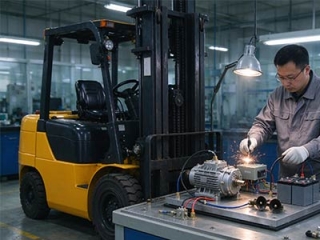 What Tests Are Conducted Before Explosion Proof Forklift DeliveryExplosion-proof forklifts are for flammable and dusty warehouses. They pass strict tests on structure, electrics, temperature and hydraulics before delivery.
Do you like ?0
Read more -
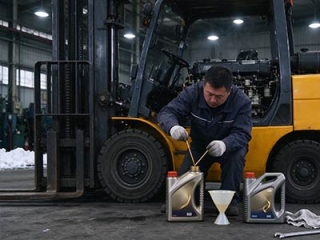 How to Maintain Internal Combustion Forklift in Cold WinterInternal combustion forklifts suffer hard starting and fuel icing in cold weather. Maintain fuel, oil, battery and cooling systems for winter use.
Do you like ?0
Read more -
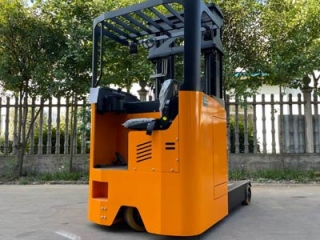 2 Ton Sit-down Reach Stacker, Sit-on Electric Reach Stacker2-ton seated reach stackers fit narrow aisle high rack warehouses. Its extending mast works for two-shift stacking; watch aisle size and high lift capacity deration.
Do you like ?0
Read more