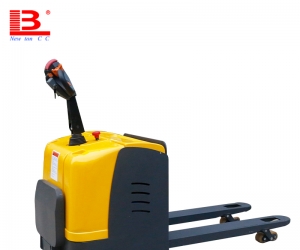
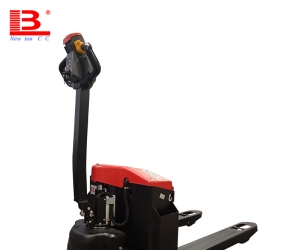
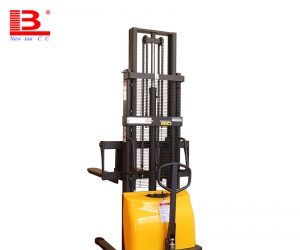
Off-road Full Electric Pallet Jack VS Indoor Electric Pallet Truck Feature Break
Many factory operators work on rough terrain covered with gravel, pits and uneven ground, requiring pallet trucks that adapt to harsh outdoor conditions. If you cannot confirm whether an off-road model is necessary, this guide fully explains the Differences Between Off-road Walk-behind Electric Pallet Truck & Standard Pallet Truck, sorted into 5 core distinctions of the Off-road Full Electric Pallet Jack.
1. Tires & Ground Clearance: Huge Gap In Passing Capacity
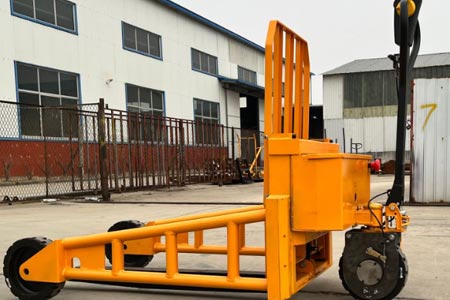
Standard indoor electric pallet jacks use small smooth PU solid wheels without anti-slip treads, with only 50–70mm ground clearance. They are limited to epoxy floors and flat cement warehouse surfaces. Gravel and pits easily jam wheels and scratch hydraulic chassis; minor muddy roads cause slipping and sinking, completely unfit for unpaved outdoor yards. The Off-road Full Electric Pallet Jack is fitted with wide deep-tread rubber off-road tires for strong anti-slip grip. Ground clearance is raised to 100–180mm with full bottom anti-collision guards. It rolls smoothly over shallow pits, gravel and small curbs without chassis scraping on muddy or stone stockyards.
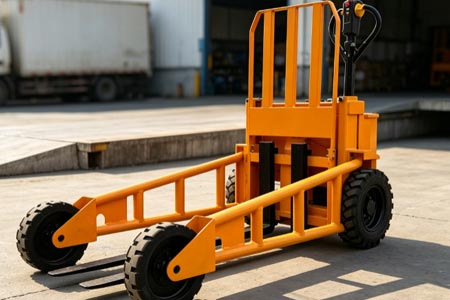
2. Motor Power & Climbing Performance: Heavy Load Capacity Gap
Ordinary indoor pallet trucks adopt low-torque 24V drive motors, only capable of climbing gentle slopes below 3° under full load. They lack sufficient power for factory loading ramps or outdoor inclines and risk sliding backward, only suitable for short flat indoor transfers. Off-road versions are equipped with sealed high-torque 48V brushless motors matched with heavy-duty gearboxes, boosting power output by over 30%. They steadily climb 5°–15° slopes with full loads, handling construction ramps, long factory gradients and truck loading/unloading without stuttering during heavy-load startup.
3. Chassis Frame Structure: Shock Resistance & Service Life
Standard electric pallet trucks feature thin bent welded frames with no underbody protection. Long-term vibration and bumping easily crack welds and bend forks, only designed for light-duty low-wear indoor operation. The off-road pallet truck uses double-thick high-strength integrated welded steel frames, paired with full wrap-around bottom guards and built-in simple shock absorption. The robust structure withstands constant vibration on gravel yards without deformation, ideal for long-term transport of 2–3 ton heavy construction materials.
4. Electric Control IP Rating: Dividing Line For Harsh Outdoor Environments
Standard indoor pallet trucks have unsealed controllers and wiring. Rainwater and construction dust easily penetrate components and short out the drive unit, restricted to dry enclosed warehouses and prohibited for outdoor rainy or dusty work. All electrical parts on the off-road model are fully sealed for dustproof and waterproof protection, drastically lifting IP rating. It runs reliably under light rain, heavy dust and humid outdoor yards, cutting failure rates by 70% and supporting both indoor and outdoor multi-scenario use.
Selection Summary
Review your working environment before purchasing to judge if you need the Off-road Full Electric Pallet Jack. Mastering the Differences Between Off-road Walk-behind Electric Pallet Truck & Standard Pallet Truck helps you avoid unsuitable model purchases and unnecessary extra costs.
-
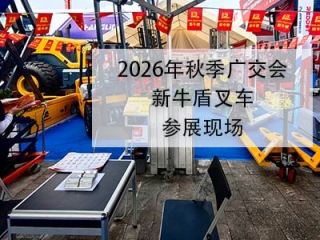 Newnewton Forklift Export, Canton Fair Electric Warehouse Forklift ManufacturerAt the 140th Canton Fair, Newnewton displays full electric warehouse equipment, including cold storage and explosion-proof models with CE, OEM and export support.
Do you like ?0
Read more -
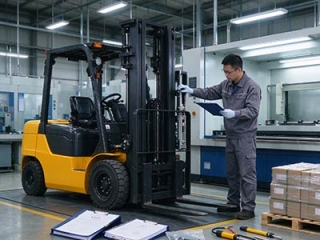 Electric Forklift Factory Direct Quotation, Warehouse Handling EquipmentSame model electric forklifts have varied quotes due to different configurations. Provide load, lift, working conditions and certifications for accurate direct factory pricing.
Do you like ?0
Read more -
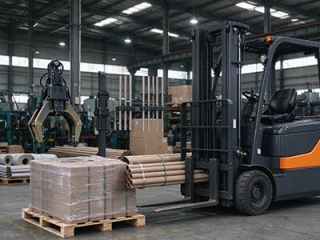 5 Common Working Scenarios for Customized Warehouse Forklift SolutionsStandard forklifts fail to fit special warehouse conditions. The factory offers customization for narrow aisles, cold rooms, explosion-proof and outdoor heavy-load scenarios.
Do you like ?0
Read more -
 What Tests Are Conducted Before Explosion Proof Forklift DeliveryExplosion-proof forklifts are for flammable and dusty warehouses. They pass strict tests on structure, electrics, temperature and hydraulics before delivery.
Do you like ?0
Read more -
 How to Maintain Internal Combustion Forklift in Cold WinterInternal combustion forklifts suffer hard starting and fuel icing in cold weather. Maintain fuel, oil, battery and cooling systems for winter use.
Do you like ?0
Read more -
 2 Ton Sit-down Reach Stacker, Sit-on Electric Reach Stacker2-ton seated reach stackers fit narrow aisle high rack warehouses. Its extending mast works for two-shift stacking; watch aisle size and high lift capacity deration.
Do you like ?0
Read more