
Standard Safe Operating Procedures For Electric Order Picker High Bay Picking
This complete set of High Level Order Picker Safe Operation Specifications can be directly used for warehouse staff safety training. Improper operation of the Electric Order Picker creates severe risks of tipping or shaking during high-level picking, which easily leads to serious personal injury. Master all standard operating rules before startup to protect operators and on-site personnel.
1. Pre-operation Inspection Standards
Full vehicle structure check: Ensure lifting platform guardrails, self-locking safety gates and anti-slip footplates are intact and firm, free of deformation, cracked welds or missing parts.
Safety component verification: Test emergency stop button, audible & visual warning lights, travel brakes and height limit devices for sensitive, error-free performance with no fault alarms.
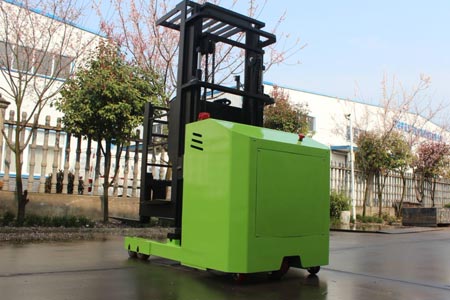
Power & hydraulic inspection: Confirm sufficient battery power, intact wiring without cracked insulation; check lifting cylinders and hoses for oil seepage, well-lubricated lifting chains with smooth movement.
No-load trial run: Test lifting/lowering, forward/reverse travel and braking twice under empty load, confirm no automatic fork sinking, abnormal noise or drifting.
Personal protective rules: Operators must wear anti-slip safety shoes and fasten safety harnesses throughout high-level work. Lanyards shall only lock onto the equipment’s dedicated anchor points, never racking or pipeline fixtures. Any unit with oil leakage, damaged guardrails or failed brakes is strictly prohibited from operation; resume use only after professional maintenance.
2. Travel & Passage Safety Standards
Maintain low travel speed at all times. Slow down and sound the horn at aisle corners, rack intersections and crowded zones, yield to ground staff actively.
Do not travel long distances with the lifting platform raised; only minor short-distance fine-tuning is allowed for pallet alignment.
Forbid rapid acceleration, sudden braking and sharp turns. Avoid slopes steeper than 3° and slippery oil/water covered floors to prevent gravity shift and tipping.
Keep a minimum 30cm safety gap between the truck and side racks. Clear cartons, pallets and debris from aisles to guarantee unobstructed passage.
Stop and check visibility when two vehicles pass each other or sightlines are blocked; no cutting corners or close tailgating.
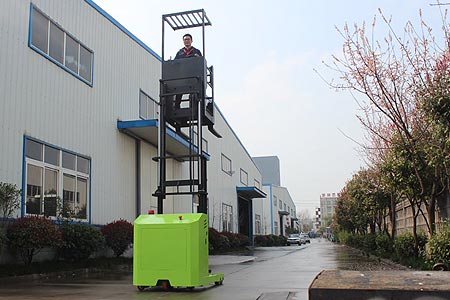
3. High-level Lifting & Picking Rules
Follow the core rule: Do not lift while traveling; do not travel while lifted.
Only one operator is allowed on the platform; no overloading or overcrowding. Place goods evenly in the center, avoid heavy one-sided loads that cause tilt.
Stand firm and hold handrails during lifting; keep hands, feet and tools inside guardrails. Never step on rails or stack boxes to gain extra height.
Handle goods gently at height; do not drop cartons or waste downwards to avoid striking ground personnel.
Slow to a stop when approaching ceiling beams and pipes at maximum height, reserve safe clearance to prevent head crushing impacts.
4. Strictly Forbidden Dangerous Operations (Safety Red Lines)
Do not remove, short-circuit or disable guardrails, limit switches, emergency stops and other safety devices; no unauthorized modification of electric control or hydraulic systems.
Ban operation by intoxicated, fatigued or untrained uncertified personnel.
Never use the order picker as a ladder, crane or towing tool; do not drag heavy ground cargo.
Keep all body parts clear of scissor/mast gaps during lifting movement to avoid crushing injuries.
Cease all high-lift operations immediately during thunderstorms, strong winds, poor lighting or slippery floors.
Cut power and shut down if abnormal noise, oil leakage or fault alarms appear; do not force continued operation.
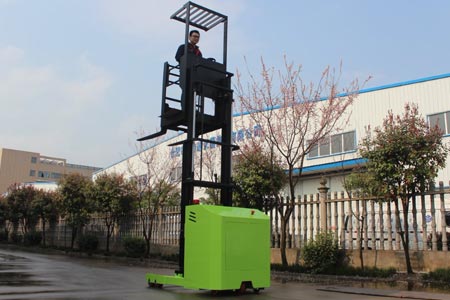
5. Post-shutdown Parking & Storage Standards
Fully lower the lifting platform to the minimum position, straighten the vehicle, engage hand brake, cut power and remove the operation key.
Clear leftover goods and debris from the platform, wipe oil stains off the truck body, inspect guardrails and wheels for collision damage.
Park on designated flat dry ground; do not block main aisles, fire exits or emergency passages.
Charge the unit promptly when low on power; disconnect power for long-term idle storage and conduct regular battery & wiring inspections.
Record all equipment defects found during the shift and submit for professional repair; operators are forbidden to disassemble spare parts independently.
Most safety accidents stem from ignoring minor hidden risks. Memorize these High Level Order Picker Safe Operation Specifications before operating the Electric Order Picker, to eliminate hazards such as falls, tipping, crushing and collisions at the source.
-
 Newnewton Forklift Export, Canton Fair Electric Warehouse Forklift ManufacturerAt the 140th Canton Fair, Newnewton displays full electric warehouse equipment, including cold storage and explosion-proof models with CE, OEM and export support.
Do you like ?0
Read more -
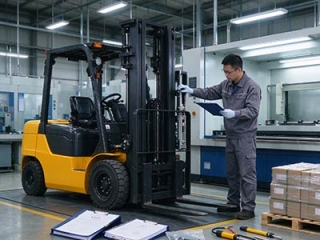 Electric Forklift Factory Direct Quotation, Warehouse Handling EquipmentSame model electric forklifts have varied quotes due to different configurations. Provide load, lift, working conditions and certifications for accurate direct factory pricing.
Do you like ?0
Read more -
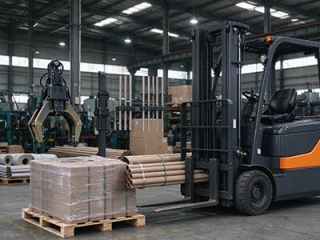 5 Common Working Scenarios for Customized Warehouse Forklift SolutionsStandard forklifts fail to fit special warehouse conditions. The factory offers customization for narrow aisles, cold rooms, explosion-proof and outdoor heavy-load scenarios.
Do you like ?0
Read more -
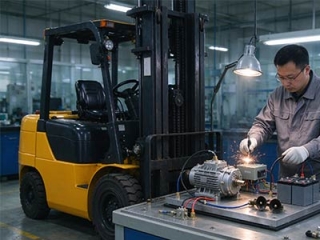 What Tests Are Conducted Before Explosion Proof Forklift DeliveryExplosion-proof forklifts are for flammable and dusty warehouses. They pass strict tests on structure, electrics, temperature and hydraulics before delivery.
Do you like ?0
Read more -
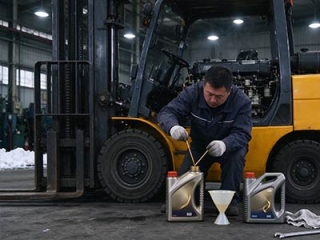 How to Maintain Internal Combustion Forklift in Cold WinterInternal combustion forklifts suffer hard starting and fuel icing in cold weather. Maintain fuel, oil, battery and cooling systems for winter use.
Do you like ?0
Read more -
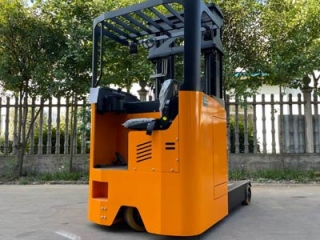 2 Ton Sit-down Reach Stacker, Sit-on Electric Reach Stacker2-ton seated reach stackers fit narrow aisle high rack warehouses. Its extending mast works for two-shift stacking; watch aisle size and high lift capacity deration.
Do you like ?0
Read more








