
Full Electric Stacker With Foot Platform | Aisle Selection Guide
Many warehouse planners focus on load capacity and lifting height while ignoring turning radius, a critical indicator. Stand-on electric stackers differ in structure from walk-behind models, so they require different turning space. Insufficient reserved aisle space will make it hard for the truck to turn between racks and reduce storage utilization and operation efficiency.
The most important reference value is the minimum outer turning radius. It means the trajectory radius of the outermost part of the truck when the steering wheel is turned to the limit under full load. Buyers should not only check the theoretical data on specification sheets, but also reserve safety margin according to pallet placement, otherwise rack collision may happen during operation.
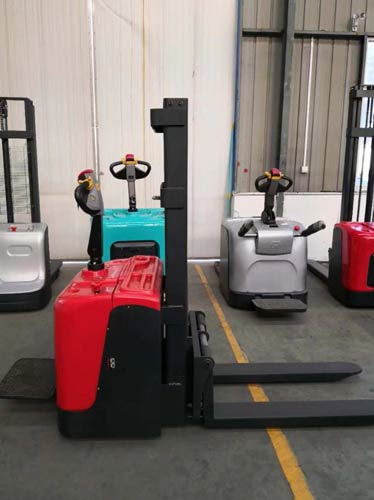
How big is the turning radius of a stand-on full electric stacker? Equipped with an extra standing platform, the full electric stacker with foot platform has a different wheelbase. Its turning radius is generally larger than that of walk-behind versions. If your warehouse has narrow aisles, it is better to ask the factory for the right-angle stacking aisle width. This data is more practical than the turning radius alone and serves as a key basis for narrow warehouse selection.
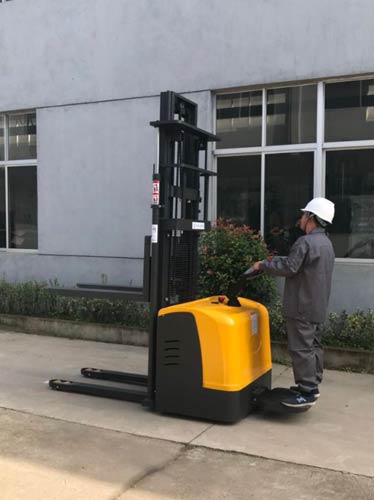
Besides vehicle parameters, on-site conditions also affect steering performance. Ground flatness, ramps, pallet size and fork length will change the actual space required for turning. Slippery ground or debris can restrict steering even if the parameters meet requirements. These working conditions should be taken into account in aisle planning.
Full electric stacker with foot platform comes with accurate turning parameters. Our engineers can calculate safe aisle dimensions based on your rack layout to fit stacking work in narrow aisles and avoid extra costs for later rack modification. Feel free to contact us for parameter details or a free customized solution.
-
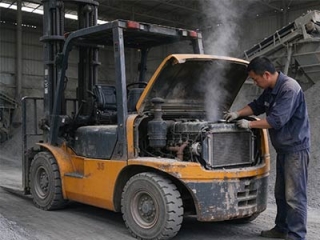 Heavy-Duty Diesel Forklift High Temperature Troubleshooting Guide3.5t diesel forklifts often overheat when handling sand and stone. Inspect cooling system step by step: radiator, belt, shroud, thermostat and water pump.
Do you like ?0
Read more -
 How to Choose Stackers for High-Level Access in Raw Material WarehouseRide-on reach stackers save aisle space for high racks. Good visibility for bulk raw materials. Select based on load curve and residual high-lift capacity.
Do you like ?0
Read more -
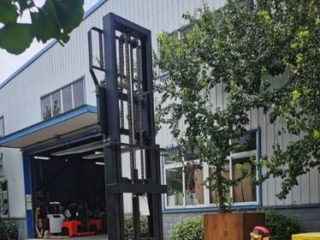 Rain Operation Rules for Legless Walk-Behind Counterbalance StackerLegless walkie counterbalance stackers are not waterproof. Only short-time use in light rain. Stop operation in heavy rain and follow safety rules on wet floors.
Do you like ?0
Read more -
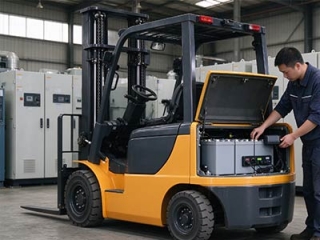 Avoid Hidden Costs When Buying Four-Wheel Electric Counterbalance ForkliftDo not compare only prices for four-wheel electric forklifts. Confirm load, lift, battery and warranty in quotes to avoid downgraded parts and extra charges.
Do you like ?0
Read more -
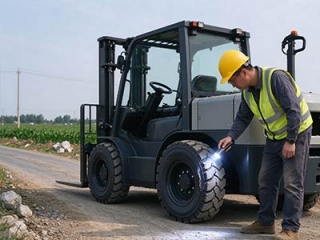 Tire Wear Inspection Methods for Rough-Terrain Walk Pallet TruckOff-road walkie pallet trucks face frequent tyre wear. Check tread pattern, sidewall damage and uneven wear to prevent skidding and blowouts.
Do you like ?0
Read more -
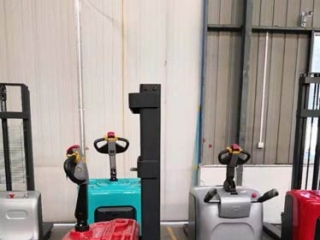 Full Electric Stacker With Foot Platform | Aisle Selection GuideWarehouse planning often overlooks turning radius. Stand-on stackers need extra aisle space. Insufficient clearance causes poor turning and reduces storage efficiency.
Do you like ?0
Read more








