Slow Charging Troubles Solved by Lithium Counterbalance Stacker
Slow battery charging often delays production, but the lithium counterbalance stacker supports opportunity charging for continuous use. An auto parts processing plant running two shifts with lead-acid counterbalance stackers was troubled by poor charging schedules. Learn about usage features of stand-on counterbalance stacker and the differences between lithium and lead-acid models to resolve conflicts between charging cycles and handling efficiency.
The workshop adopts JIT material feeding. Material delivery peaks between 9 a.m. and 10 a.m. Once the battery runs low, a lead-acid battery needs 6 to 8 hours for full charging. With only one battery pack, the stacker has to stay in the charging area, leaving production lines waiting for raw materials. Manual pallet transport is required as a temporary fix.
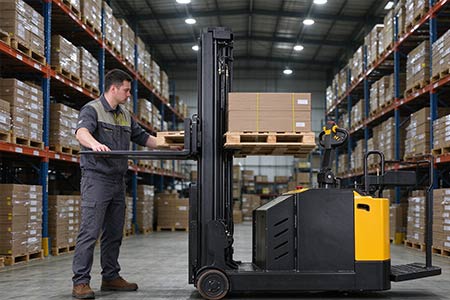
These bottlenecks disappear after switching to lithium counterbalance stackers. The strengths of the stand-on design stand out. Operators work in standing position for flexible steering. The counterbalance structure avoids leg interference, so it can handle bottom-supported pallets and special fixture pallets, fitting narrow stations beside production lines and racks.
Lithium batteries support opportunity charging. You do not need to drain the battery before charging. During a 30-minute morning break or a 20-minute lunch break, short charging can add enough power for one or two hours of handling. No dedicated long charging window or extra spare battery packs are required.
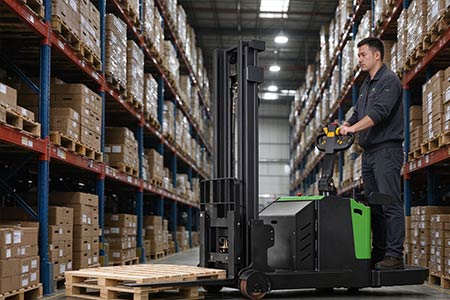
In this factory, the stacker transfers die-casting raw materials from the raw material warehouse to line-side racks and moves finished goods to temporary storage areas in continuous cycles. The lead-acid version required at least one long charging stop per day. Now operators top up power during short pauses, keeping battery level stable for nonstop material flow across morning and evening shifts.
Besides flexible charging, lithium stand-on counterbalance stacker has practical usage features suitable for production lines. It is not limited by the bottom height of pallets. The counterweight keeps stable performance during heavy-load high stacking, ideal for workshops with frequent handling of thick fixture pallets and heavy materials. Its compact body steers easily in transitional passages between racks and production lines. Operators can get on and off quickly for higher efficiency when moving between multiple stations.
If you also face issues with tight handling cycles, share your working conditions and we can offer targeted solutions.
-
 Slow Charging Troubles Solved by Lithium Counterbalance StackerLead-acid counterbalance stackers delay JIT supply for two-shift auto parts plants. Lithium versions support opportunity charging to match production rhythm.
Do you like ?0
Read more -
 Anti-Slip 2WD Diesel Rough Terrain Forklift for Unpaved GroundRough sites need high-ground-clearance 2WD rough-terrain forklifts. Diesel power prevents slipping and bottoming for outdoor loose ground handling.
Do you like ?0
Read more -
 Cold Storage Narrow Aisle Stacker, Direct Supply for Cold Chain WarehousingCold storage narrow aisle stackers come with factory low-temp protection against condensation, better than simple retrofits for frozen food and pharmaceutical cold chains.
Do you like ?0
Read more -
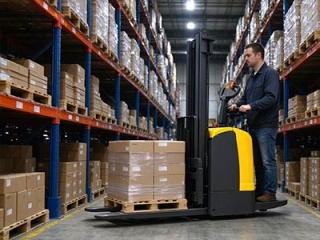 When to Choose Stand-on Electric Double Pallet StackerChoose between double pallet and standard stackers by aisle and load per trip for e-commerce and transfer warehouses to avoid inefficient equipment.
Do you like ?0
Read more -
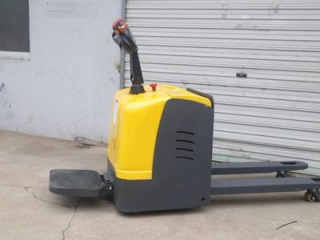 3 Key Parameters to Select Small Stand-on Electric Pallet TruckFor compact stand-on pallet trucks, turning radius, load and battery are core specs. Match aisle, frequency and budget to avoid poor site adaption.
Do you like ?0
Read more -
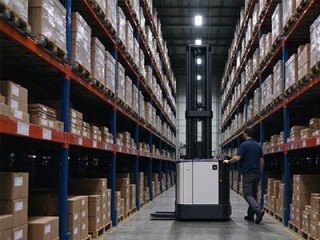 What Aisle Width Is Required for Safe Stacking of Walk-behind StackerWhen choosing walkie stackers, Ast (right-angle stacking aisle) matters more than body width. Differentiate stacking aisle from straight passage and leave extra space.
Do you like ?0
Read more