
What Aisle Width Is Required for Safe Stacking of Walk-behind Stacker
Many small warehouses only focus on vehicle width when planning racks and ignore the actual turning space for right-angle stacking. To know what aisle width fits an electric walk-behind stacker, you need to check the Ast, the right-angle stacking aisle width, instead of only the body width.
For mainstream 1-ton to 1.5-ton electric walk-behind stackers matched with common 1000×1200mm Chinese pallets, the factory-stated Ast ranges from 2210mm to 2340mm. This is a theoretical value measured under no-load conditions, with cargo not overhanging the pallet and flat ground.
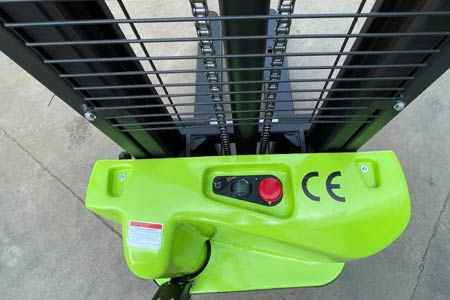
Do not design the warehouse purely according to theoretical data. Rack uprights, protectors, overhanging goods, uneven ground and operator safety margin all need extra space. For regular stock and single-operator work, the clear aisle width of 2400mm is recommended. This size fits most domestic walk-behind stackers and reduces collision risks during turning and pallet handling.
If warehouse space is tight, with light loads, cargo within pallet edges and smooth floor, a minimum clear aisle of 2300mm is usable, though long-term full-load operation is not advised. For 800×1200mm Euro pallets placed along the forks, the theoretical stacking aisle can be reduced to 2060mm to 2180mm, and the safe on-site clearance should be above 2200mm.
It is important to tell straight passage apart from stacking turning. Straight travel only needs around 300mm extra space beyond the vehicle width, roughly 1100mm for passing. However, this width cannot support 90-degree turning and stacking, which is a common trap for buyers.
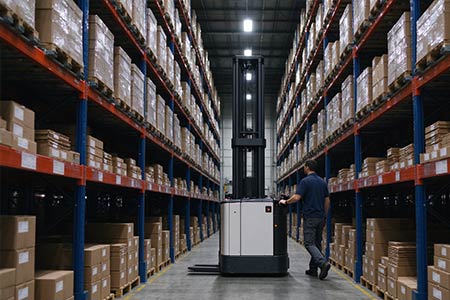
Several factors affect aisle requirements. The outer width of support legs limits the minimum pallet bottom height for straddle stackers. Pallets with too low ground clearance cannot be accessed even with enough aisle width. Higher lifting height requires more precise positioning, so an extra 100mm clearance is suggested for high-lifting tasks. Wider aisles are necessary for mixed pedestrian and forklift traffic to reserve space for people to dodge.
Before selecting narrow aisle electric walk-behind stacker, check the Ast value on the nameplate. This factory-tested stacking parameter is more reliable than general reference data. Measure the clear width after rack installation and match it with equipment parameters. This prevents waste of warehouse space caused by machines that can pass straight but cannot turn after racks are finished.
Send your pallet size and rack type to us for accurate aisle calculation if you need warehouse layout planning.
-
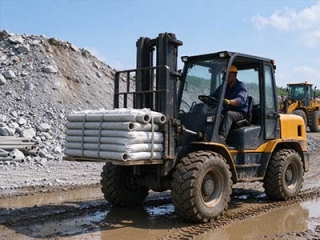 Anti-Slip 2WD Diesel Rough Terrain Forklift for Unpaved GroundRough sites need high-ground-clearance 2WD rough-terrain forklifts. Diesel power prevents slipping and bottoming for outdoor loose ground handling.
Do you like ?0
Read more -
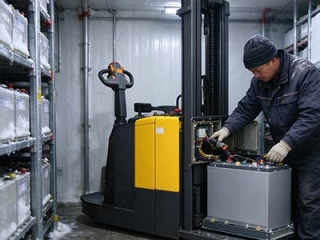 Cold Storage Narrow Aisle Stacker, Direct Supply for Cold Chain WarehousingCold storage narrow aisle stackers come with factory low-temp protection against condensation, better than simple retrofits for frozen food and pharmaceutical cold chains.
Do you like ?0
Read more -
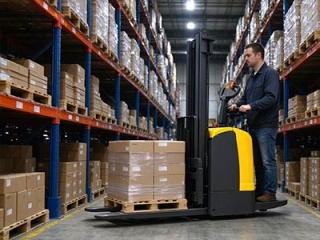 When to Choose Stand-on Electric Double Pallet StackerChoose between double pallet and standard stackers by aisle and load per trip for e-commerce and transfer warehouses to avoid inefficient equipment.
Do you like ?0
Read more -
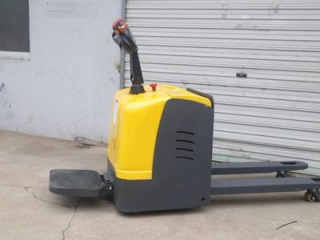 3 Key Parameters to Select Small Stand-on Electric Pallet TruckFor compact stand-on pallet trucks, turning radius, load and battery are core specs. Match aisle, frequency and budget to avoid poor site adaption.
Do you like ?0
Read more -
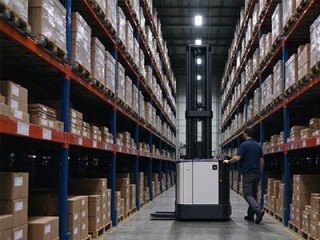 What Aisle Width Is Required for Safe Stacking of Walk-behind StackerWhen choosing walkie stackers, Ast (right-angle stacking aisle) matters more than body width. Differentiate stacking aisle from straight passage and leave extra space.
Do you like ?0
Read more -
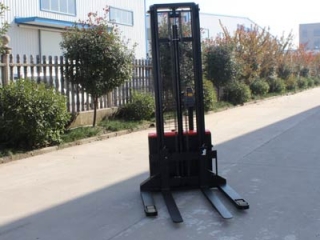 Silent Version Walk-behind Straddle Electric Stacker for Clean WorkshopSilent walkie straddle stackers reduce noise from motor, hydraulics and wheels for quiet workshops in electronics, medical and precision manufacturing.
Do you like ?0
Read more








