
Walk-Behind vs Ride-On Counterbalance Stacker: Choose Wisely
Many people don’t know how to choose between walk-behind and ride-on stackers, especially when it comes to counterbalance designs—they’re unsure about the specific differences. To help you better judge these two types of stackers when purchasing, we’ve conducted a detailed walk-behind vs ride-on counterbalance stacker comparison. We hope that by understanding their parameters and advantages, you can choose the right stacker for your needs.
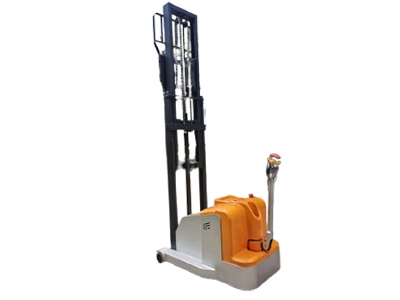
Ride-On Counterbalance Stacker
The rated load usually ranges from 0.5 tons to 3 tons, and the lifting height can reach 6 meters.
Its main advantage is the ride-on operation, which is more labor-saving and does not easily block the operator’s view, improving overall work efficiency. The ride-on counterbalance stacker has low operation intensity, allowing operators to work longer and more accurately. It is equipped with a large-capacity maintenance-free battery and a legless design, suitable for various pallets.
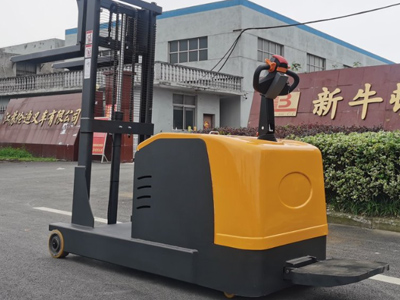
Walk-Behind Stacker
The rated load usually ranges from 0.5 tons to 1 ton, and the lifting height can reach 3 meters.
Its main advantage is the walk-behind operation; the whole machine is designed to be more compact and small, able to adapt to more narrow aisles and small-space operation scenarios. The work efficiency of this stacker is lower than that of the ride-on type—after all, the parameters speak for themselves—but it is superior in flexibility. In addition, its battery and legless design are the same as those of the ride-on type.
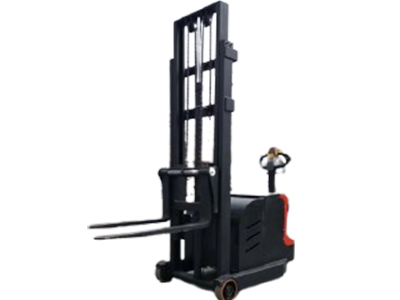
It can be seen that neither of these two stackers is “better” than the other; it all depends on which one better matches your current operation scenarios and needs. For small spaces, narrow aisles, and short handling distances, the walk-behind type is more suitable. For wider aisles, large handling volume, and pursuit of efficiency, the ride-on counterbalance stacker is the right choice.
Through this walk-behind vs ride-on counterbalance stacker comparison, you should now know how to choose. If you have any questions about purchasing stackers, feel free to leave a message to discuss!
-
 Buy Manual Hydraulic Pallet Truck Directly from Factory NewnewtonChoose reliable original manufacturers for manual hydraulic pallet trucks and stackers. They control production quality, support custom models, provide competitive bulk price and direct after-sales support.
Do you like ?0
Read more -
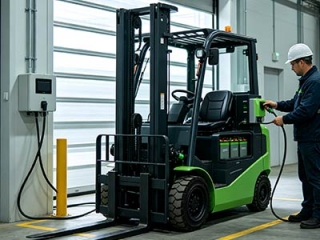 4 Daily Maintenance Tips to Prolong Electric Forklift Battery LifePoor maintenance causes fast capacity loss of electric forklift batteries. Standardize charging and inspection to extend battery service life.
Do you like ?0
Read more -
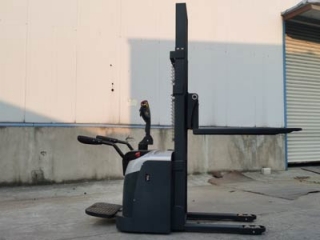 Wholesale Guide | Source Factory Purchase of Ride-on Electric StackerFor bulk purchase of ride-on electric stackers, source directly from manufacturers to cut costs, customize equipment and simplify after-sales.
Do you like ?0
Read more -
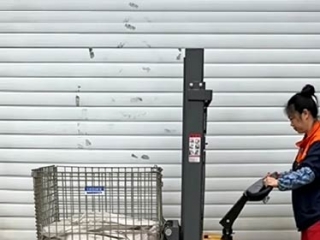 2 Common Misunderstandings of CE Certification for Walk-behind Straddle StackerDouble pallet stackers boost warehouse throughput in peak seasons. Verify aisle width, floor load capacity and pallet specs before purchase.
Do you like ?0
Read more -
3 Conditions to Use Ride-on Double Pallet Stacker in WarehouseDouble pallet stackers boost warehouse throughput in peak seasons. Verify aisle width, floor load capacity and pallet specs before purchase.
Do you like ?0
Read more -
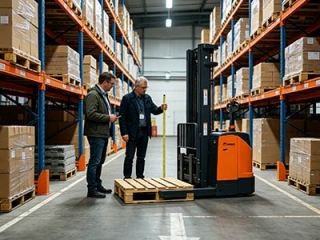 Small Warehouse Stacker Buying Guide | Brand Ranking AnalysisWhen buying small tonnage stackers for small warehouses, brand rankings are inconsistent. Select by brand tiers, working frequency, budget and site conditions.
Do you like ?0
Read more








