
Precautions for loading, unloading and handling of counterbalanced forklifts
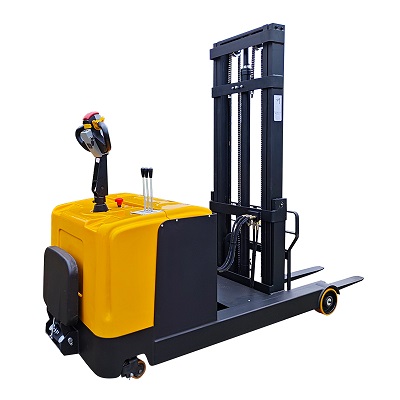
Precautions when loading, unloading and handling:
When the fork approaches or evacuates the item, the speed should be slow and steady, taking care to avoid the wheels running over the item, the skid(pallet) and the fork head, and at the same time do not scratch the item support personnel.
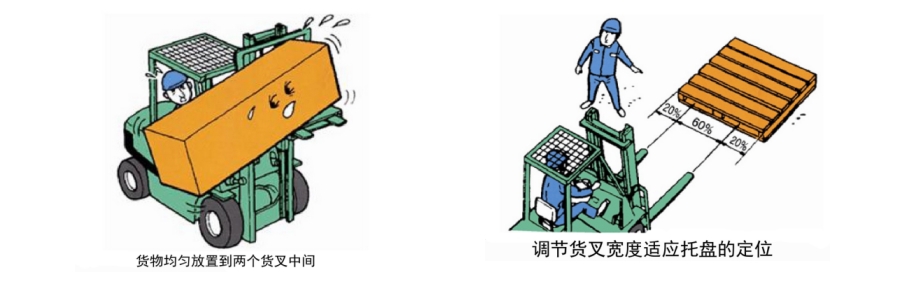
When forks are loaded with goods, the weight of the goods should be evenly shared between the two forks, and the goods should not be deviated, and one side should be attached to the retaining shelf. Small goods should be placed in a collection box or wooden pallet to avoid falling. The goods carried by the counterbalanced forklift shall not block the operator's line of sight, and if the line of sight is blocked, it should be reversed slowly.
When loading the goods, the distance of the forks should be adjusted according to the size of the goods, and the weight of the goods should be evenly distributed on the two forks to avoid eccentric load or the goods slipping to the side when driving.
When loading and unloading goods in a container or box vehicle, the movable lap of the ramp must be placed on the box board of the container or box vehicle. The rear wheels of the container or box vehicle must be blocked by a triangular block, otherwise loading and unloading cannot be carried out.
Counterbalanced forklift loading and unloading "ten prohibitions":
· It is not allowed to use a single fork to load and unload goods;
· It is not allowed to use inertial high-speed forks to pick up goods;
· It is not allowed to directly shovel dangerous goods;
· It is forbidden to use slip to load and unload goods;
· It is not allowed to use the force of impact to load and unload goods;
· It is forbidden to use people to balance the weight of the goods;
· It is not allowed to hang the goods in the air for a long time;
· It is not allowed to push or lift goods with fork tips;
· It is not allowed to use forks to lift personnel to engage in high-altitude operations;
· It is not allowed to use counterbalanced forklifts to push and pull goods.
-
 Taizhou newnewton Forklift Manufacturer IntroductionAvoid selecting warehouse forklifts only by unit price. Check site conditions, certificates and after-sales. Newnewton, Taizhou source factory, provides full product range, CE certification, customization and reliable spare parts supply.
Do you like ?0
Read more -
 Semi-electric Stacker vs Manual Stacker Cost ComparisonWhen buying stacking equipment for small warehouses, compare semi-electric stackers and manual stackers from cost, efficiency and maintenance to balance upfront expense and long-term investment.
Do you like ?0
Read more -
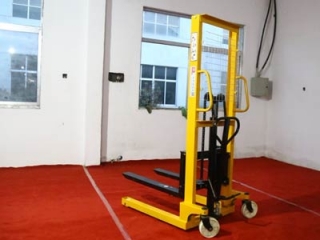 CE Certification for Manual Hydraulic StackerNewnewton manual hydraulic stackers exported to EU need CE certification complying with 2006/42/EC and EN1757-1, including safety assessment, technical documents and product compliance checks.
Do you like ?0
Read more -
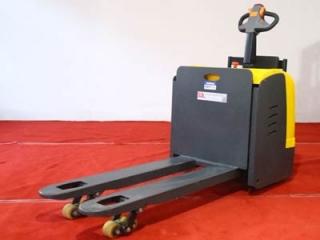 Stand-on vs Walk-behind Electric Pallet Truck ComparisonUnderstand the differences between stand-on and pedestrian electric pallet trucks in operation, efficiency, aisle requirements and costs. Choose the right model based on warehouse scale, transfer distance and order volume.
Do you like ?0
Read more -
 Operation Notes for Electric Self Elevating TruckPedestrian electric stackers cover tiered brand options with different features. International brands offer stable performance at high cost, while domestic brands and factory suppliers provide better cost performance and customization.
Do you like ?0
Read more -
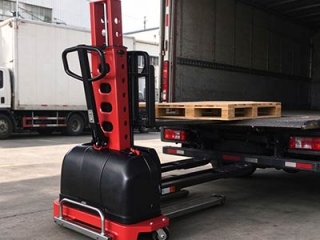 Operation Notes for Electric Self-elevating Truck | Truck Mounted Forklift SafetTruck-mounted self-loading forklifts fixed on truck tails handle cargo without loading docks. Control load and cargo gravity, inspect equipment and avoid soft slopes to prevent tipping and falling goods.
Do you like ?0
Read more








