Manual Hydraulic Stacker Repair | How To Fix Stacker Not Lifting
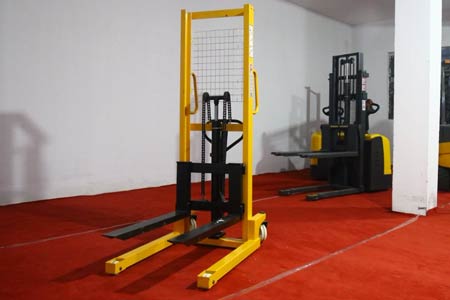
Does your manual hydraulic stacker break down frequently? The problem usually stems from improper maintenance. Many enterprises find that forks cannot lift loads after one year of operation, and some suffer frequent failures within less than a year. Since the structure of manual hydraulic stacker looks simple, operators mistakenly believe complicated maintenance is unnecessary, leading to improper daily operations. How to solve the issue when your manual stacker cannot lift loads? Avoid maintenance errors and conduct regular upkeep to reduce breakdowns.
Mistake 1: Random oil filling and mixing different hydraulic fluids Operators add engine oil or used hydraulic oil when lifting power becomes weak. Mixing fluids with different viscosities accelerates valve wear, corrodes cylinder seals and causes automatic fork descent. Standard practice: Use dedicated hydraulic oil for stackers, replace all oil periodically, and never mix different oil grades.
Mistake 2: Continue operation with minor leakage without timely repair Tiny oil seepage at pipe joints or slow fork descent are often ignored. Continuous oil shortage causes dry wear of the hydraulic pump. Minor faults will lead to irreversible damage to cylinders and valves, greatly increasing repair costs. Standard practice: Stop operation immediately once leakage is found, and replace aging seals and pipelines.
Mistake 3: Regular overloading and forced lifting of overweight goods To improve work efficiency, operators frequently transport loads exceeding rated capacity. Long-term overloading keeps pressure relief valves and cylinders under constant stress, deforming internal seals and shortening service life. Standard practice: Strictly follow rated load limits. Select suitable equipment for heavy cargo.
Mistake 4: Only repair after breakdowns, lack regular preventive maintenance Many warehouses adopt a “repair only when broken” strategy. Valves are not cleaned regularly and chains and rollers lack lubrication. Sediment and metal debris enter the hydraulic system and abrade precision components. Standard practice: Regularly clear debris on the mast, lubricate chains and wheel sets, and inspect hydraulic oil cleanliness on schedule.
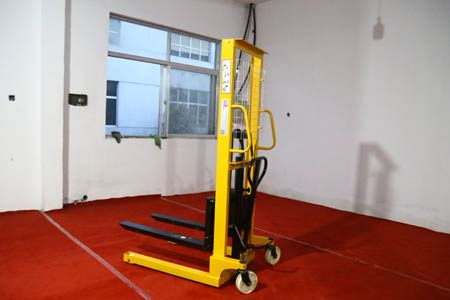
Mistake 5: Blindly adjust pressure relief valves during maintenance When lifting performance declines, many operators tighten pressure relief screws directly. Excessively high pressure exceeds the hydraulic system limit, which may cause cylinder rupture and valve damage, bringing safety hazards. Standard practice: Non-professional staff should not adjust pressure relief valves arbitrarily. Check oil shortage, air intake and worn seals first.
In summary, manual hydraulic stacker repair is not complicated. The priority is to avoid these common maintenance mistakes. With standardized operation, your manual stacker will run steadily with fewer failures. Feel free to contact us for further technical support!
-
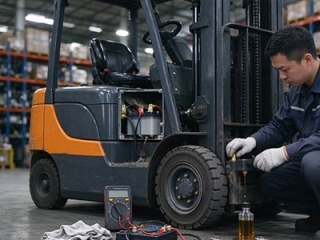 Reliability Of Newnewton Warehouse Forklifts For Heavy-Duty ShiftsWarehouse forklift reliability relies on industrial parts, reinforced frames and factory durability tests. Proper operation and maintenance reduce unexpected downtime.
Do you like ?0
Read more -
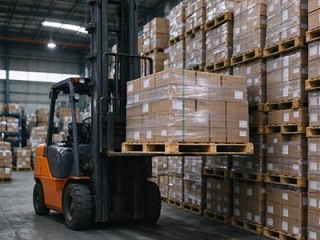 Forklift Configuration Strategy For Dense Warehousing, Warehouse ForkliftDense warehousing needs matched forklifts besides racks. Reach and trilateral stackers fit different layouts, coordinate aisle, load curve and floor for smooth handling.
Do you like ?0
Read more -
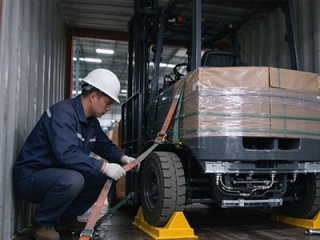 Full Container Supply For Export Forklifts, Forklift ManufacturerBulk forklift orders for overseas can ship by FCL or LCL. Newnewton FCL offers stable freight, safer packing and mixed models for large purchases.
Do you like ?0
Read more -
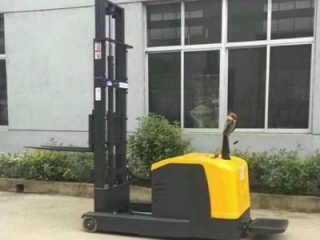 Stand-on Reach Stacker For Narrow Aisle Stacking, Mast Reach StructureStand-on reach stackers feature sliding masts that stay outside racks. They boost storage density in narrow aisles and require flat floors and standard pallets.
Do you like ?0
Read more -
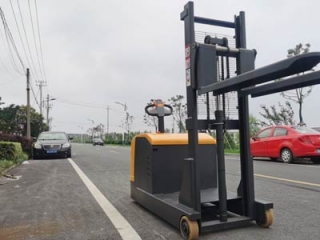 Stand-on Counterbalance Stacker For Various Pallets, Why No Leg RestrictionCounterbalance stackers have no front outriggers, using rear counterweight to avoid pallet interference. They fit various odd pallets yet need wider warehouse aisles.
Do you like ?0
Read more -
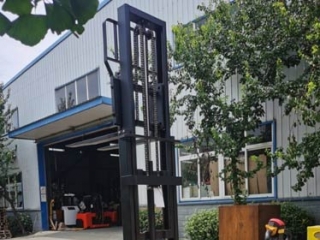 Custom Walk-Behind Counterbalance Stacker | Non-Standard ModificationsStandard walk-behind counterbalance stackers struggle with non-standard pallets and tight aisles. Customize load, lift, forks and structure, share working conditions for safe design.
Do you like ?0
Read more