
4 Delivery Capabilities to Evaluate Warehouse Forklift Export Factories
For bulk equipment procurement of overseas warehousing projects, contacting multiple suppliers separately for forklifts, stackers and pallet trucks brings high communication costs. Inconsistent delivery cycles of various equipment may also lead to confusion in document handling. Choosing one-stop procurement of warehouse logistics equipment helps simplify the whole purchasing process. Four core delivery capabilities can be used to evaluate whether the manufacturer can undertake overseas warehousing equipment orders.
First, full-range equipment supporting capacity.
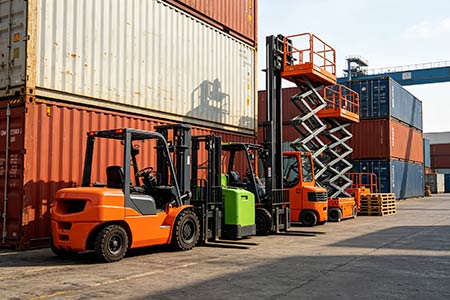
The core of one-stop procurement lies in the factory’s ability to supply multiple types of warehouse logistics equipment instead of a single forklift category. Ranging from diesel forklifts and full electric stackers to manual hydraulic pallet trucks and aerial work machines, unified model selection can be finished within one manufacturer. The parameters of different equipment match better for unified warehouse maintenance and management. For orders requiring partial shipments, unified production scheduling can reduce information deviation caused by multi-party communication.
Second, export certification and document processing capacity.
Access standards for warehouse vehicles vary in different countries and regions. Qualified export manufacturers shall prepare corresponding product certification documents in accordance with requirements of target markets, as well as complete documents for customs declaration and clearance. Standardized document preparation prevents goods detention at ports due to incomplete certificates and extra detention charges, which is an easily overlooked point in foreign trade orders.
Third, flexible production and customized delivery capacity.
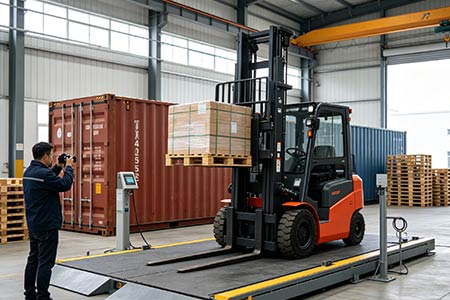
Working conditions differ among overseas warehouses. Some orders require customized adjustment of mast height, fork specification, battery type and logo marks. Source manufacturers with independent production lines can adjust equipment configurations according to customer demands and control production schedule for stable lead time. Full load tests will be completed before shipment, and container loading photos will be provided to confirm the loading condition of goods.
Fourth, after-sales spare parts and technical support capacity.
Equipment delivery is not the end of cooperation. Long replenishment cycle of maintenance spare parts overseas will directly affect warehouse operation. Trusted export manufacturers can provide on-board spare parts kits, build fast delivery channels for spare parts, and supply technical documents for equipment operation and troubleshooting. Remote assistance can help on-site staff deal with simple equipment faults and reduce downtime risks of overseas warehouses.
In summary, these four capabilities determine whether the one-stop procurement project of warehouse forklifts from export manufacturers can be implemented smoothly. When purchasing, buyers should not only compare unit prices, but also take supporting services, documents, customization and after-sales service into overall evaluation. If you are preparing an overseas warehouse equipment procurement project, provide your project list and target market information to get a complete equipment selection solution.
-
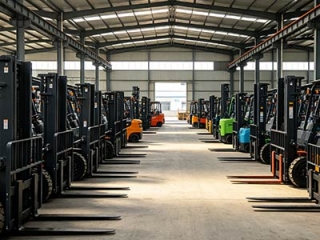 Newnewton Forklift: Source Factory with Independent Manufacturing CapacityOverseas buyers prefer real manufacturers over resellers. Newnewton Forklift is a direct factory with full in-house production, custom service and complete export certifications for warehousing equipment.
Do you like ?0
Read more -
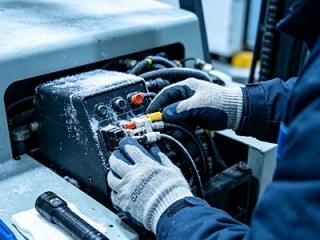 What to Note When Using Lithium Electric Forklifts in Cold StorageLow temperature and frost in cold storage age lithium electric forklift components. Adopt cold-resistant models and standardize charging and operation to stabilize warehouse handling and reduce breakdowns.
Do you like ?0
Read more -
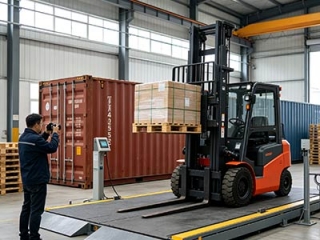 4 Delivery Capabilities to Evaluate Warehouse Forklift Export FactoriesFor bulk overseas warehouse procurement, multiple suppliers bring high communication costs and messy documents. Evaluate manufacturers by four capacities: full product supply, export docs, customization and after-sales spare parts.
Do you like ?0
Read more -
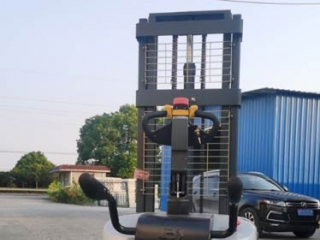 Stand-on Warehouse Stacker: Racking Matching & Core StrengthsRide-on electric stackers feature compact size and flexible steering. They fit multiple rack types including beam, narrow aisle and shelving racks to boost warehouse operational efficiency.
Do you like ?0
Read more -
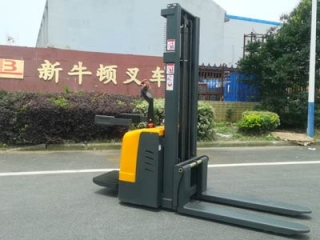 3 Parameters to Check if Double Fork Stand-on Stacker Fits Euro PalletsForeign trade warehouses often ignore pallet compatibility when purchasing ride-on double-fork stackers. Check fork width, fork length and ground clearance to fit EU pallets and avoid operation failures.
Do you like ?0
Read more -
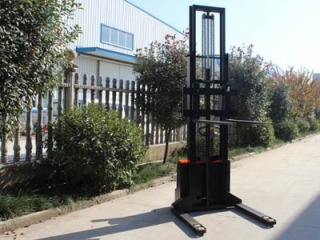 Advantages of Walk-behind Electric Stacker with Adjustable LegsAdjustable leg electric stackers flexibly adapt to various pallet sizes. The compact walking design solves messy pallet specifications and reduces warehouse equipment procurement costs.
Do you like ?0
Read more








