
Nylon Wheel vs PU Wheel for Manual Pallet Jack, Selection Guide
You need to confirm accessory options when ordering manual pallet jacks. Wheels with different materials perform quite differently. This article illustrates the difference between nylon wheel and polyurethane wheel for manual hydraulic pallet truck to simplify your selection.
Floor protection effect Polyurethane wheels are relatively soft and hardly scratch the floor. They are the preferred option for epoxy floors and polished cement ground. Nylon wheels feature high hardness and tend to leave obvious friction marks. They are not suitable for clean epoxy floors, as they may damage the floor and bring extra maintenance cost.
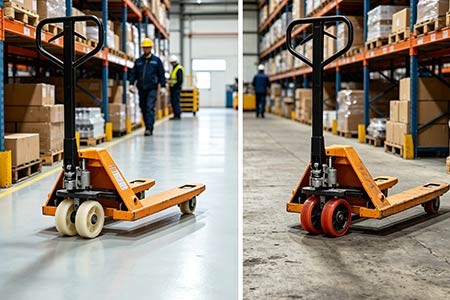
Noise performance Polyurethane wheels run quietly. For night shifts in warehouses and workshops, they create less noise disturbance. They fit e-commerce warehouses, food warehouses and other sites with strict noise control requirements. Hard nylon wheels produce loud knocking and friction noise on hard ground. They are not recommended for warehouses with strict noise limits.
Wear resistance and load capacity Nylon wheels have superior wear resistance and impact resistance. They work well on sandy, rough cement ground. They are not easy to deform under heavy load and resist scratches from iron scraps and gravel. Polyurethane wheels are less wear-resistant compared with nylon wheels. Sharp debris may cut the wheel surface. Long-term heavy compression will leave slight indentations and accelerate aging under continuous heavy load.
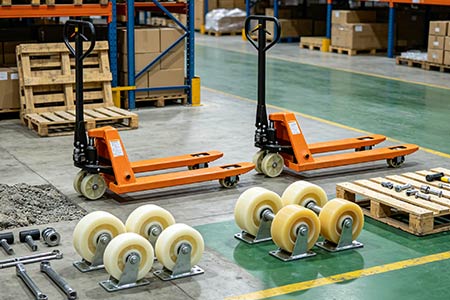
Operation cost Nylon wheels come with lower unit price and longer service life. They require fewer replacements on rough ground and deliver better comprehensive cost performance. Polyurethane wheels have higher purchase price. They wear rapidly on sites with gravel and iron scraps and need frequent replacement. They are only suitable for flat and clean indoor warehouse environments.
Choose polyurethane wheels if floor protection and low noise are your priority. Pick nylon wheels for rough ground, frequent heavy loads and limited budget.
In summary, you can get a full understanding of wheel materials for manual hydraulic pallet jack. Contact us anytime if you need detailed specifications, quotations or inquiries about other materials and accessories.
-
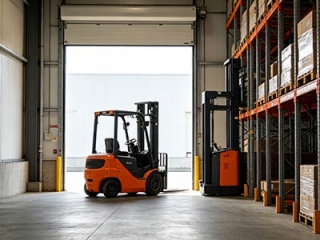 Narrow Aisle Forklift vs Ordinary Forklift, Core Comparison PointsDistinguish narrow aisle forklifts from standard ones to avoid wrong selection. Compare aisle width, structure and stacking method for your warehouse.
Do you like ?0
Read more -
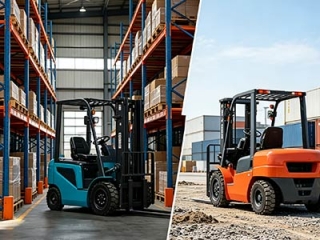 4 Dimensions to Reference Domestic Electric Forklift Brand RankingMany buyers select forklifts only by brand rankings, which may mismatch working conditions. Evaluate brands from statistics, application, after-sales and quality control.
Do you like ?0
Read more -
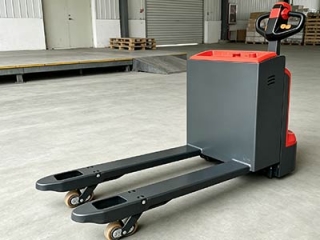 Warehouse Transfer Application of Walk-behind Electric Pallet JackPedestrian electric pallet trucks are widely used in small warehouses. Check factory capacity, quality inspection, warranty and CE documents for export orders.
Do you like ?0
Read more -
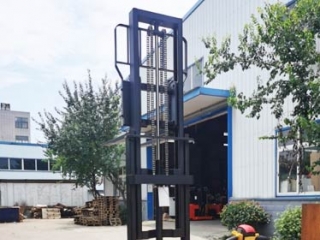 3 Key Checking Points for Walk-behind Counterbalanced Stacker Export InquiryDealers purchasing counterbalance electric stackers for export may overlook details. Check config, trade terms & certificates to avoid extra costs and risks.
Do you like ?0
Read more -
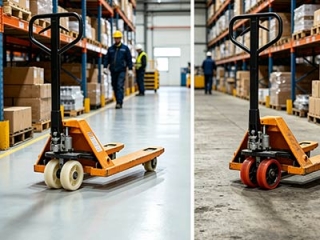 Nylon Wheel vs PU Wheel for Manual Pallet Jack, Selection GuideManual pallet trucks use nylon or PU wheels. They differ in floor protection, noise, wear resistance and cost. Choose wheels by warehouse floor conditions.
Do you like ?0
Read more -
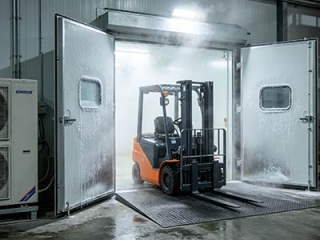 Cold Storage Forklift Guide: Condensation Protection & TroubleshootingForklifts get condensation while entering & exiting cold warehouses, causing short circuits and rust. Use transition zone and moisture protection to extend service life.
Do you like ?0
Read more








