
Which Battery For 4 Wheel Electric Forklift? Working Condition Comparison
The battery is the core component of the Four-wheel Electric Forklift. Proper battery selection directly affects service life, runtime and power performance. There is no universal best solution; the choice depends on your actual working conditions. This article compares two mainstream traction batteries, analyzes applicable scenarios and sorts out key selection criteria.
Lead-acid Battery
Lead-acid batteries are the traditional power option for early four-wheel electric forklifts with mature technology and widely available spare parts.
Procurement Cost: Lower upfront investment for equal capacity, reducing initial capital pressure.
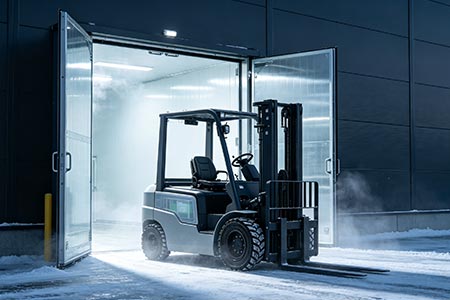
Maintenance Requirement: Non-sealed types require regular electrolyte inspection and distilled water topping-up. Hydrogen is released during charging; charging areas must be well ventilated. Charging inside enclosed rooms is prohibited.
Charge & Discharge Performance: Not suitable for opportunity charging. A full charge takes 8–10 hours; short break top-up is not recommended. Continuous high-current discharge performance is moderate.
Cycle Life: 500–1000 cycles normally, service life around 2–3 years under standard operation.
Low-temperature Performance: Significant capacity attenuation under cold conditions. Not recommended for long-term freezer operation.
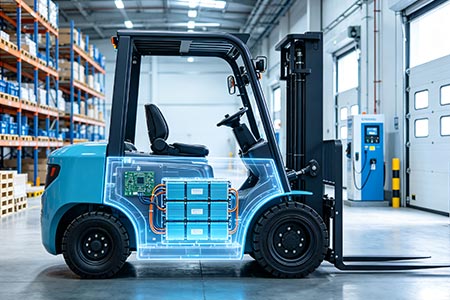
Lithium Iron Phosphate Battery
Sealed integrated LiFePO4 batteries are the preferred choice for high-frequency warehouses and export equipment. Two versions available: standard type and low-temperature preheating type for cold storage.
Procurement Cost: Higher initial purchase price compared with lead-acid batteries of equal capacity.
Maintenance Requirement: Completely maintenance-free. No electrolyte refilling needed. No hydrogen emission during charging, safe for food, electronics and clean workshops.
Charge & Discharge Performance: Supports fast charging and opportunity charging. Short charging during lunch breaks extends operation time, perfectly matching two-shift non-stop operation.
Cycle Life: 2000~3000 cycles, standardized service life of 5–8 years with fewer replacement cycles in long-term operation.
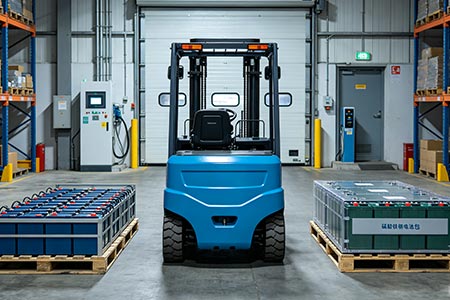
Low-temperature Performance: Optional version with built-in BMS preheating module, suitable for -18°C freezer working environments.
Both battery types for four-wheel electric forklifts have obvious advantages and drawbacks.
Choose lead-acid battery if: Single-shift operation, daily working hours 4–6 hours, moderate inbound & outbound volume, limited budget, no low-temperature working requirements.
Choose lithium iron phosphate battery if: Multi-shift continuous operation, high daily handling frequency, need opportunity charging, cleanroom / cold storage application, pursuing lower long-term replacement and maintenance costs.
In short, each battery technology has its own merits. You can make the decision according to your warehouse operation mode and site environment.
-
 Direct Source Factory for Small Electric Forklifts | NewnewtonBuying forklifts from source factories saves markup and speeds up after-sales service. Check qualifications carefully to distinguish real manufacturers from OEM traders.
Do you like ?0
Read more -
 5 Troubleshooting Reasons for Slow Lifting Speed of Electric ForkliftSlow fork lifting is a common electric forklift fault. Check battery voltage, hydraulic oil, filter, pump and multi-way valve to quickly locate the root cause.
Do you like ?0
Read more -
 Lithium-ion Warehouse Forklift Brands Review, Advantages and DisadvantagesLithium forklift brands vary greatly, including major manufacturers, original factories and dealers. Compare Heli, Hangcha, Noblift, BYD to select models matching your budget.
Do you like ?0
Read more -
 Price Reference of Hydraulic Dock Leveler for Warehouse Loading BayHydraulic dock levelers include fixed and mobile types with large price gaps. Load capacity, steel and hydraulic systems are key factors to consider for procurement.
Do you like ?0
Read more -
 Charging & Storage Taboos for Lithium-ion Double Pallet Electric TruckLithium battery double pallet trucks suffer heavy discharge under load. Follow charging, storage and operation rules to slow cell aging and cut replacement costs.
Do you like ?0
Read more -
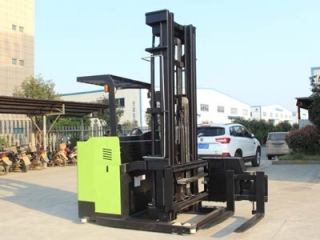 High-level Stacking Safety Notes for Electric Three-way ForkliftThree-way electric forklifts face collision and falling risks in narrow aisles. Follow standard operating procedures for pre-check, traveling, stacking and finishing to ensure warehouse safety.
Do you like ?0
Read more








